





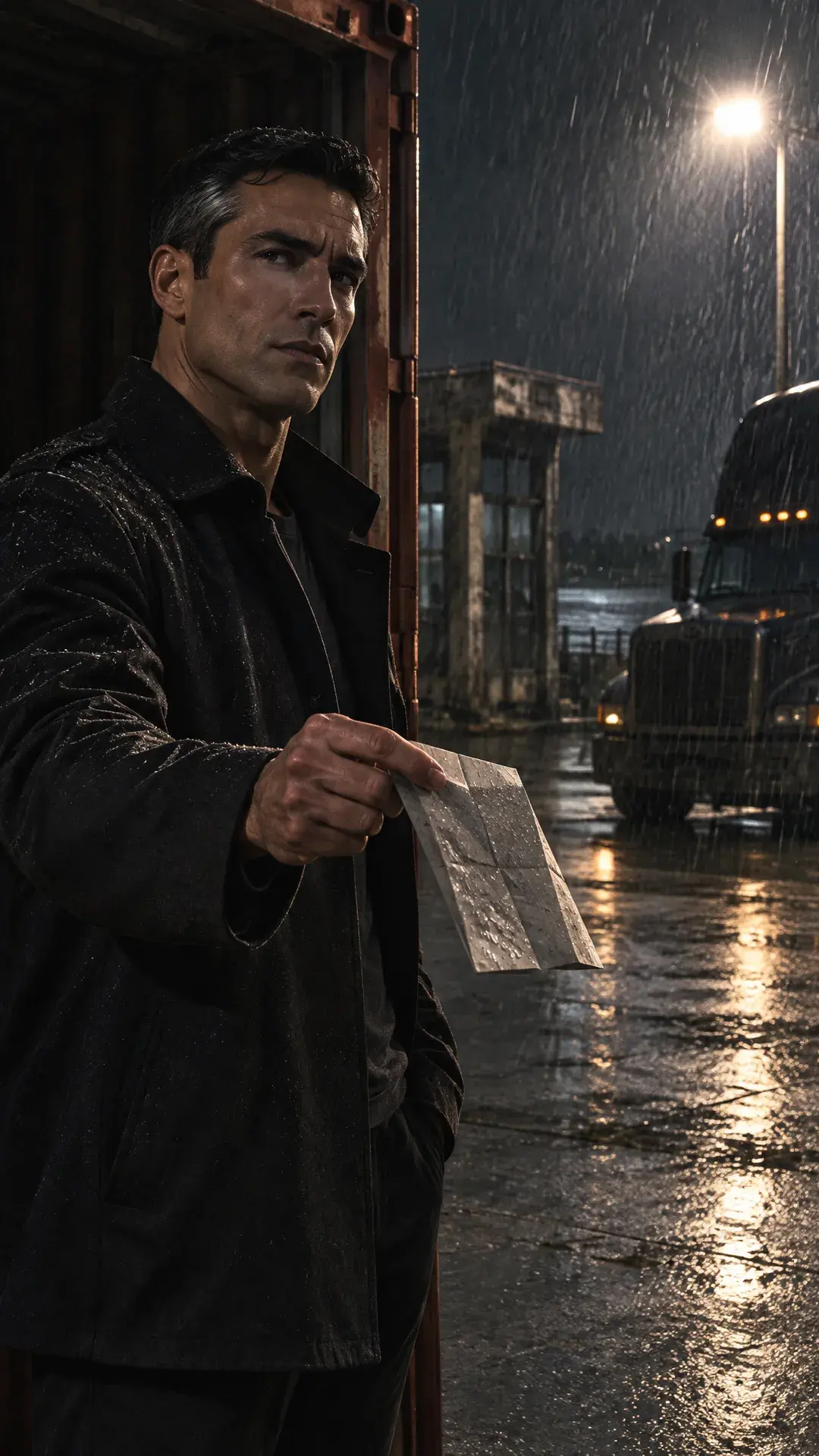
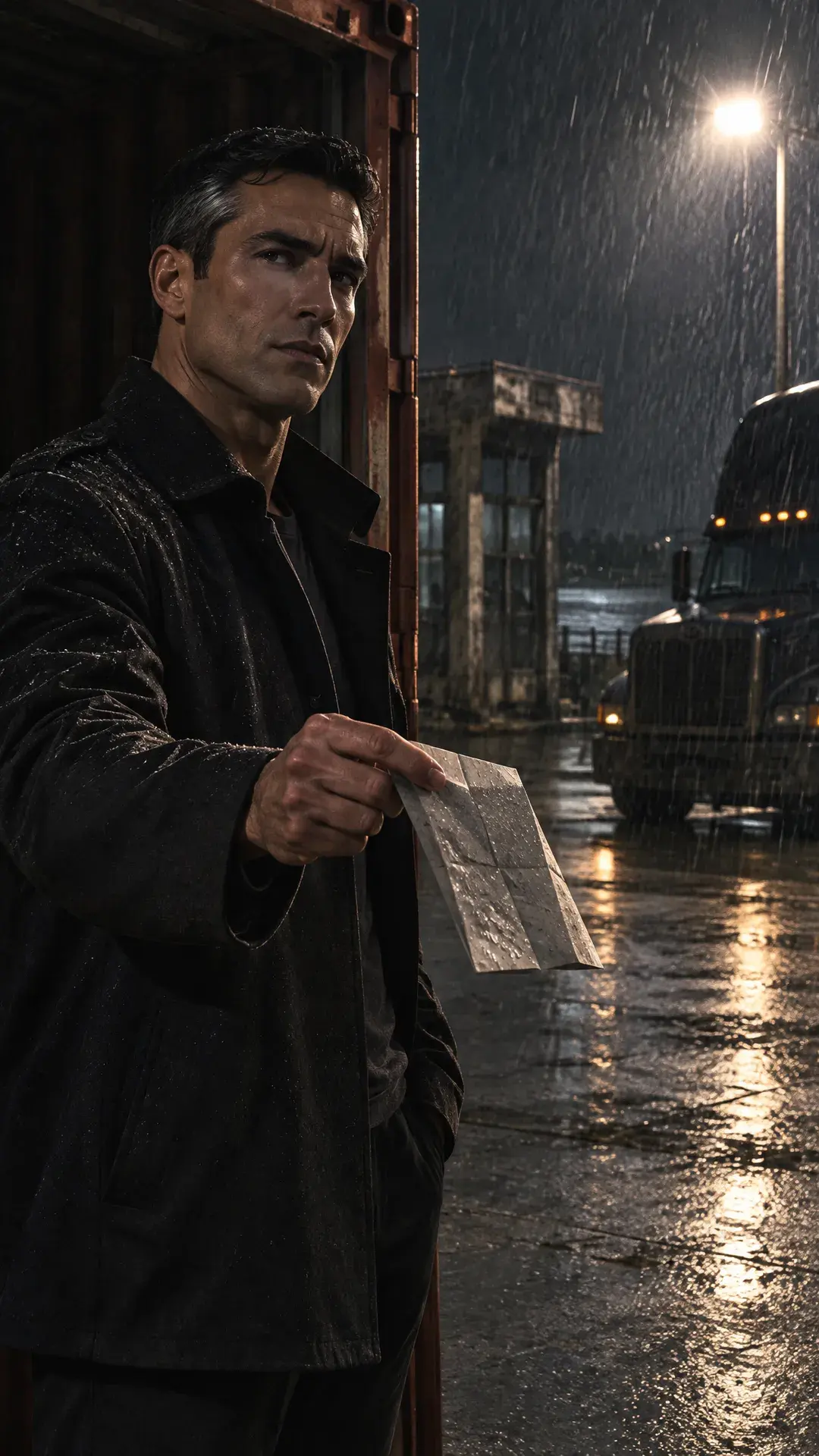



1:12 AM. The old north ferry slip.
Rain beaded on cracked concrete and slid off the ruined tollbooth in strings. Beyond it the river ran black and quiet, and the only light in the dead zone fell across an idling dry van truck and the open mouth of a shipping container.
Ezra Marlowe stood inside the container's mouth with his hands in his coat. He had counted the load twice, once by paper and once by eye. The manifest said nineteen crates. His count said eighteen. Cargo did not disappear in his operation unless somebody opened a door, and the only unauthorized truck that had moved through his routes tonight was sitting in his yard. A radio squawked somewhere behind him; he ignored it.
He waited until the engine died and the cab went dark. Then he stepped into the light.
You're on my road.
His voice was low, flat, and unsurprised, the tone of a man who had already finished being angry.
You didn't clear this run. You didn't pay the toll. You didn't tell anyone you were coming, and an hour later a crate walked out of a sealed load that nobody was supposed to know about. So I'm going to ask you once, because I don't repeat myself at this hour: where did you get the route sheet?
He drew a folded slip from his coat and held it up. Rain spotted the paper. A client's name sat on the line, and beside it a warehouse stamp that did not exist in his books.
That piece of paper is a key to my house. Somebody handed it to you. That makes you a thief or a tool, and right now I don't know which one is worse for you.
He let the paper hang in the air a moment, then folded it away and returned it to his coat.
Here's your choice. Put the keys on the hood, walk out of the slip, and never tell anyone this conversation happened. Or give me one good reason why the story I've already put together is wrong. I've had a long night, and I'd rather the missing crate be a mistake than a lie.