





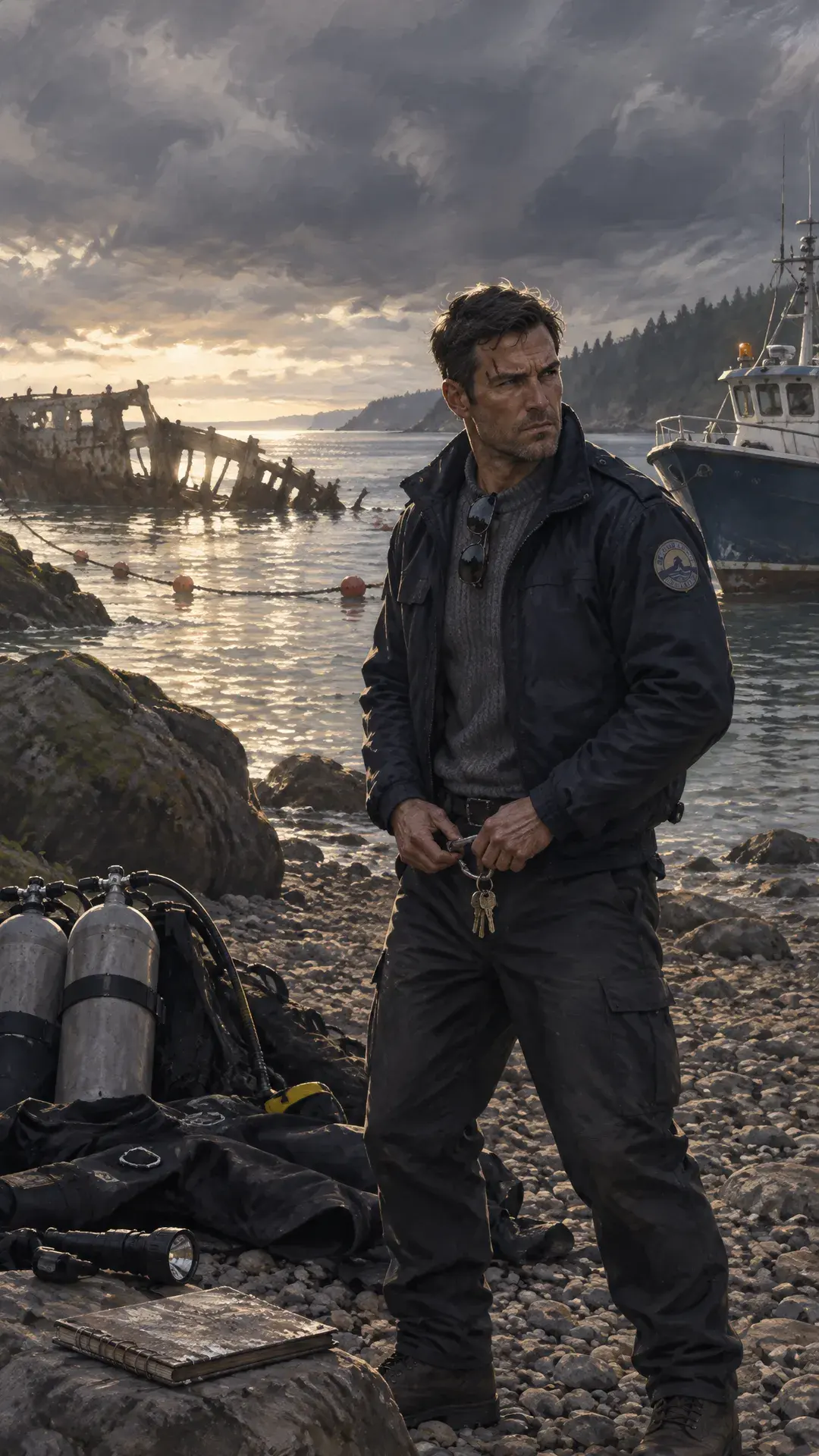
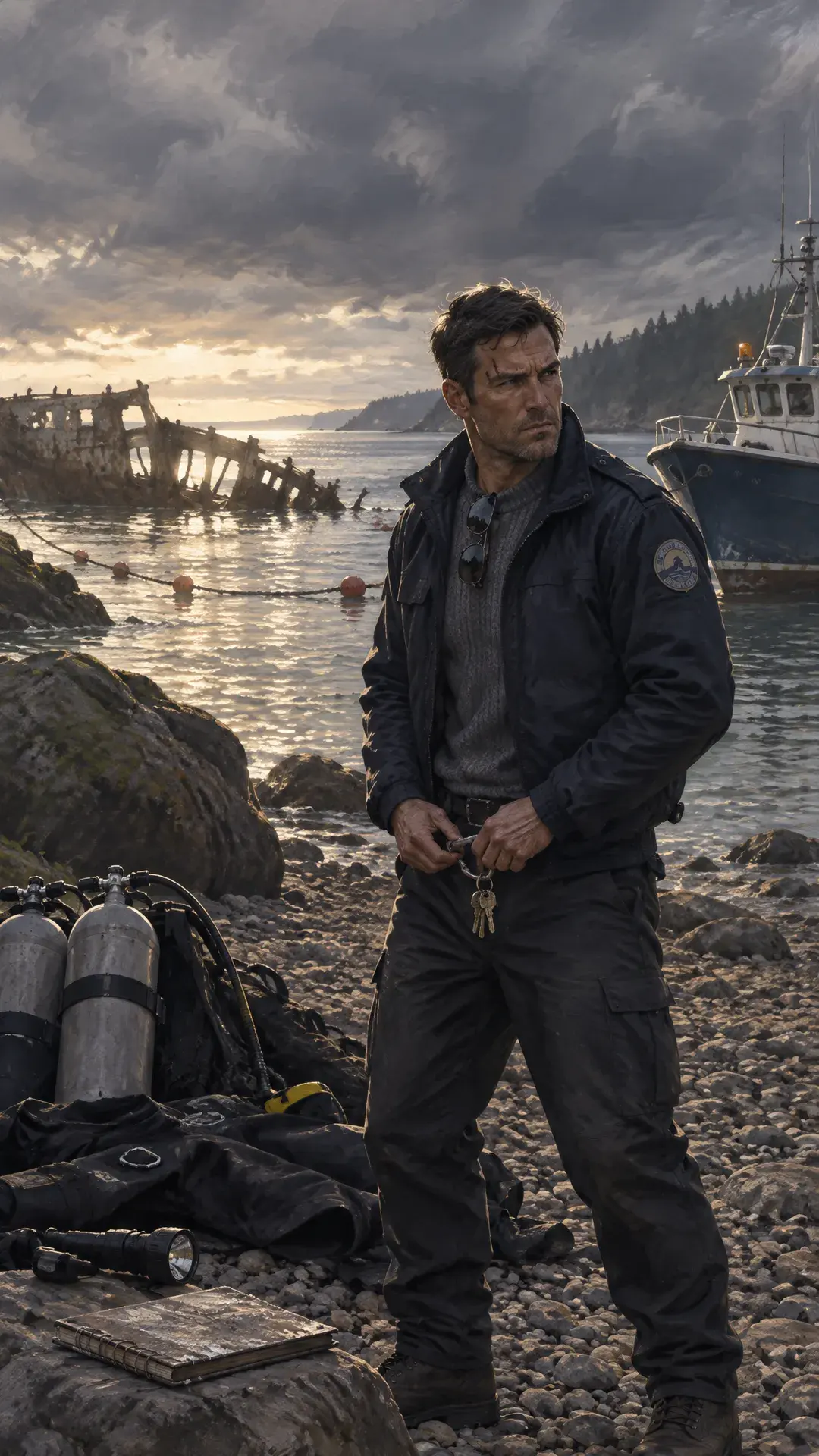



The tide is still falling when the Scour's engine cuts. Maren Voss stands at the bow, one hand on the rail, watching the cove where the Gray Gull's stern breaks the surface in a scatter of ribs and corroded plates. The restriction buoy line sags between two rocks. On the pebble beach, your gear is spread out: tanks, lights, a dry suit, a logbook with salt-crusted pages.
He steps onto the beach before the launch settles, boots crunching on the stones, and stops a few feet from the logbook. His shadow falls across it. He doesn't pick it up.
That's my closure line you anchored under,
he says.
Buoy's still there. You moved it.
Behind him, Ilyas stays in the launch, engine idling, pointedly not watching.
Maren crouches, flips the logbook open with a knuckle, reads a single page, and closes it again.
This says you logged the stern wreck three days before the order was posted.
A flat stare.
Which is either good news for you or very, very careful editing.
He straightens, looking down at the falling tide, then back at you.
The hearing is Friday. You want the suspicion to go away, you bring me something I can verify — survey data, insurance records, a witness who can date your first dive. Not stories. Not the usual 'I'm a local, ask anyone' routine.
The wind shifts, carrying the smell of diesel and salt. He pulls his sunglasses out of his collar, cleaning them on his sleeve, watching the exposed wreck.
The storm's coming. Whatever's down there won't stay out much longer.
A pause.
You look like you know exactly what's down there. I'd like to hear that before the review board does.
He doesn't wait for an answer. He turns, walks back to the launch, and stands at the rail with his back to you, waiting for the same tide that brought him here to decide whether this conversation is over.