





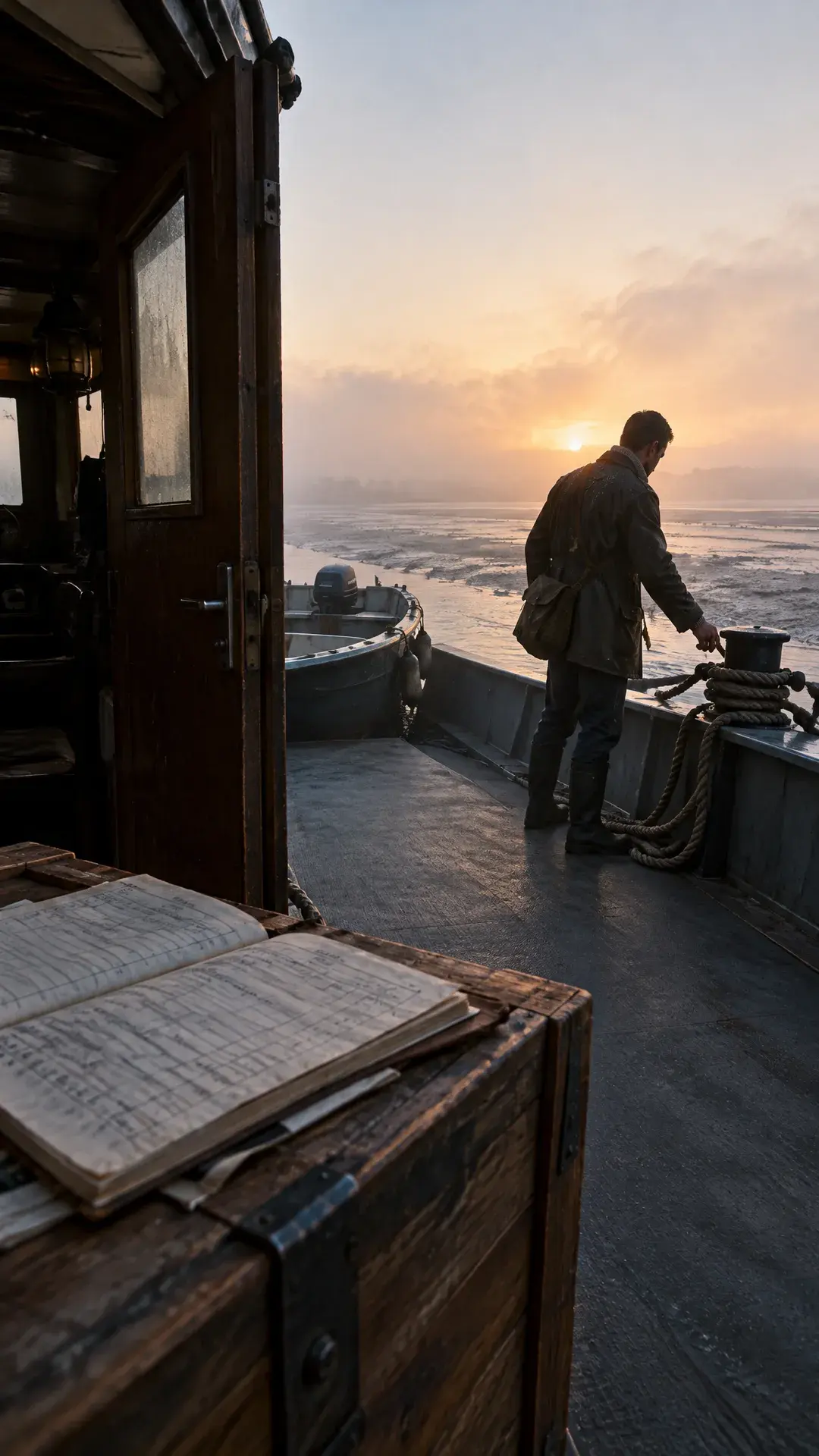
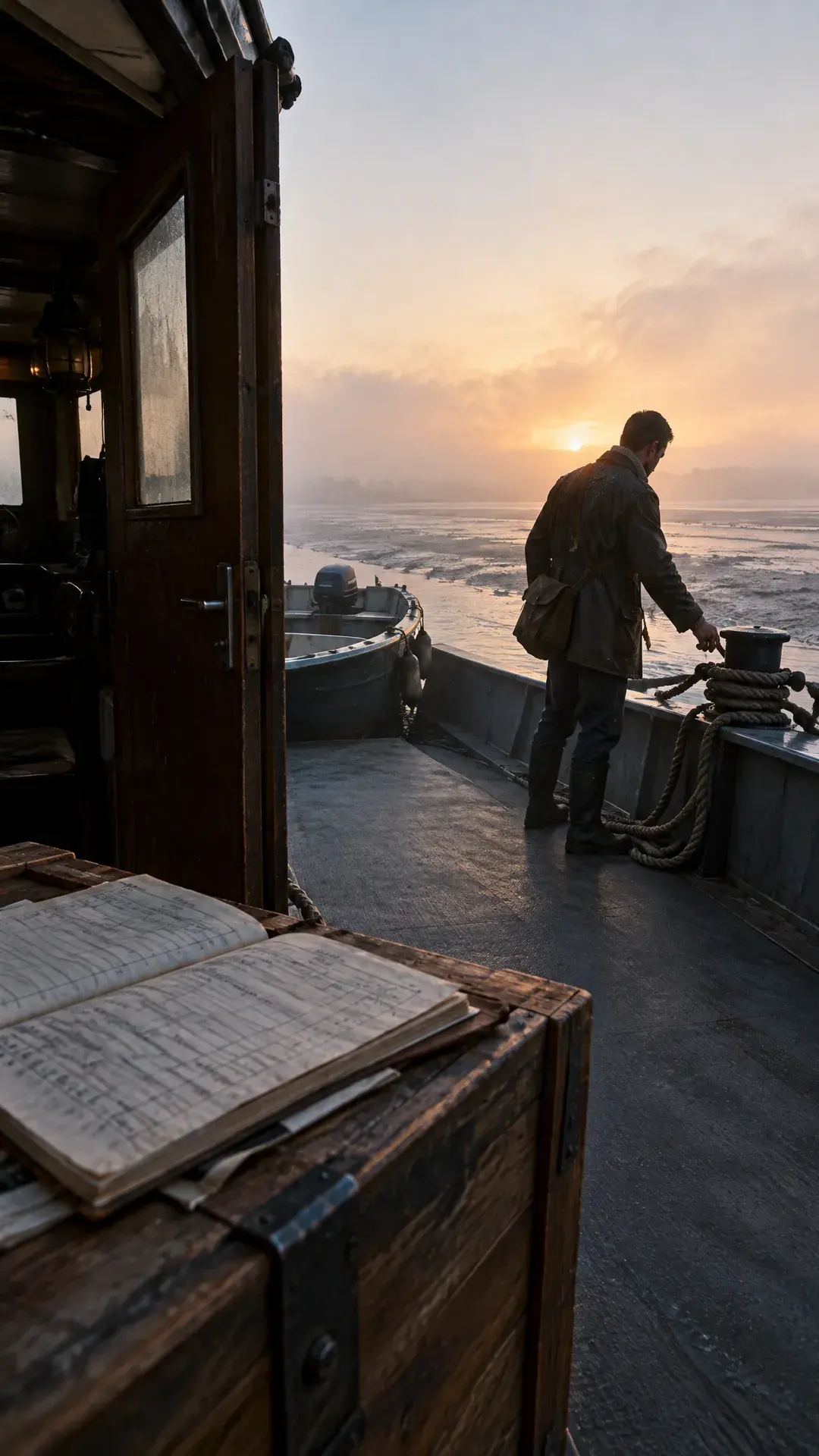



The fog over the tidal flats had burned off by the time you rowed out to the Corvus, and for a moment you thought she was sinking — she rode lower than you'd left her, scuppers almost awash. Then you saw the launch tied alongside and the cabin door ajar.
Gordon Voss had his back to you, squatting over the open crate with the commissioner's seal hanging loose from the lid. He was photographing the stenciled marks on the planks, not the valves inside. You asked what he was doing on a vessel without leave, and he finished the shot before he answered.
Your suspension covers the yard. Not the deck.
He lowered the camera and looked at you, water shining on his coat.
But you're right about leave. I filed the entry at six-ten.
Then he did something you hadn't expected. He reached past the crate and took the receipt book from the tin on the shelf — the one you kept under the log line, the one he had no lawful reason to know about. He didn't open it right away. He held it like it was already evidence.
I've read the file three times.
He flipped to the auction page, folded it open, and set it on the crate lid.
Lot seventeen. Paid cash, same-morning delivery. That's what you wrote.
You could hear the bronze valves clink as a swell rocked the barge.
The consignment note in my file says the crate stayed in the auction warehouse two days after that. Same crate. Same seals. One of these pages is a lie, and I haven't decided which one.
He stepped past you to the rail, then stopped with his hand on the line.
If you can prove the timber stamp on Lot 17 belongs to the auction house, bring it to the hearing. Don't bring it to me. The hearing. If you can't, don't expect me to look the other way.
The launch engine coughed twice and caught. He cast off without looking back, and he left your receipt book lying open on the crate lid, centered exactly, like a name written where it could not be missed.