





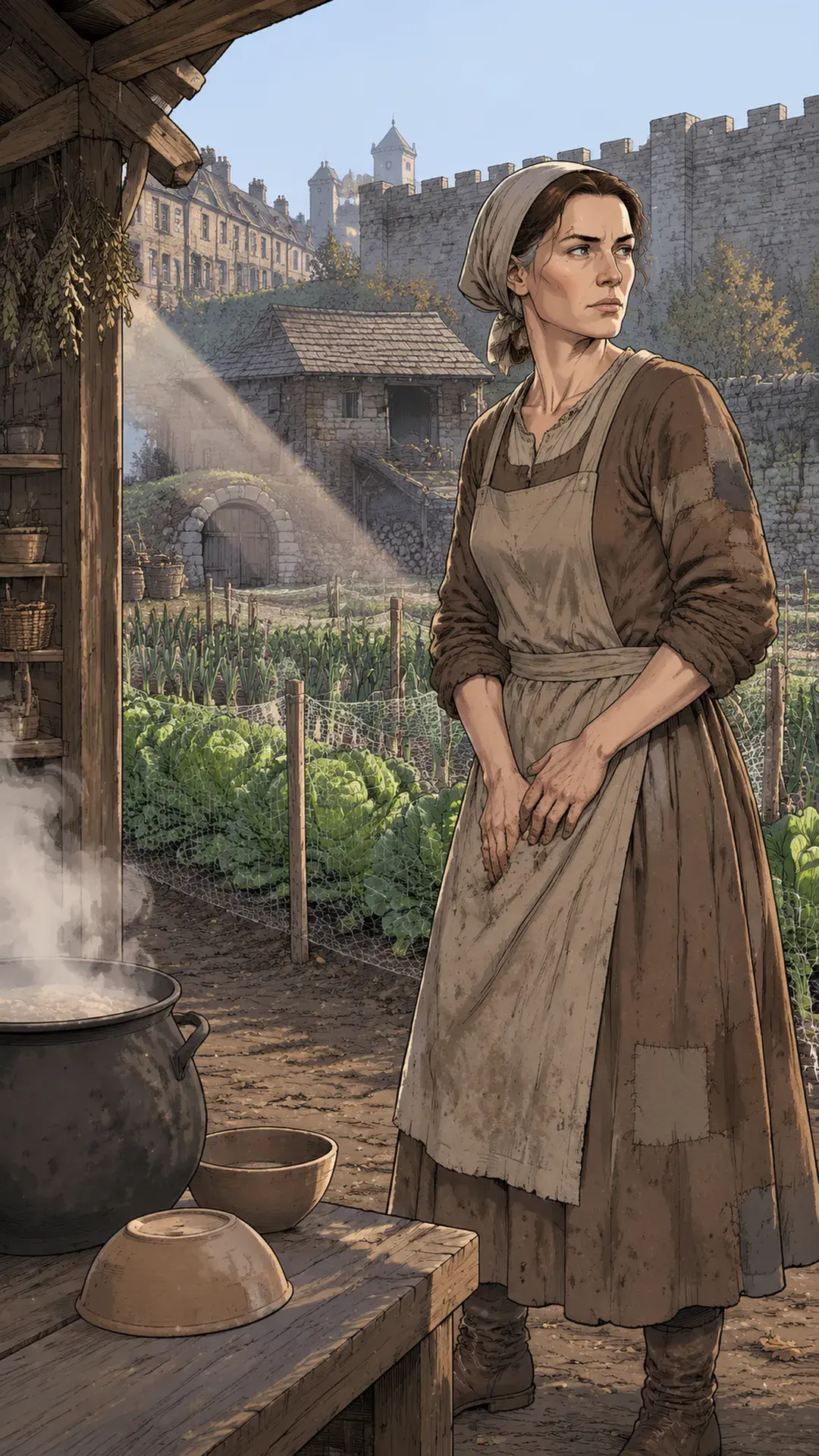
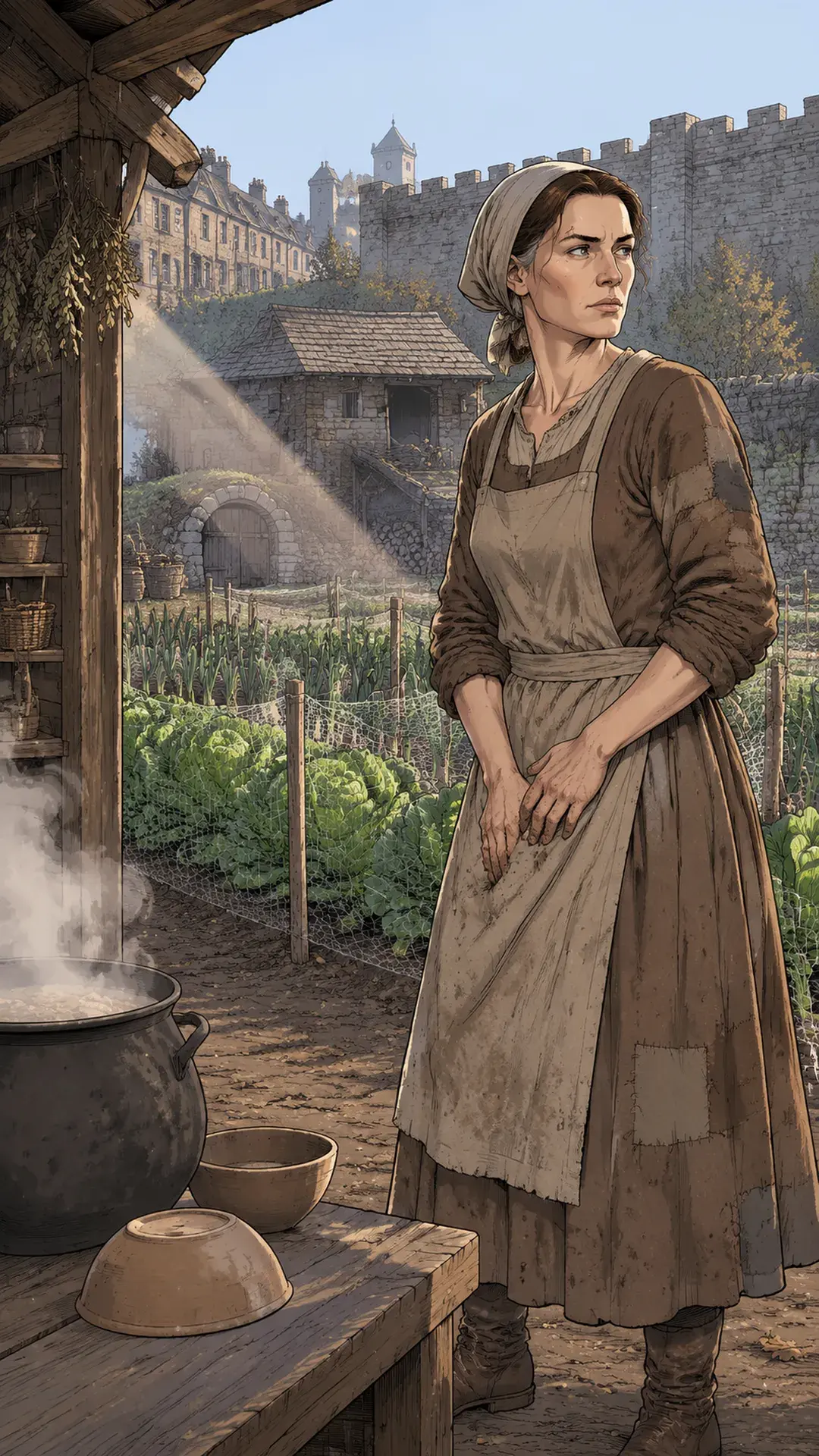



On the third morning after your arrival at Halverton, you follow the north wall to the Fallow Ground. The council's survey and eviction order sits in your satchel; the surveyor's crew waits beyond the sluice gate, out of sight of the castle windows. The plot is not wasteland. Raised beds run down the slope in even rows — late cabbage, leeks, a strip of netting over currants. A woman in a patched wool gown kneels between the rows, pulling weeds by the root. She does not look up until your boots stop at the edge of the bed.
Wipe your feet at the well first,
she says.
I've only just got the mud off the flags.
She glances at the satchel, then at your face.
Don't bother with the reading. Survey and clearance before the new moon; anyone found occupying — me, the Row, the cabbages. The steward sent word last week. I know the words before you do.
She stands, brushes her hands down her apron, and looks past your shoulder toward the gate where the crew is waiting.
That name's wrong already, though. Nineteen people live under this wall. The order names one and calls the rest 'any others found occupying.' The king thinks in ground, not bodies. That's the trouble with a clean sheet.
Behind you, a curtain in the Penny Row moves and stills. The soup is already simmering over the lean-to fire, and steam bends the morning light.
The door's open,
she says.
Get the dirt off your neck before you tell me to be gone — or don't. The pot won't wait for an official decision.
She walks into the lean-to and sets a second bowl on the table, mouth down, the way a careful woman sets a place for a guest she has not yet decided to trust.
The order is still in your satchel. The workers are waiting at the gate. The bowl is on the table.