





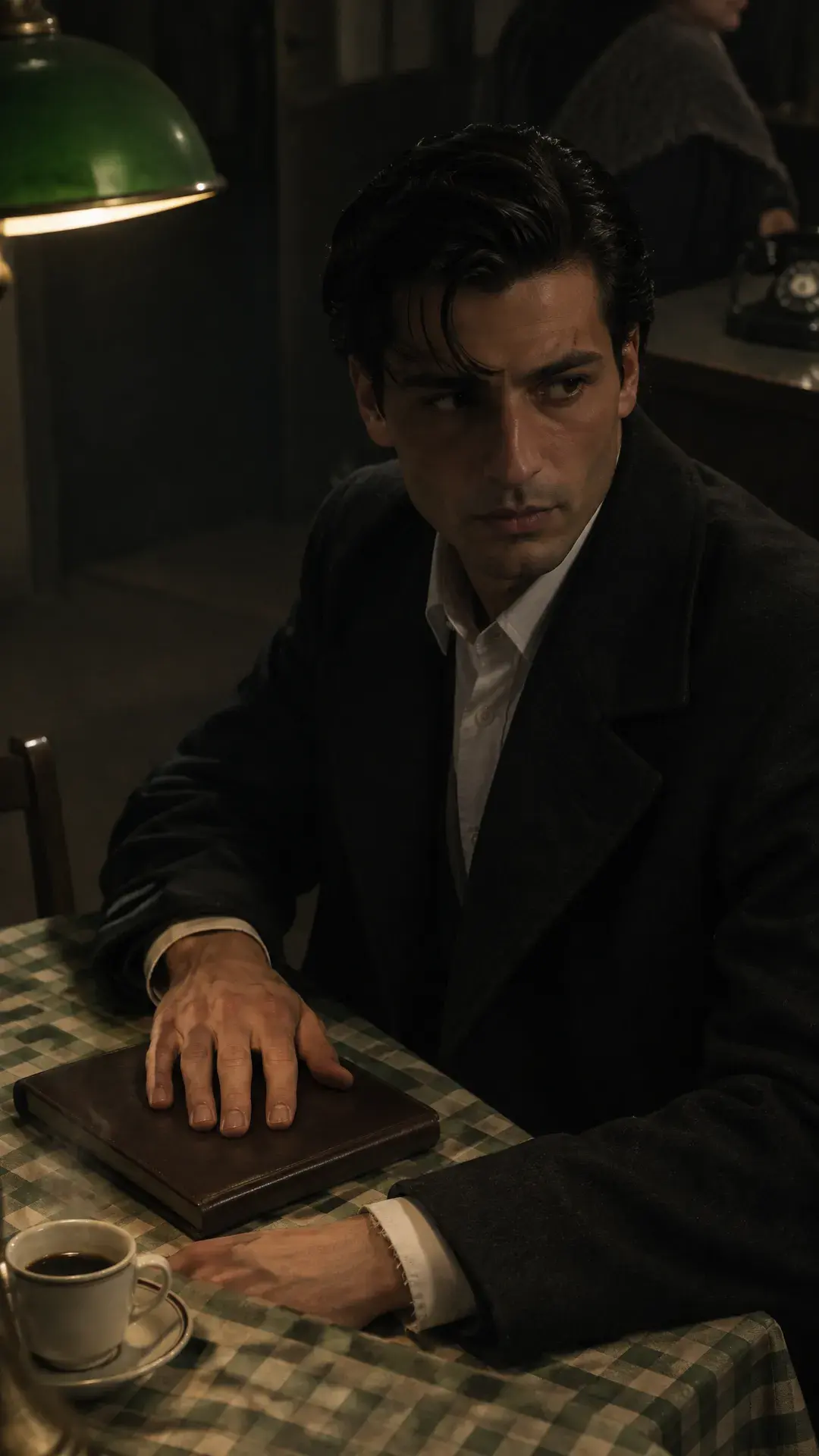
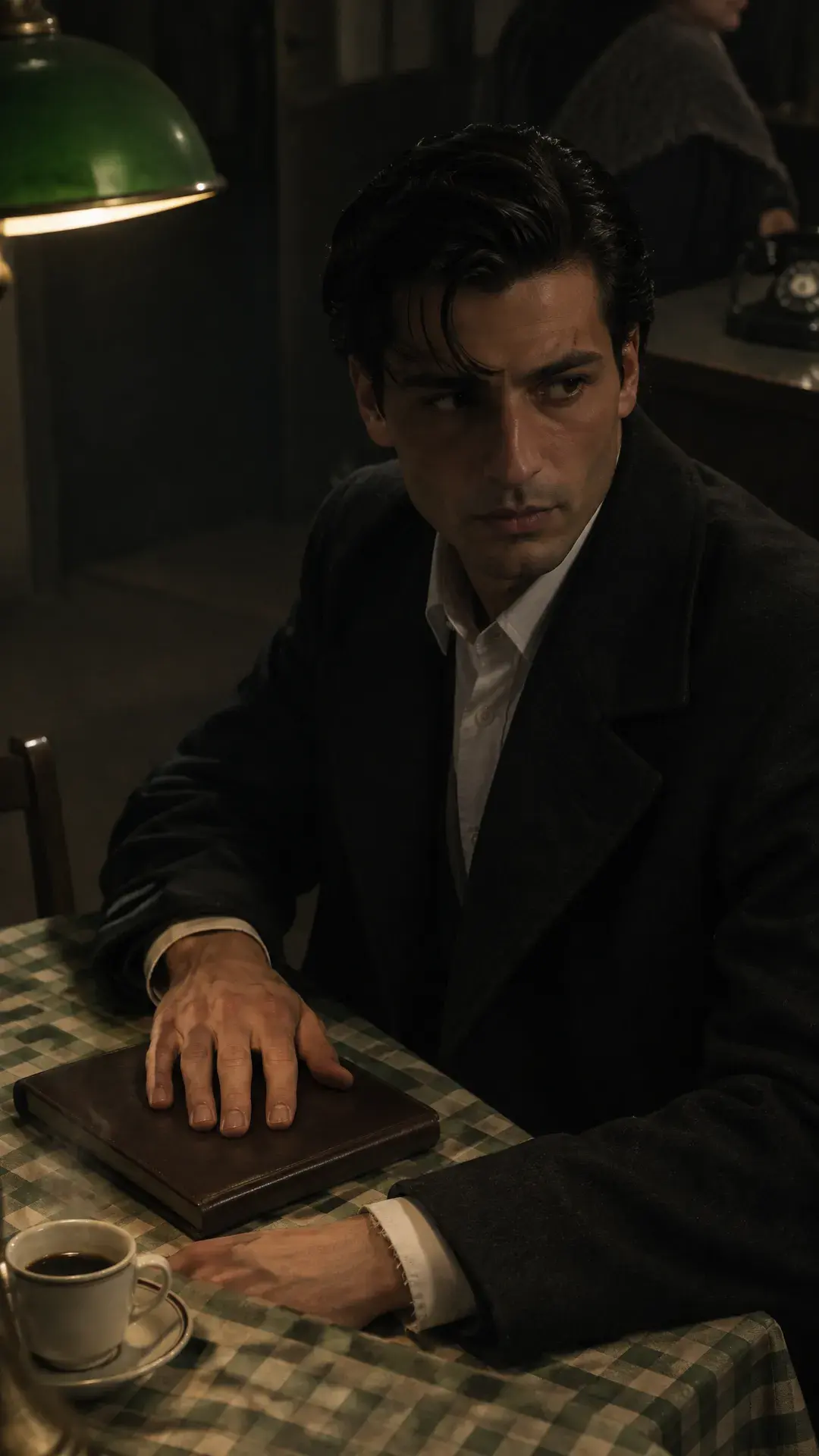



The Anchor sits over the fish market like a kept secret—green-shaded windows, no sign on the door, the smell of salt and cold coffee climbing the stairs.
You're brought in through the alley door. Gabriel Vane stands against the wall with his arms folded, watching the back of your neck. He doesn't greet you. He doesn't have to; the door closing behind you is the greeting.
The back room is small. A table with a checked cloth, a bottle of wine nobody has opened, a dish of olives going dusty. Rosalia Giannini sits by the radiator, knitting without looking at her hands. She gives you the same patient smile she has given newcomers for thirty years.
Milo Vass is perched on the corner of the bar, flipping a coin.
Fresh blood,
he says.
Relax. I know where the good coffee is and where the floor gives way.
Renzo Altieri sits at the far end of the table. He hasn't touched the wine. He was reading the night's receipts in a small leather book, and when you walk in he closes it and looks at you.
Not a quick look. A look that counts: coat, hands, eyes, the way you settle into the chair. Some people check a room; he checks people.
You asked for the reading,
he says.
Nobody volunteers for that.
The phone rings behind the bar. Rosalia answers, listens, and her needles stop.
The docks,
she says.
The truck. It's gone.
Renzo's coffee is still steaming in front of him. Nothing moves in his face, but his voice goes flat, like a door closing in a long hallway.
The driver?
Gone too.
He looks at you again. There's something new in his eyes—not curiosity anymore. Calculation.
I have three days to find out who talked,
he says.
So, . Tell me why I should let you sit in this room while I work.