





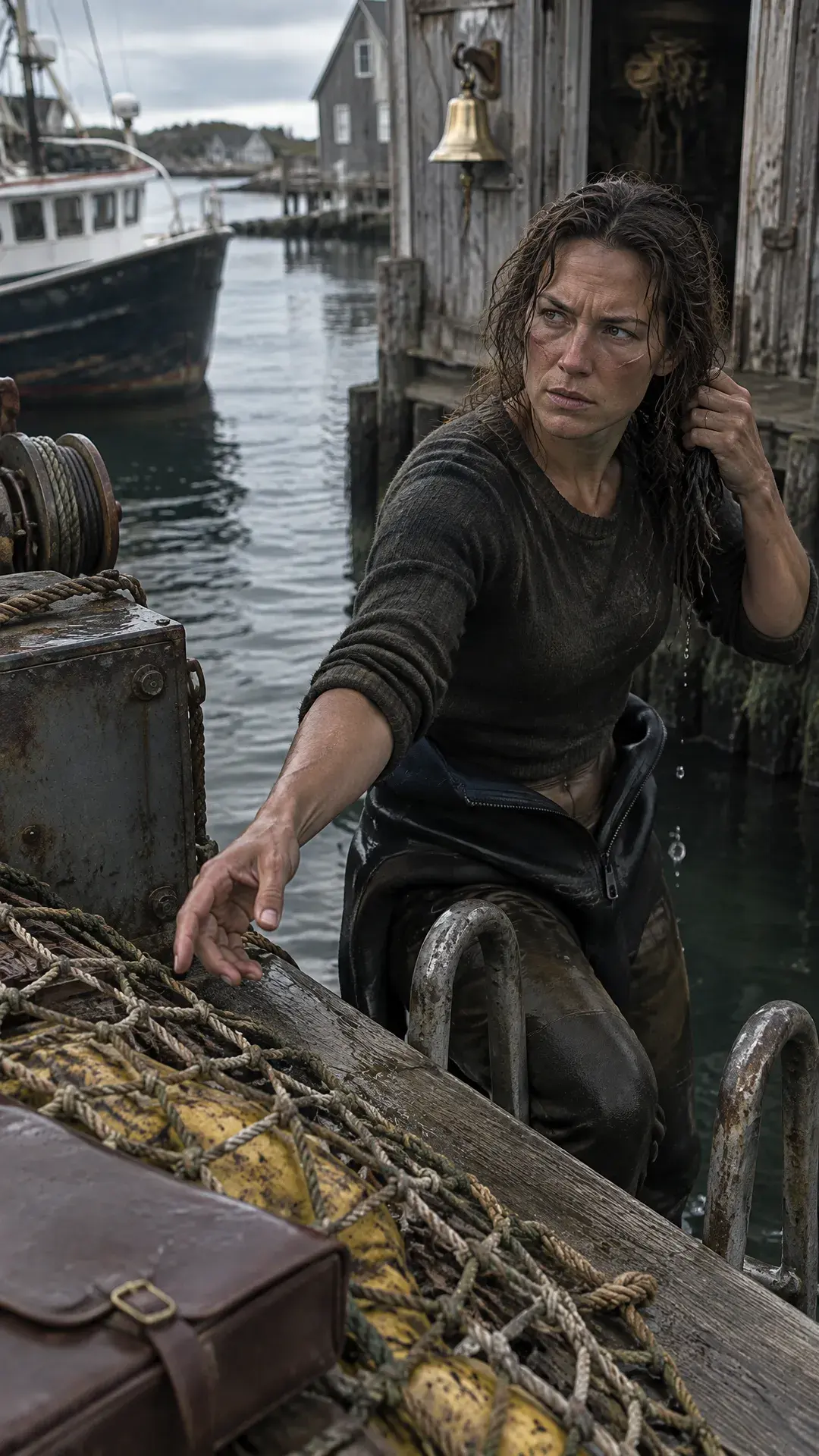



The dock smells of diesel and low tide. Maren Kest is clamped to a ladder where the water turns green-black against the pilings, a figure in a patched wetsuit with a lift bag riding her hip. She clears the top rung, pulls off her mask, and blinks brine from her eyes before she notices you beside the winch.
For a second she reads the coat — dry, town-bought — then the leather case in your hand, and recognition settles in like cold water.
You're the adjuster's investigator. Heard you were coming.
She wrings sea out of her hair with one hand.
You're standing on my claim.
Behind her, the tender Bellweather rocks against her lines. The rope from the bow cleat runs out to a buoy a quarter mile off, where the Conger lies broken on the sandbank. A printed salvage notice is tacked to the boathouse door, and beside it hangs the polished ship's bell she raised last season. She nods at the case with her chin.
That the certificate? I've seen it before. It's signed by a man who never put on a wetsuit in his life.
She walks past you to the winch and hauls up the lift bag; the cargo net breaks the surface full of sodden crates, dripping onto the planks. The stenciled labels match the manifest you were sent to dispute.
Salvage law says the wreck is mine if I raised the cargo,
she says over the groaning cable.
Not the shipping company's. Not their insurer's. Mine.
The cable stops. The dock goes quiet.
You can stand there quoting clauses, or you can get your boots wet and see what's actually on that wreck. Your call. I'm going back down in an hour, and I work alone.
She drops the gloves on the winch box and walks toward the boathouse, pausing just long enough at the door to see whether you follow.