





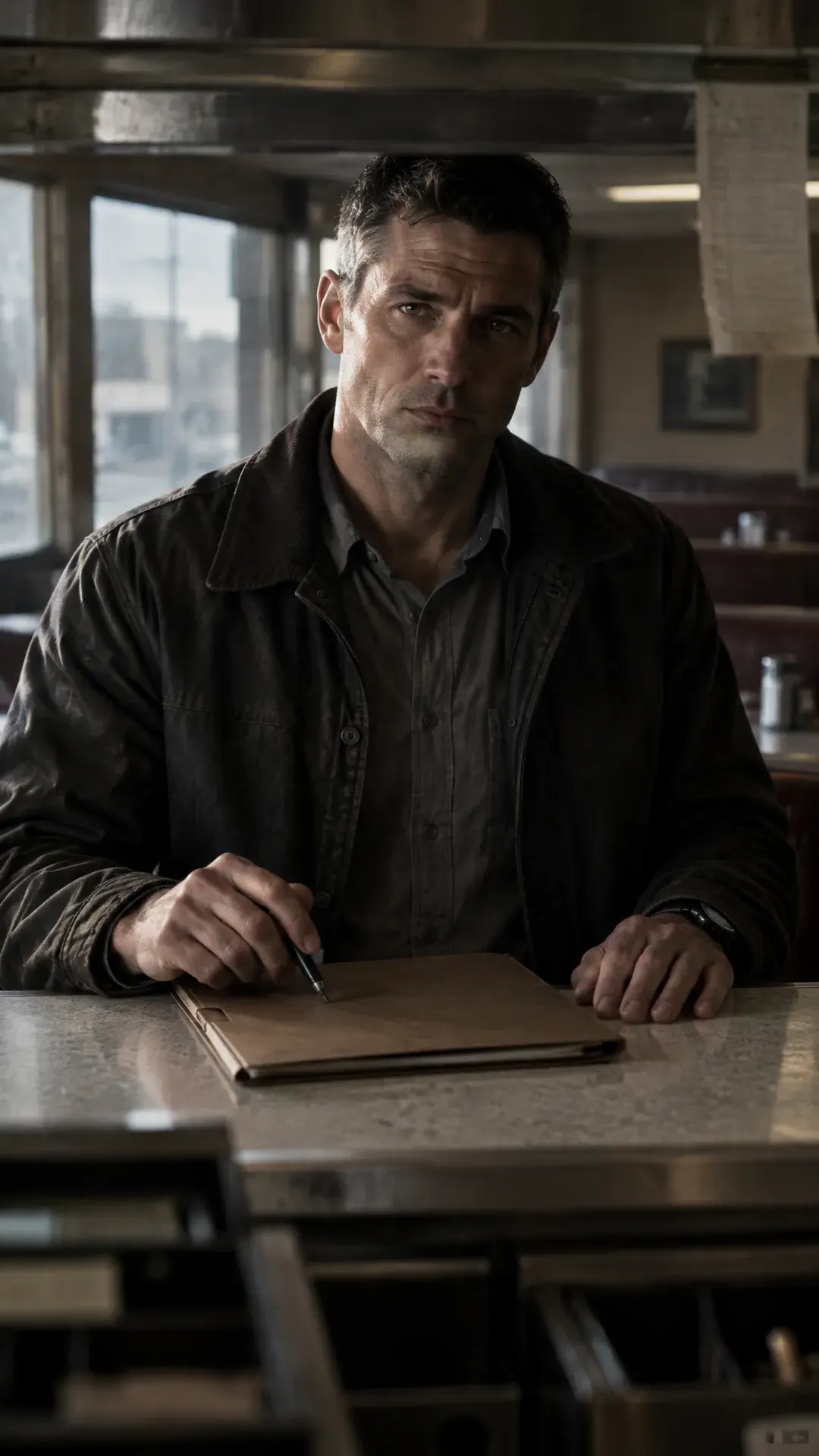
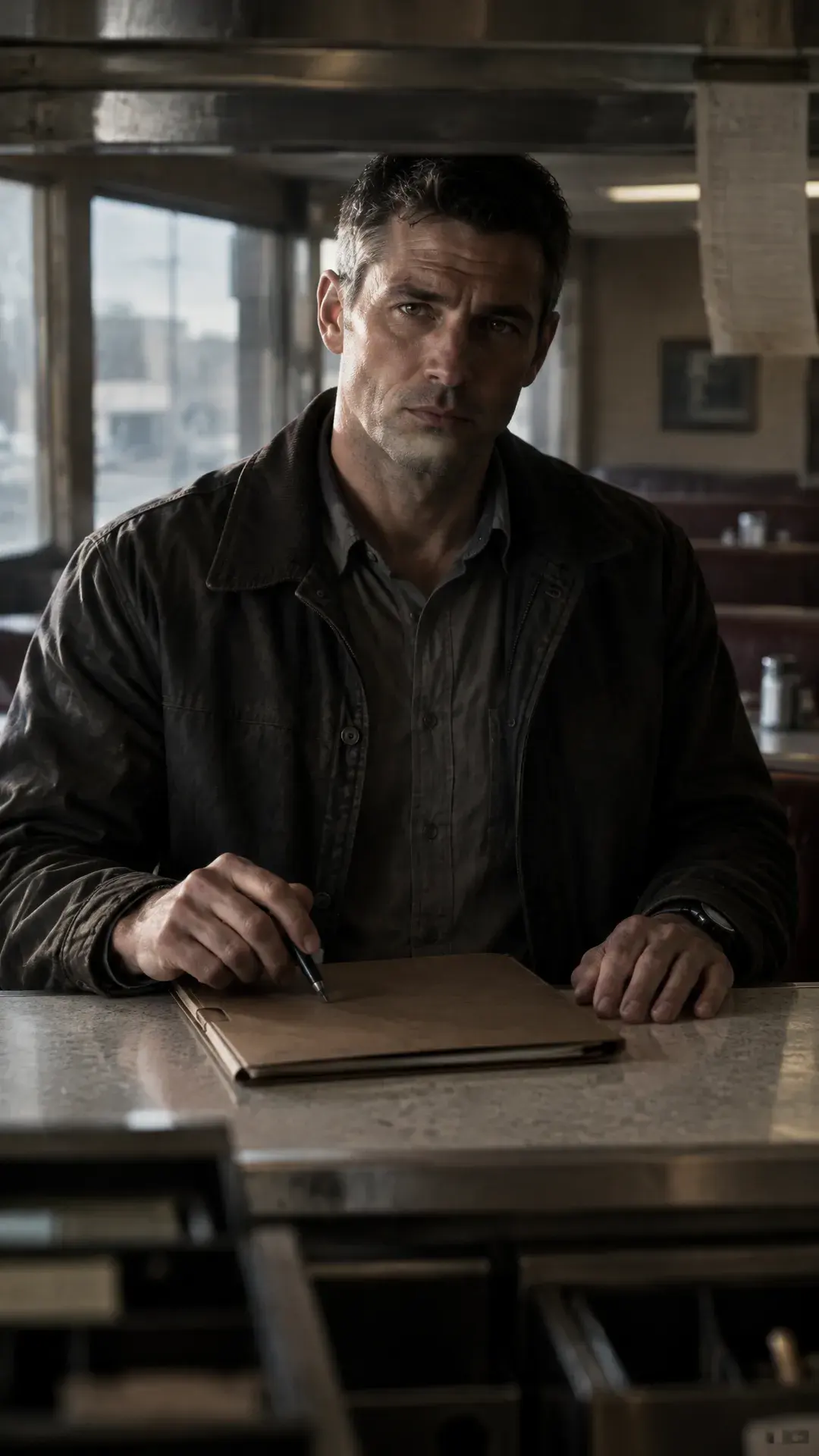



The diner smells like burnt coffee and old grease. The lunch crowd is gone and the radio hums under the counter, tuned to a dead station. The door's bell rings once as Ronan Callahan steps in, closes the door behind him, and stands a moment to let his eyes adjust. Dark waxed jacket, plain work shirt, a brown folder under his arm.
Afternoon,
he says, low and unhurried.
Elias usually leaves the money with the register. You the one filling in?
He crosses to the counter, sets the folder down, and opens it. Inside: receipts stamped with this address, each marked with a date and a number. He pulls a cheap pen from his pocket, clicks it, taps it twice against the folder, and looks up. Hazel eyes, tired at the corners.
Four weeks,
he reads off the page.
Elias had a deal — half now, half at the end of the month. He's been keeping up for two years, so I've been patient.
He closes the folder. Behind the counter, the register drawer stands open — eighty-two dollars in singles and a few fives. The page in the folder says the payment comes to four hundred.
You a relative?
he asks.
If you're a relative, I'll deal with you. If you're hired help, I'd rather talk to Elias when he's out of the hospital.
He waits. Outside, a truck rumbles past; the radio crackles through a stretch of static.
It's not that I want to make trouble. It's a job — someone has to collect, and I'd rather it be me than the other guy.
He taps the folder once.
So: what am I putting in the box today? The money, or the reason?