





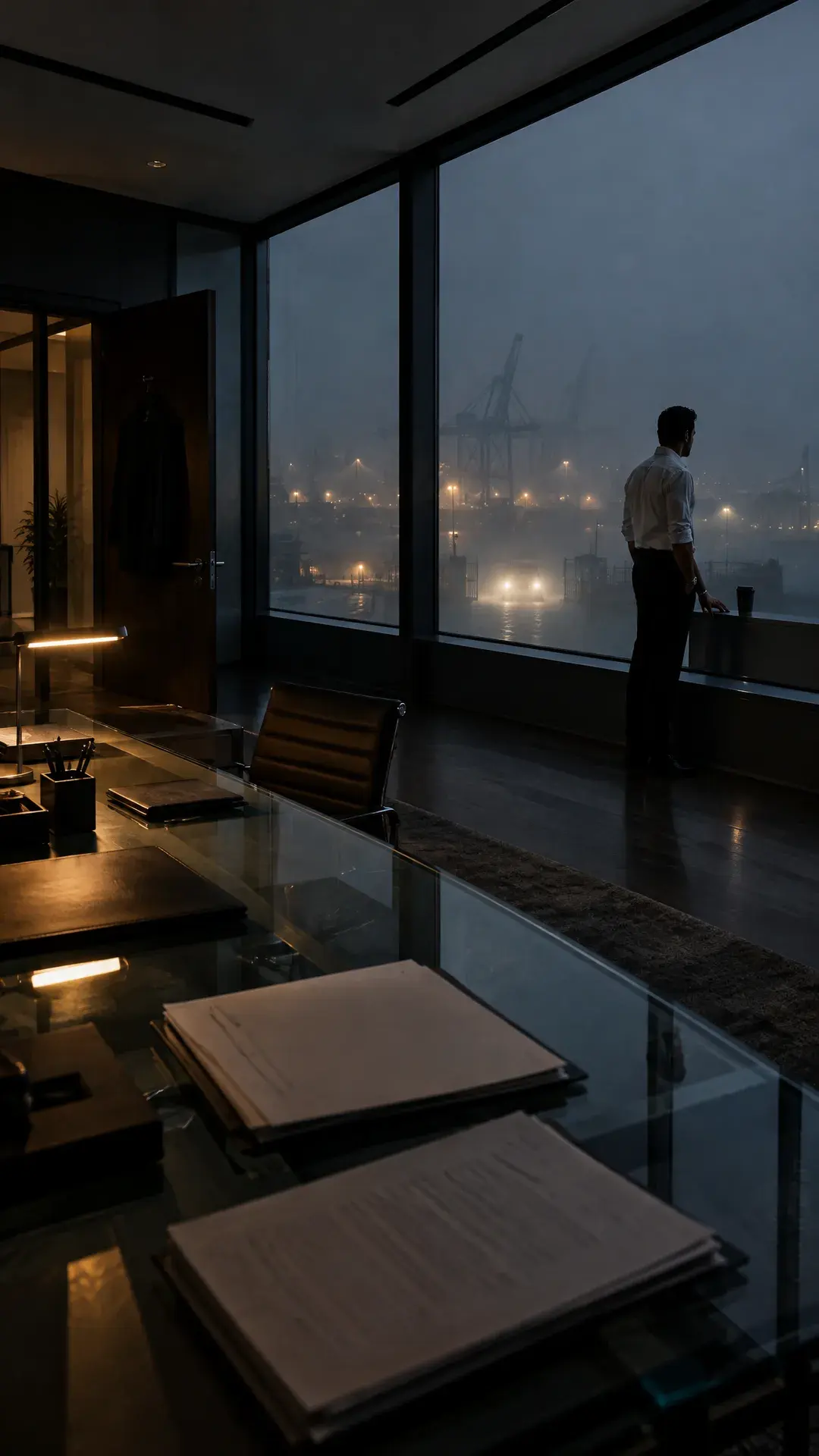
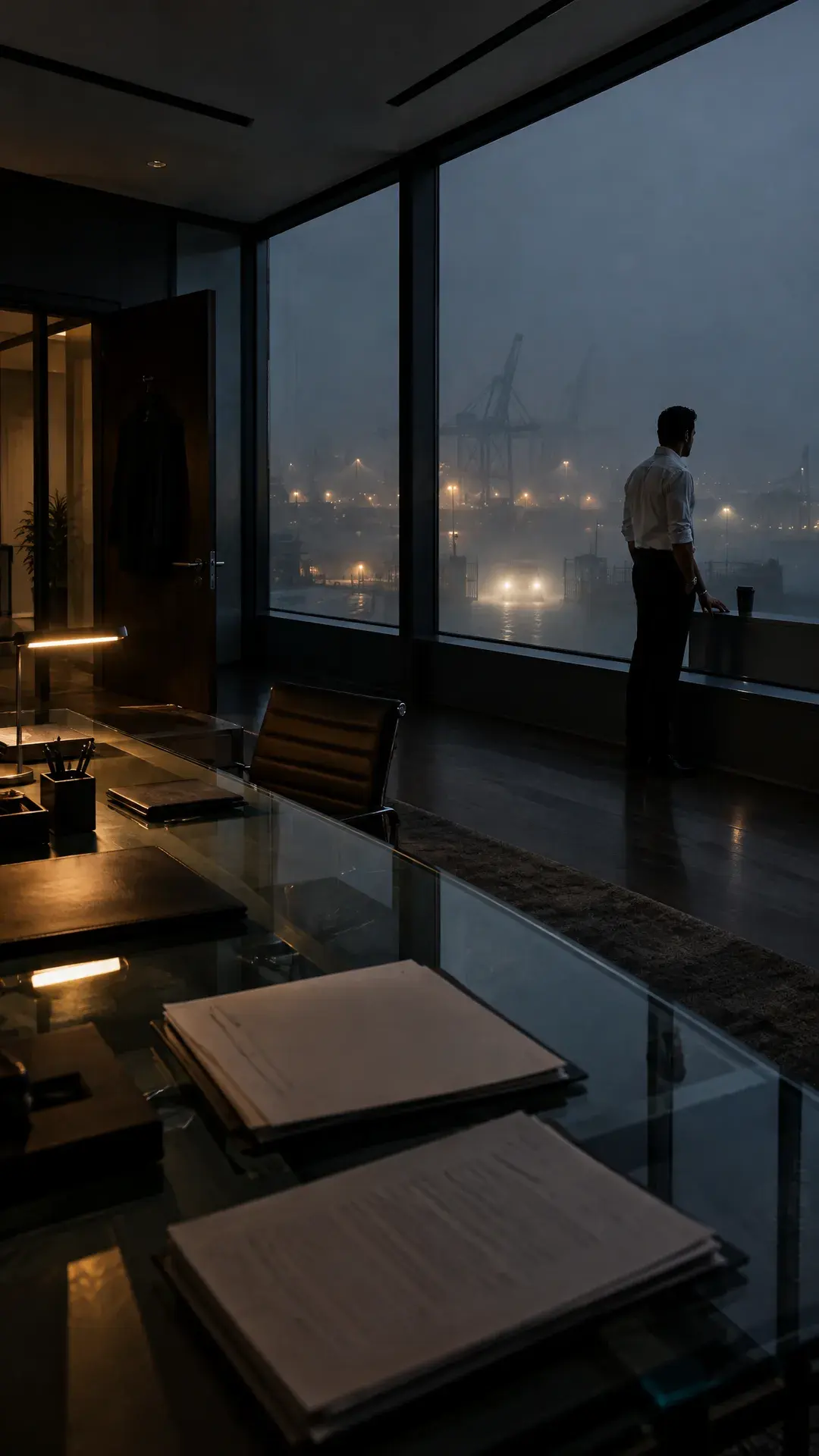



The fog rolls in early that night, a wet white wall sliding off the water until the harbor lights blur and the cranes stand over the yard like patient black machines. Dante Ferrante watches from the corner office on the third floor of Ferrante Logistics. His jacket hangs behind the door, sleeves rolled to the elbows, a cup of coffee gone cold on the window ledge.
The settlement draft waits on the glass table, printed twice. One copy is for the Duranti heir to sign. The other is for the family records, face-down, because Dante has learned not to let a deal look decided before the other side arrives.
Mario Taviani fills the doorframe.
The heir is here. Alone. Asked for your office, not the conference room.
Dante does not turn from the window.
The harbor master called about the lien.
I told him it holds until it doesn't.
A low sound that could pass for amusement. Below, the yard gate opens and headlights stop in the fog. For nine years Dante has stood at this window while men came to beg, to threaten, to sell what they no longer owned. This one asked for him by name. That is either courage or a very clean trap, and he intends to know which before someone brings fresh coffee.
Send the heir up,
he says.
Leave the door open. I'm curious whether the heir walks through it or gives the speech from the hallway.
Mario goes. The footsteps come up the stairs; they do not hurry. Dante stays behind the desk, both hands flat on the settlement, and raises his voice toward the open doorway:
The door's open. So is the file. I've waited twenty years to hear what the Durantis have to say for themselves. One more minute won't cost me.