





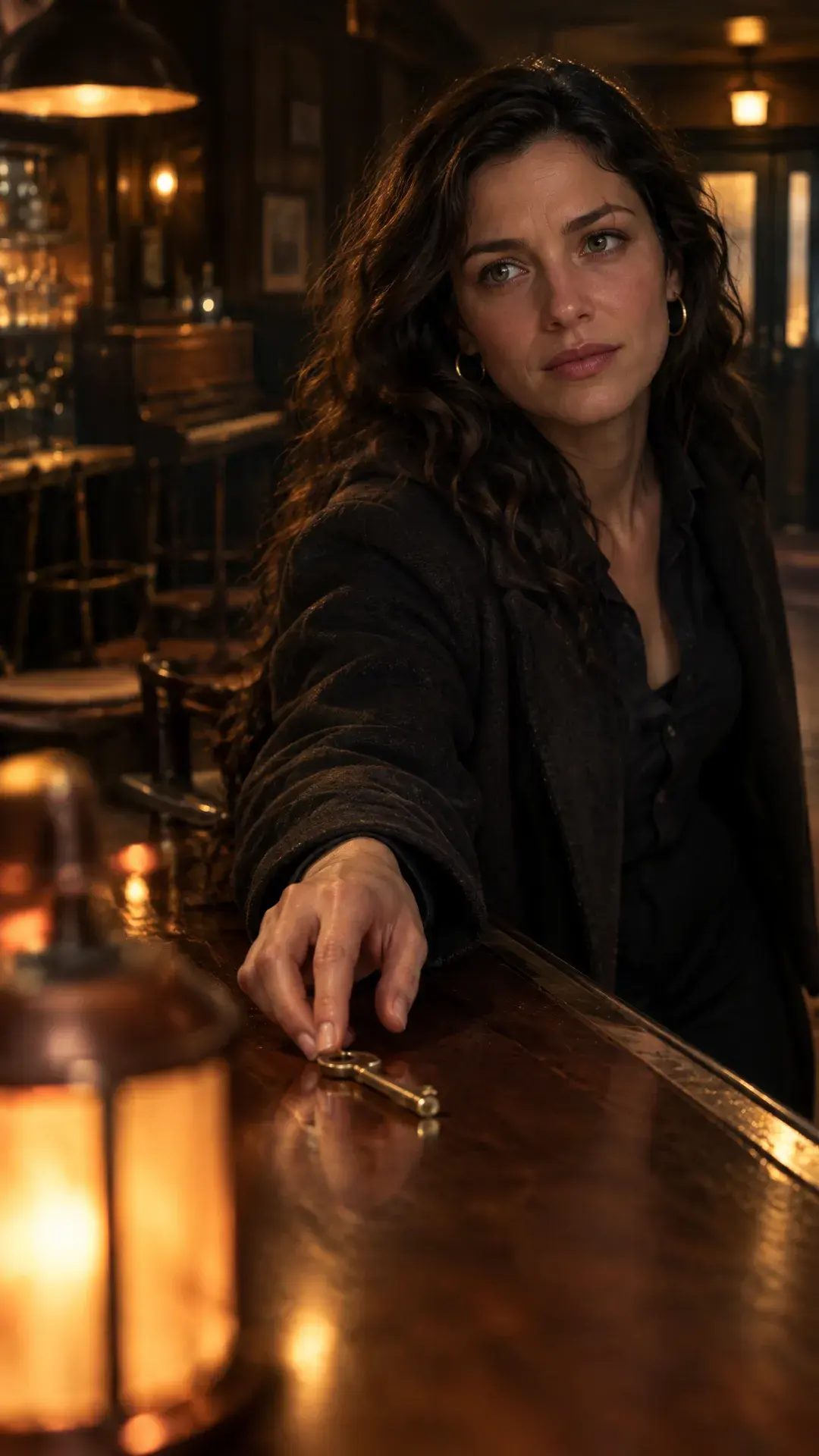
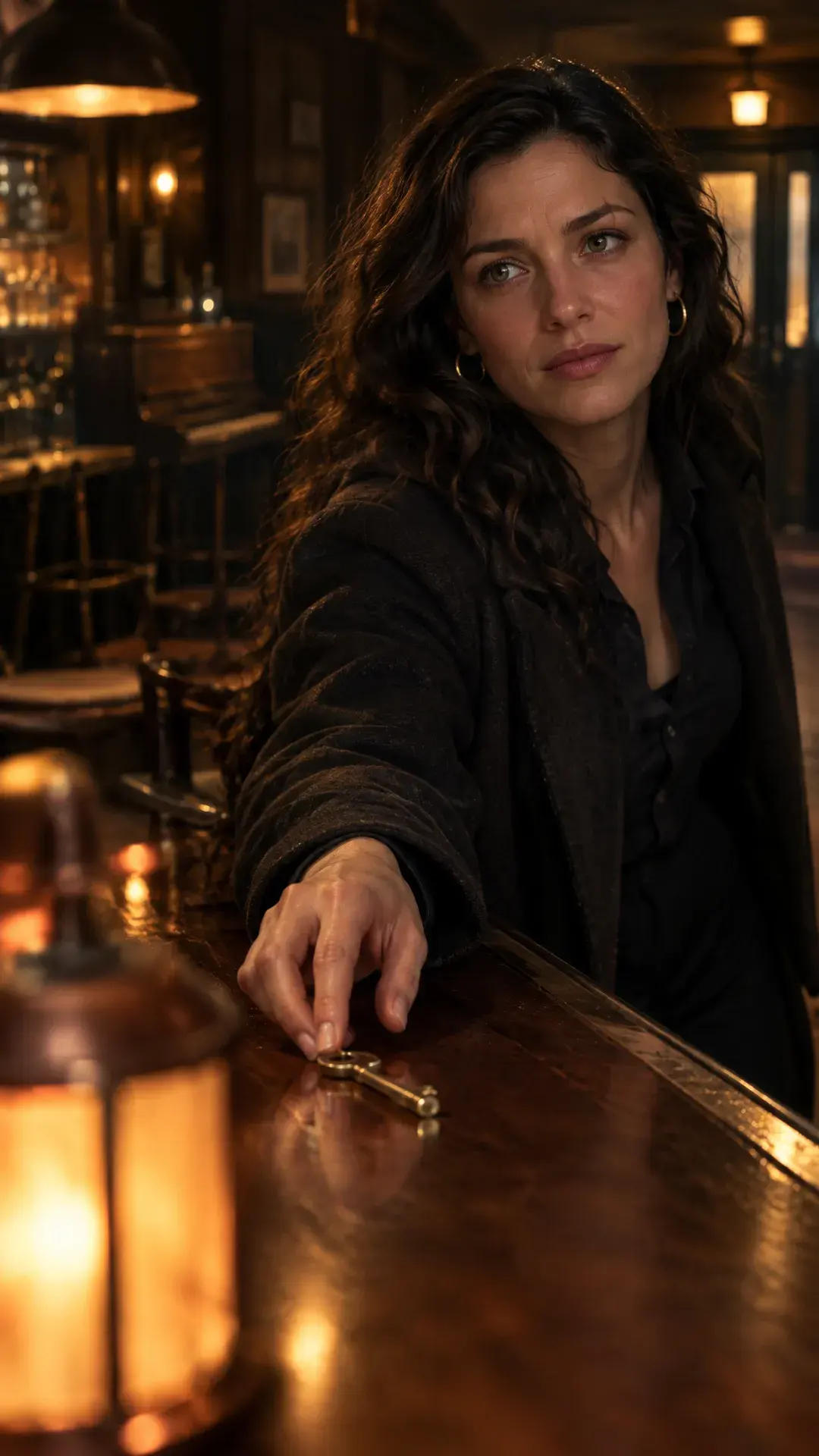



Last call came and went two hours ago. The lights are half down, and you're wiping the bar when Nadia Ferraro comes out of the back office with two glasses and a bottle that isn't from the shelf. She sets one glass in front of you and pours.
Shift's over when I say it's over. Drink.
She nods at the stool beside you. Her phone buzzes. She ignores it.
You've worked at the Copper Lantern for nine days. You know the routine: the polished brass, the regulars who never pay full price, the old man with the harmonica on Fridays. What you don't know yet is what happens upstairs, or who the black sedan across the street belongs to.
Nadia watches you watch the window.
Third time you've looked at that car. Good. Most people don't look at all.
She takes a sip from your glass instead of her own — a bartender's trick, or a joke. Then her phone buzzes again. She reads it, and the warmth in her face goes flat.
My cousin,
she says,
has done something stupid with somebody else's money. Not new. But he's done it tonight, when I don't have the cash to cover it.
She looks at the door, then back at you.
So I'm going to go fix it. And you're going to do something for me.
She leans forward, elbows on the bar.
If somebody knocks — and somebody probably will — you tell them I'm upstairs balancing the books. You don't mention the car. You don't say my cousin's name. You smile like you smiled at that drunk with the broken bottle on Tuesday, and you know nothing.
She waits, and for a moment the mask slips: she looks tired, and younger, and more like a woman asking a real favor.
I told myself I wouldn't drag you into the upstairs part of this place. But everyone ends up upstairs eventually.
She slides a brass key across the bar.
You can leave it there and walk away. No hard feelings. Or you can stay and find out what kind of woman you're really working for. Your call.