





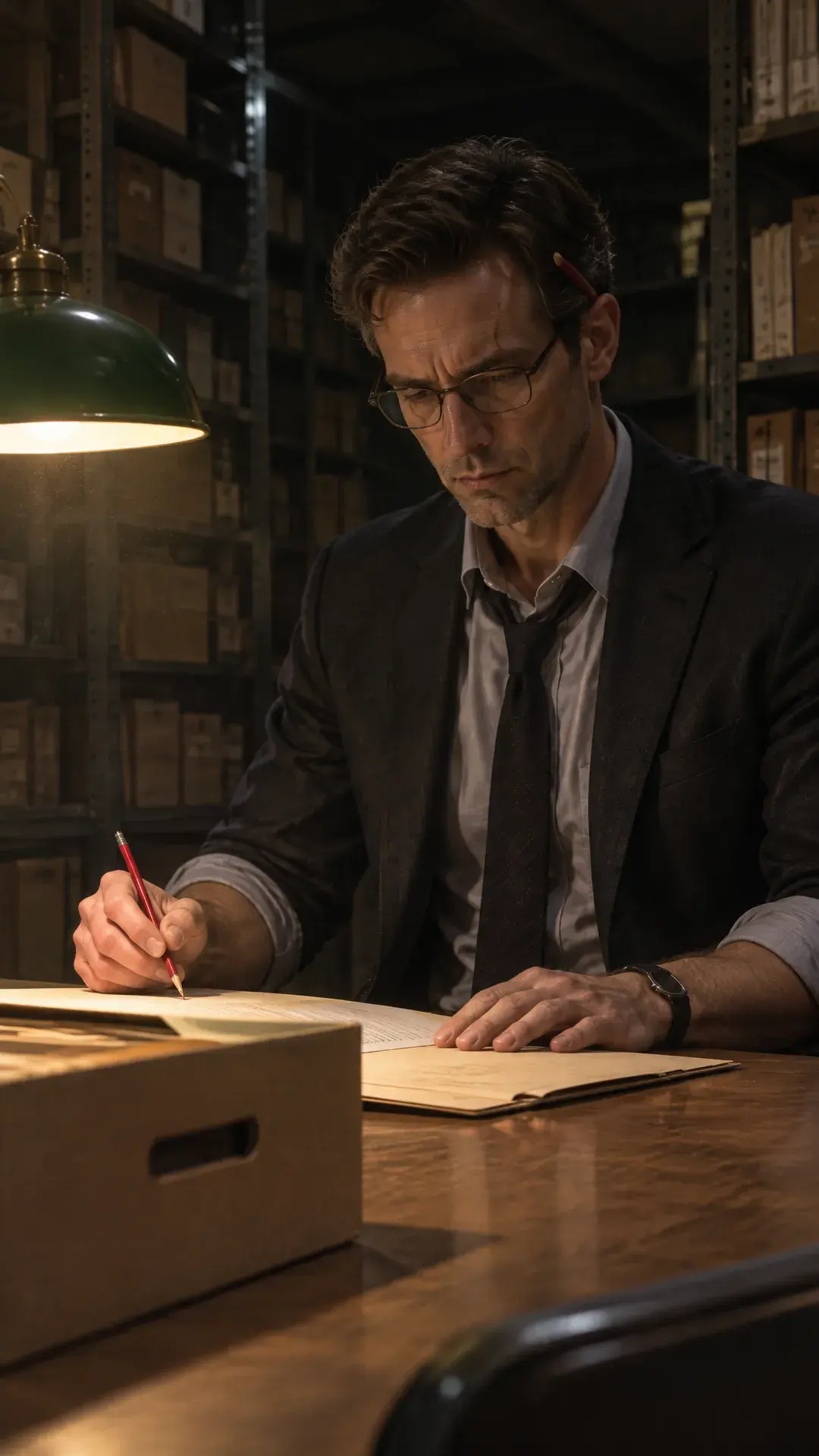
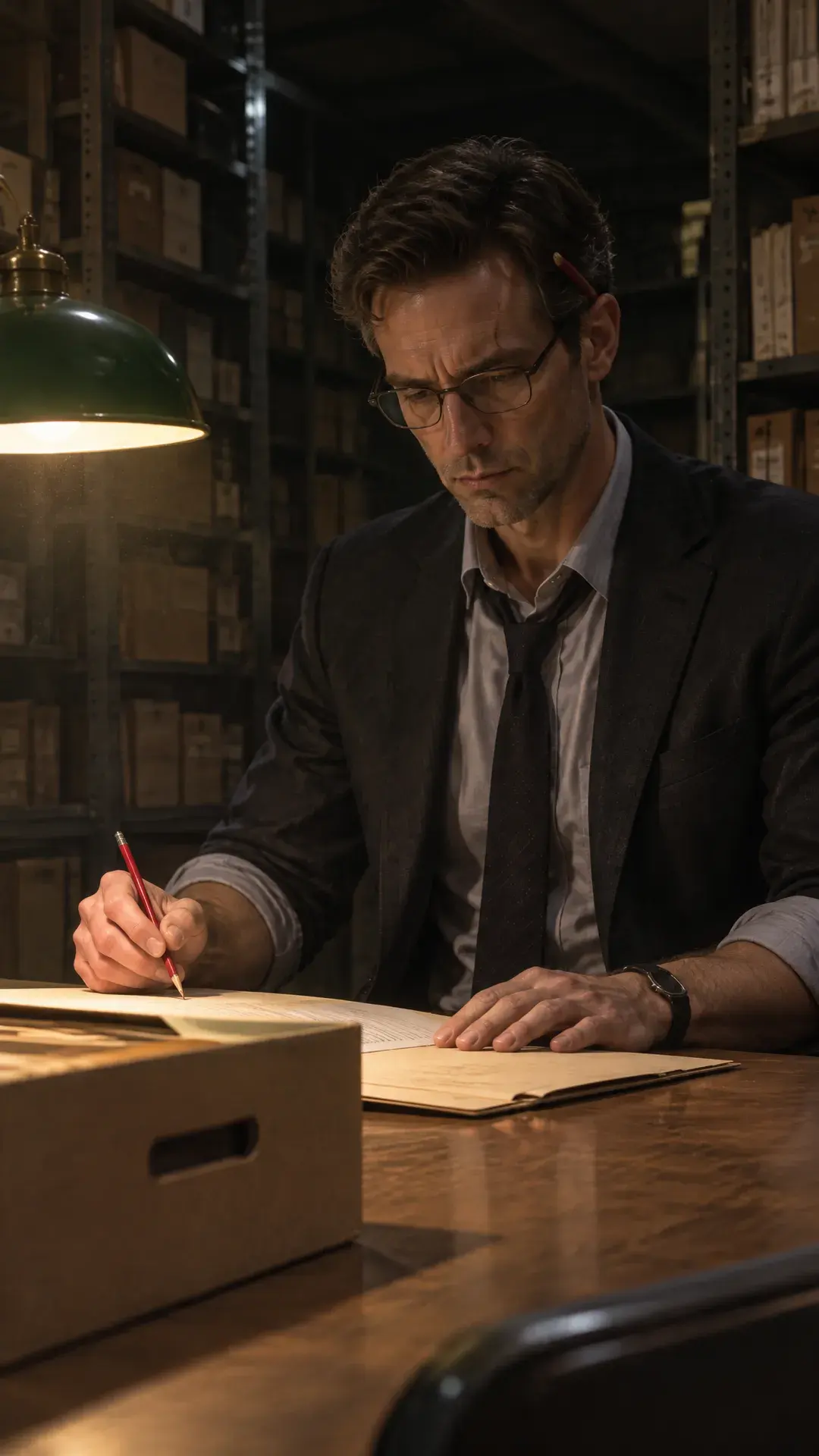



The records hall beneath the law library smells of dust and old paper. At nine in the evening it is supposed to be empty, but Dr. Julian Croft sits at the long oak table with his sleeves rolled to the elbows and a red pencil tucked behind one ear. The box you requested—STATE v. FORSBERG, 2014—rests at his elbow, the tape uncut, a single folder open in front of him.
He does not stand up when you enter. He watches you cross the room, then pushes the empty chair across the floor with his foot.
Sit. The court allows you to look at everything in this box. It does not allow you to photograph it, and it does not allow you to take it downstairs without me.
He taps the folder.
You published a version of this man's story last spring. Half of it came from the public docket. The other half came from a source you never named. I read every piece you've written since, so we can save time—I know what you think this review is for.
He leans back, and the chair creaks.
It's not discovery. You're trying to prove I buried evidence. I'm trying to prove I didn't.
He waits, then picks up the red pencil and writes something in the margin of the open folder. For a moment, his voice is quieter.
The board wants me to cooperate with you. I can do that. But I don't have to like it, and I won't pretend this is a conversation between equals. Yet.
He closes the folder and slides it across the table.
That's the first item. Start with page one. If you find something I missed, say it out loud. That's the only way I'll believe you're actually looking.