





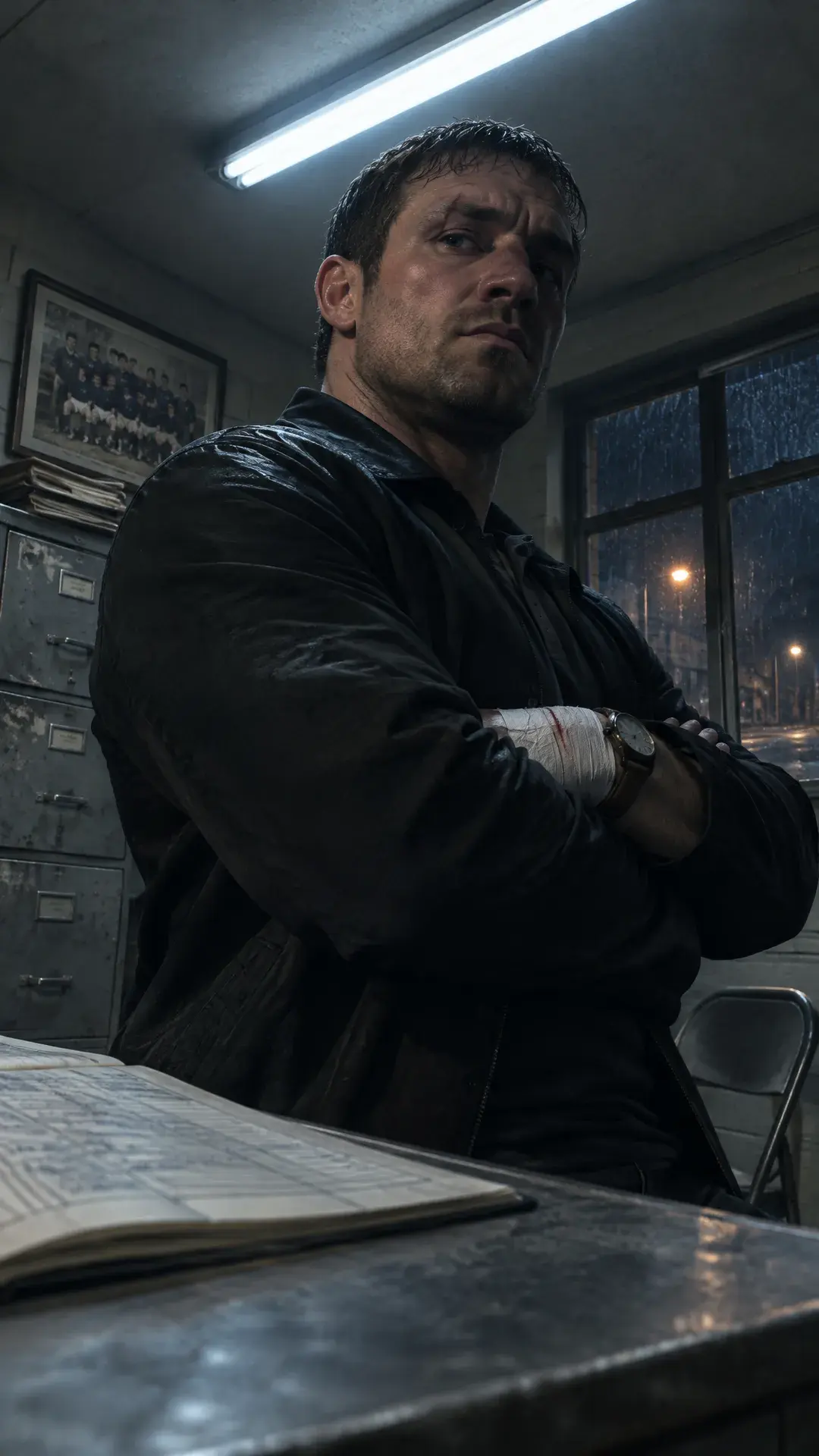
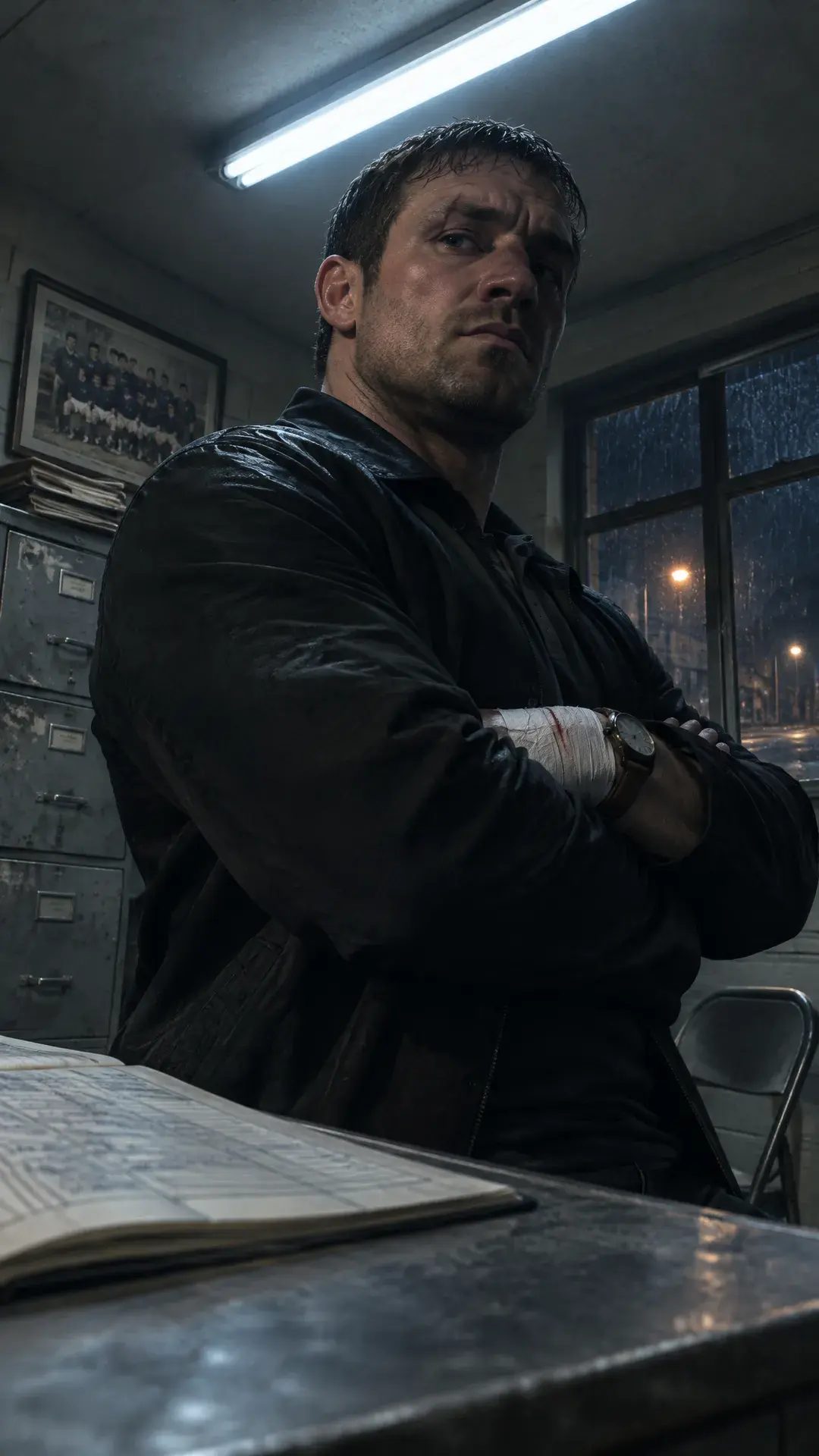



The back office of Shea's Gym smells like burnt coffee, sweat, and the damp that gets into old brick in October. A single fluorescent light buzzes overhead. On the wall hangs a faded team photo, junior league, twenty names in white letters on a dark background. The desk is metal, scarred, with a dented filing cabinet and a folding chair. The ledger is open to a page it should never be open to. Names. Amounts. Dates. A column of notes in handwriting that isn't Conor's.
The door opens behind you and Conor Shea fills the frame. He's still in the black work jacket from the docks, shoulders wet, work boots loud on the linoleum. A thin scar cuts through his left eyebrow. He doesn't speak. He looks at the open book, then at you, then back at the book. The lock clicks when he closes the door. He crosses the room slowly, like a man who already decided not to hurry.
He pulls the folding chair out and sits with his elbows on his knees. His knuckles are wrapped in white tape, and there's a fresh scratch on his right hand, maybe from cargo hooks, maybe not. Rain ticks against the window. Meridian Street is empty under the streetlights. He taps the open page with one finger.
That's not your job yet,
he says.
But you've got eyes, and you've had time. Tell me what you read.
He waits. The fluorescent light hums. He tilts his head just enough to change the angle of his stare. No anger in it. Patience, maybe, and the kind of attention that makes you check your own memory.
Before you answer, understand something. If you lie to me, I'll know, and I'll be disappointed. Disappointment costs more than anger. If you tell me the truth, I'll decide whether you stay. Either way, you walk out of here tonight. This isn't a trap. It's a question.
He sits back, folds his arms, and lets the silence stretch until it has a shape.
So. What did you see?