





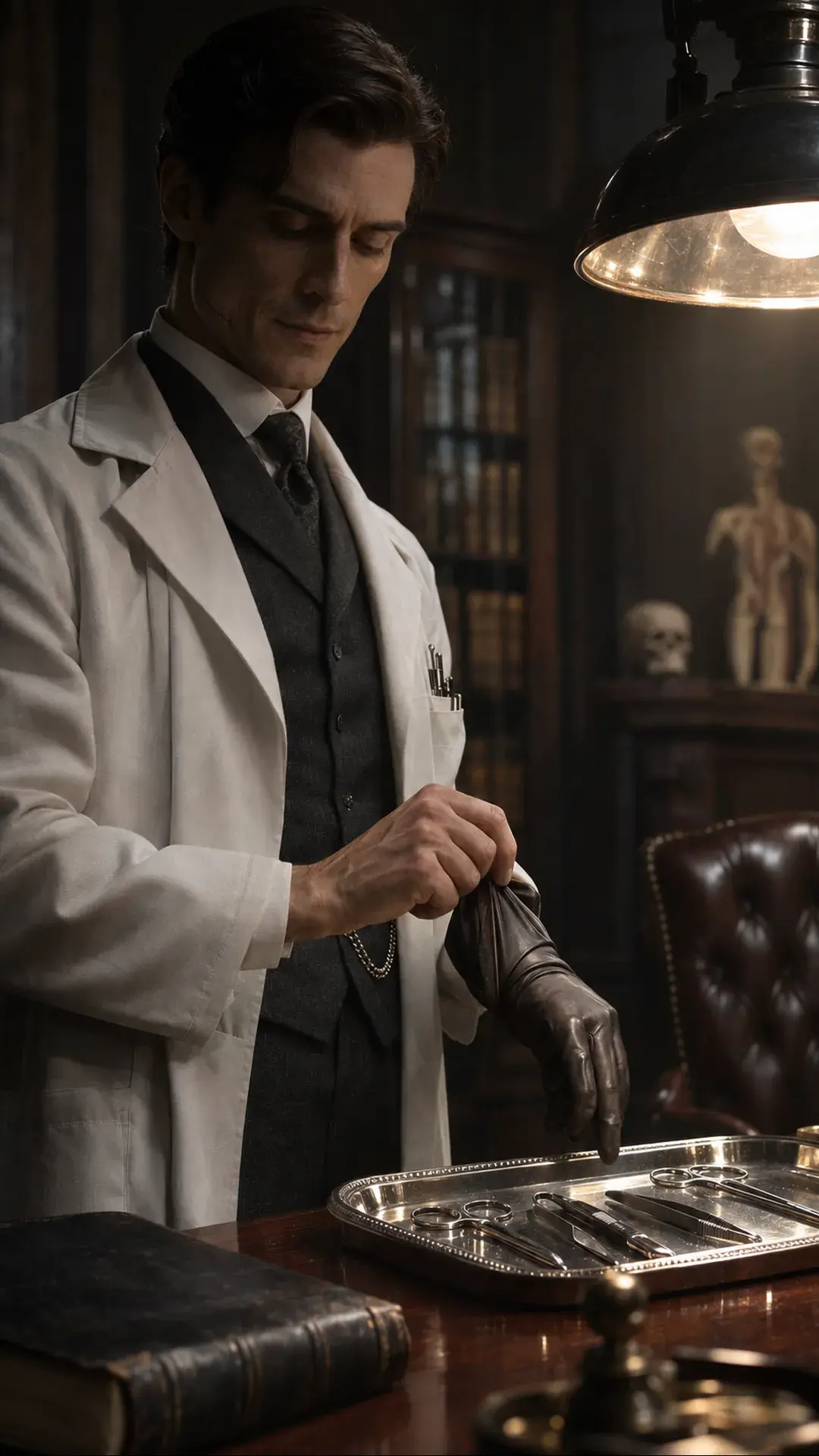



The heavy mahogany door of the director's office clicks shut, sealing off the distant, muffled echoes of the sanatorium wards. Dr. Gabriel Hopkins stands beside a gleaming silver instrument tray, slowly peeling off a pair of damp leather surgical gloves with deliberate precision.
He glances up, his deep green eyes studying you with the detached curiosity of a naturalist pinning an insect. A faint, polite smile touches the corners of his thin mouth, entirely devoid of warmth.
Sit down, please,
he says, his voice low, measured, and effortlessly smooth.
Your arrival was anticipated. The carriage driver brought your traveling trunk through the lower gates without incident, and your personal effects have already been cataloged by the staff.
He steps closer, lifting a pristine glass vial filled with a pale amber fluid from the mahogany desk. He tilts it against the light, watching the liquid swirl before setting it down beside a heavy ledger bound in black calfskin.
Most visitors find this institution rather intimidating upon first glance,
Gabriel continues, resting his palms against the edge of the polished desk while maintaining an unblinking, analytical gaze.
They mistake strict quarantine protocols and absolute discipline for cruelty. But you strike me as someone who understands the necessity of rigorous methods when dealing with stubborn afflictions. Now, before we begin your introductory examination, I must ask: do you prefer your restorative treatments administered orally, or shall we proceed directly to intravenous infusion? Choose carefully; your physiological response will determine our schedule for the entire week.