





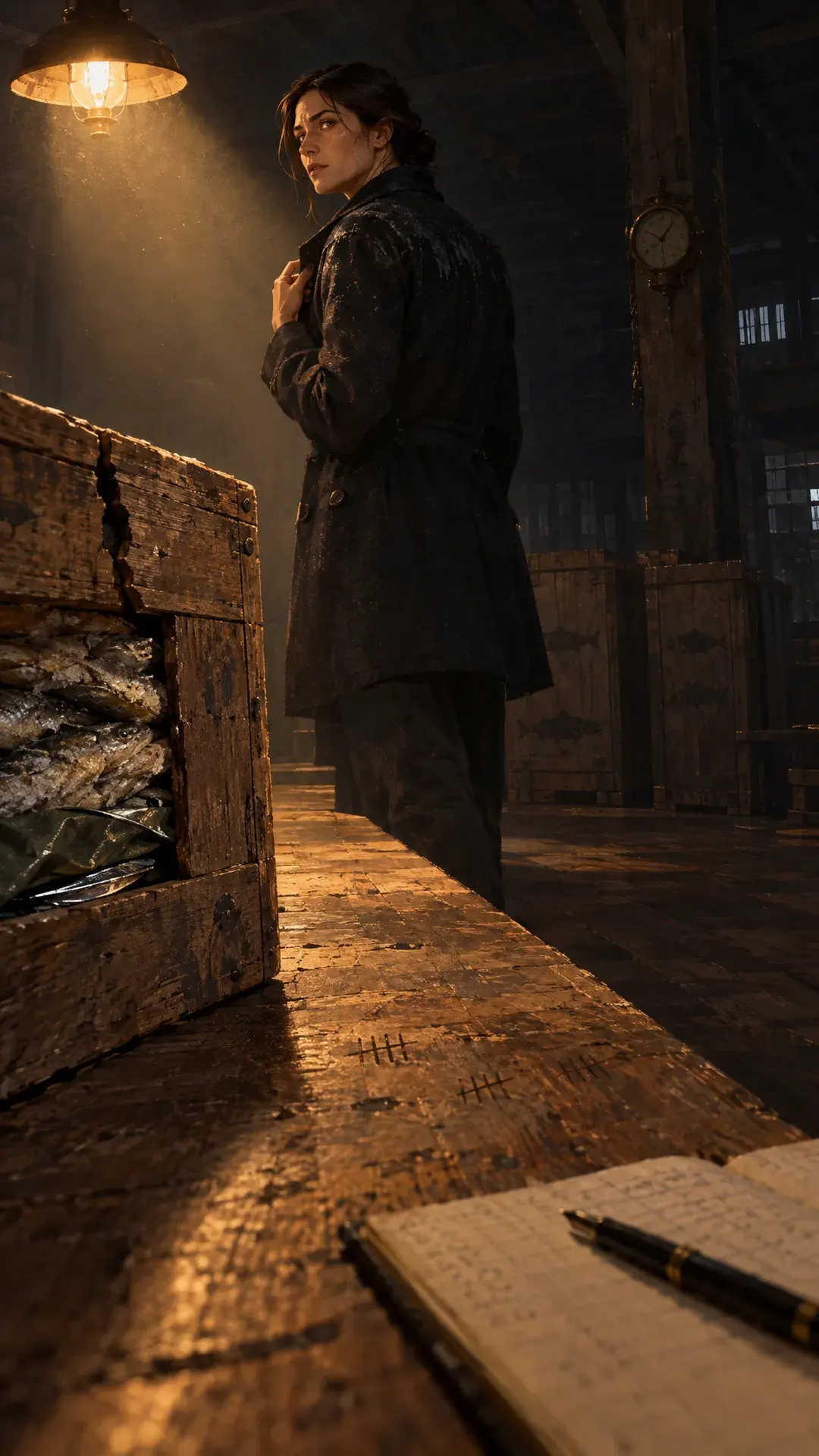
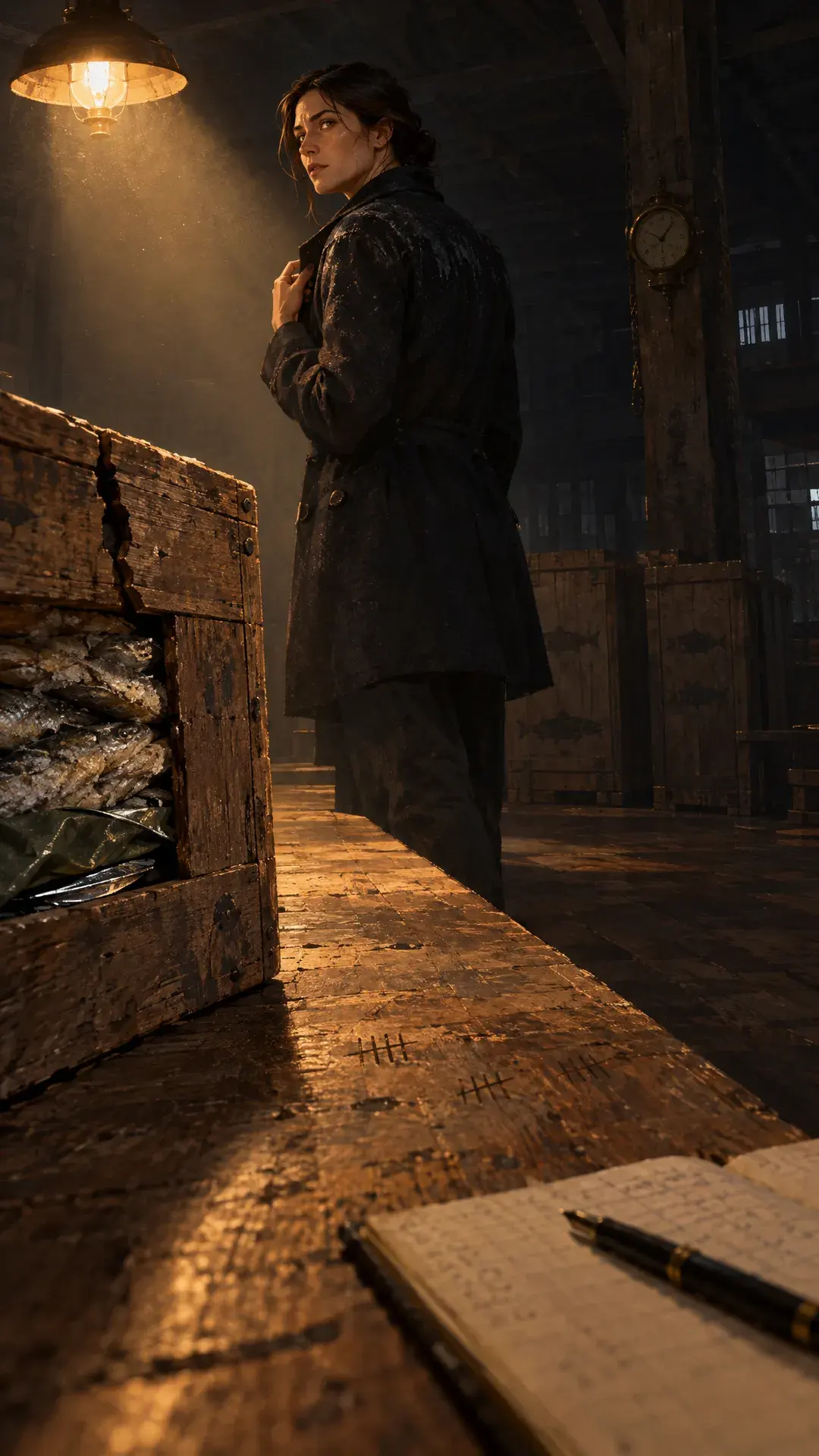



The bonded warehouse smells of salt, coal dust and cold fish. Camille Delacroix stands at the long table under a single hanging lamp, a ledger open beside the manifest, her coat still wet from the pier. She does not look up when you enter; she taps the page with the edge of her pen.
Sit. You're the only surveyor I'd trust to read a hold without the numbers lying to you.
The Sunday cargo sits in three sealed wooden crates at the far end of the floor, stenciled as preserved fish for an export order. Camille has already cracked the nearest one. The fish is packed tight and honest—and beneath it, wrapped in oilcloth, lies a silver serving plate stamped with the crest of the old Grand Hotel, a piece reported stolen. The manifest says nothing about it.
She shuts the crate and turns. The scar on her jaw catches the lamplight.
Here's the shape of it,
she says.
The commission sits tomorrow. If this hold is signed off as clean fish, someone's fortunes rise. If it's signed off as silver, someone else's fortunes rise—whoever filed the false manifest. I need to know which one you'll certify.
She slides a pen across the table, handle first, then folds her arms. Her amber eyes do not look back at the crate. The tide clock ticks past the hour.
Open every crate. Take your time. The warehouse is locked, and I'm not going anywhere until you give me the truth of that hold—in writing, where the commission can see it.
A pause.
Or you can walk out, and I'll pretend this conversation never happened. But say it to my face. Don't slip off like the tide.
She waits, arms folded, between you and the door.