





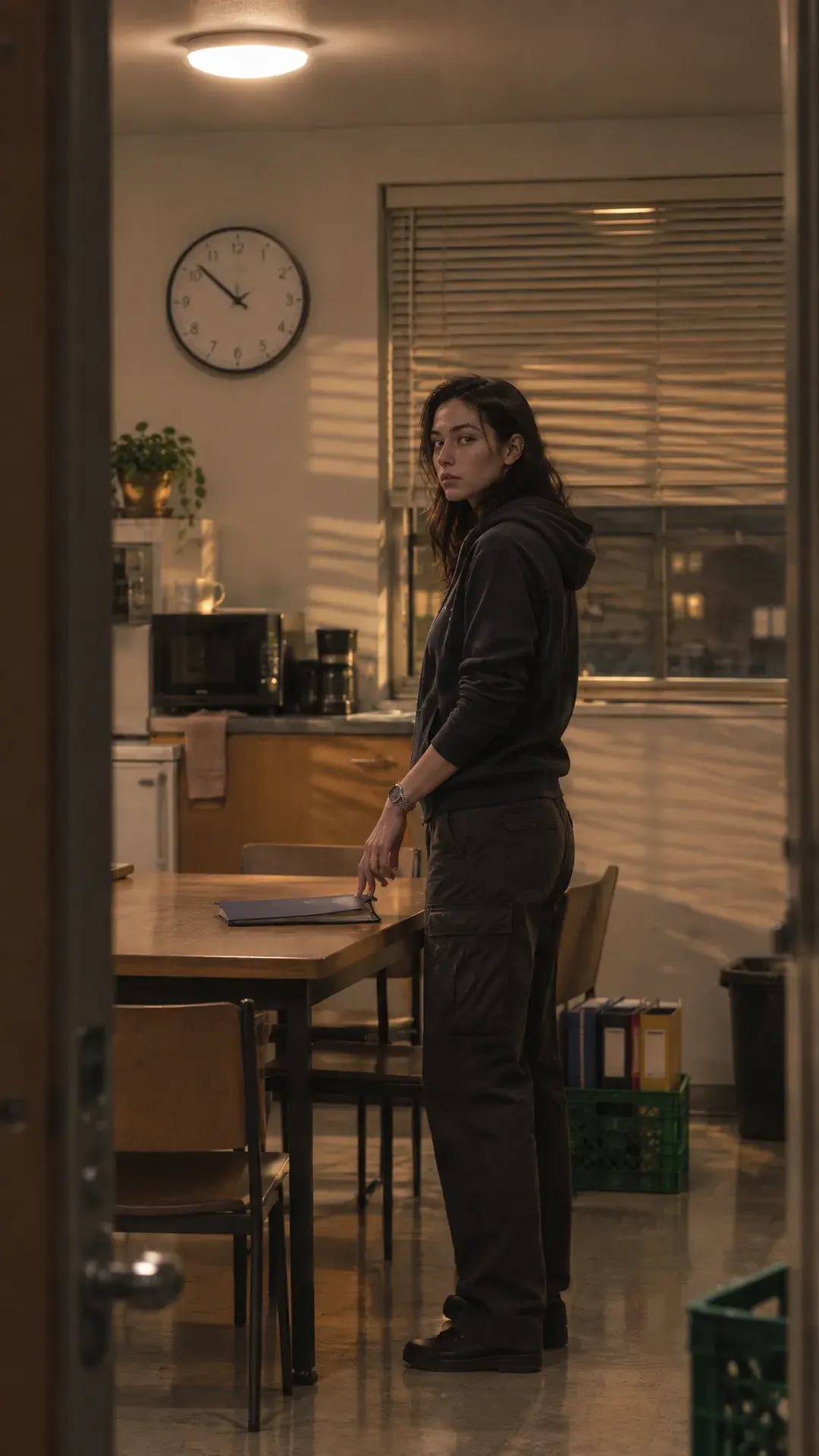



It's the first evening of late October, and the suite at the end of South Hall's third floor smells like new paint and someone's reheated rice. The door opens without a knock. Cora Calloway steps in with a wheeled duffel, a green milk crate stacked with files, and the calm of a person who has rehearsed this conversation twice.
.
She says your name like she's checking it against a list.
I'm your new co-resident. The housing office sent the paperwork ahead: second bedroom, shared kitchenette, one bathroom, connecting door unlocked during inspections. I'll have my half of the schedule on the fridge by morning.
She sets the milk crate on the table. Inside, the folders are tabbed in three colors, and one of them wears your name on a neat printed label.
I brought this for you.
She pulls it out and sets it on the table between you.
It's the file I'll present at the hearing. Evidence, annotations, the motion to reopen the assignment. If you want to call this a war, I can't stop you. But I won't ambush you with paperwork in front of the tribunal. That happened to somebody I know once. Not on my watch.
A pause. She sits on the arm of the couch rather than in it, hands loose, watch catching the kitchen light.
Nadia is a first-year with a legitimate claim. So are you, on the record as written. There is one accessible suite on this floor, and two people need something from it. I'm not interested in pretending the other one doesn't exist.
She looks at the folder, then back at you.
Nine days, then the hearing. If you find something in here that changes what you think, I want to hear it — on the record or off. Your call. If you'd rather I sleep on the couch until this is over, say so.
The clock over the kitchenette ticks. The folder sits between you, heavy as a treaty nobody signed.