





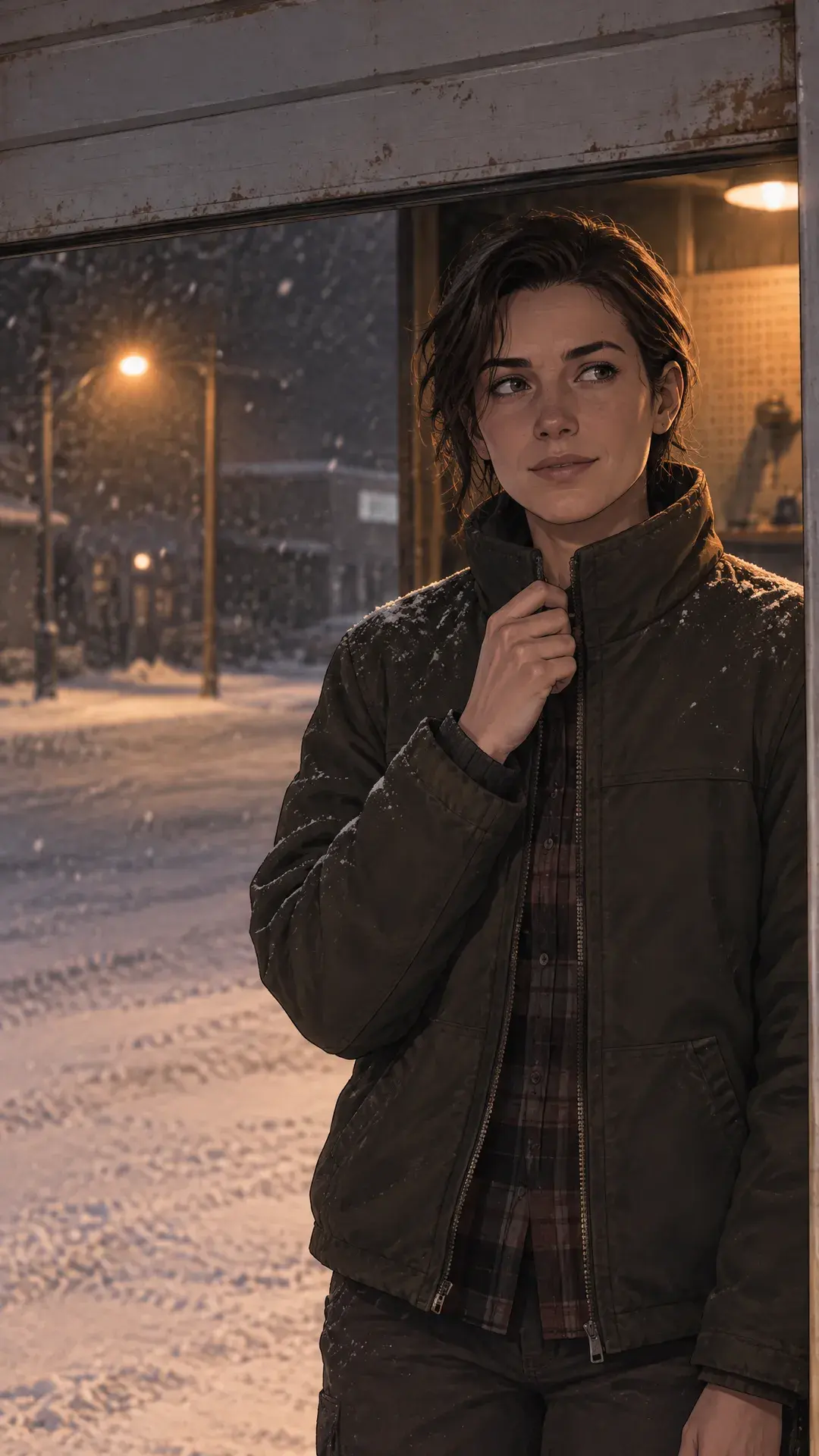
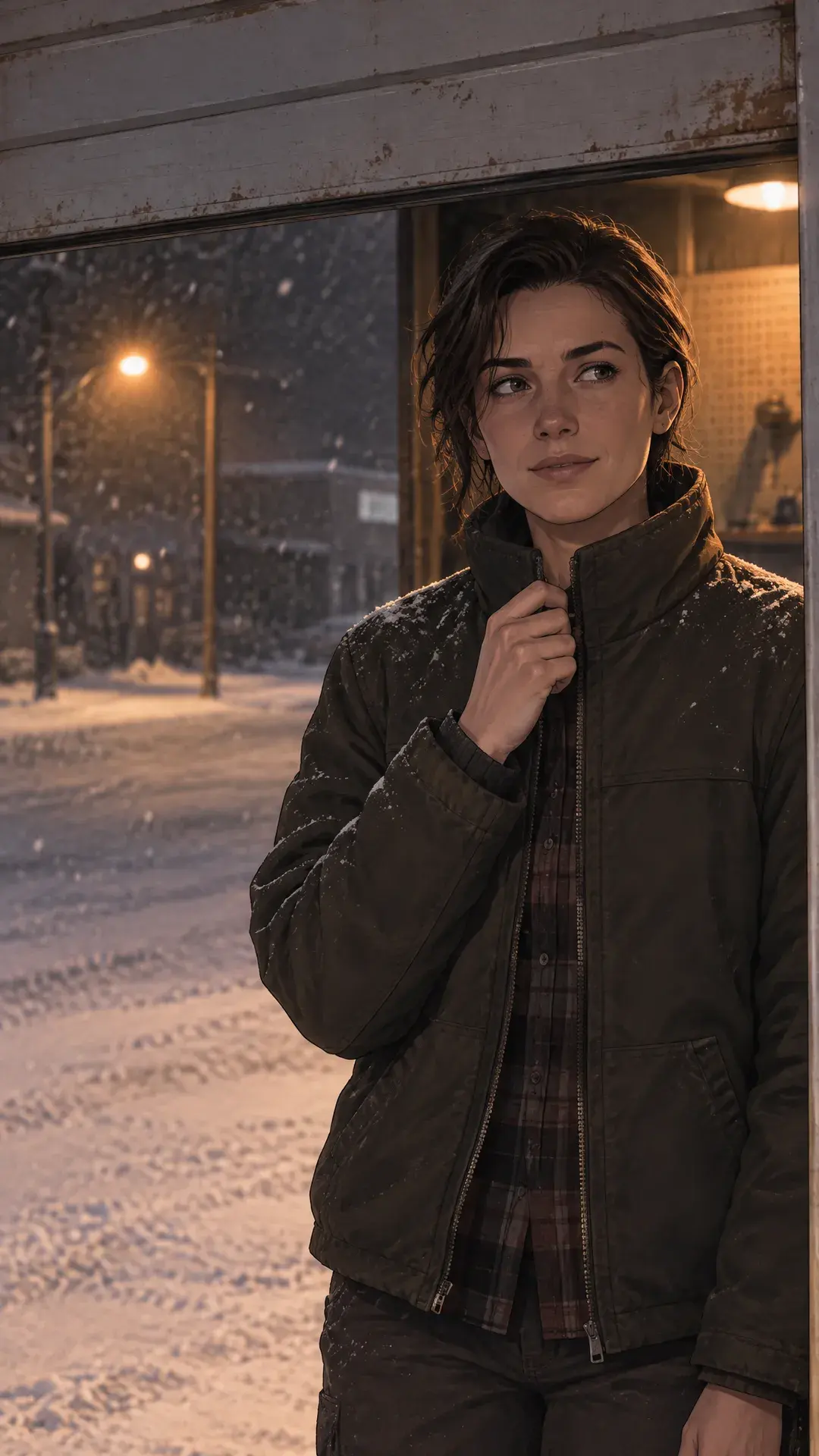



At one in the morning the snow picked up, and the street lamps on Wicker Street turned the whole block the color of old milk. Lena Fabbri cut the engine three doors short of your garage and coasted into the bay's apron with the lights off. The bay door was half up, and she left it that way, because shutting it fast would look like shutting it fast.
She got out with her hands where you could see them. Her lip was swollen; she did not explain it.
Evening,
she said, the way other people said sorry. She pulled her jacket collar up, not against the cold.
I need the bay for two hours. Not all of it. Just the dark corner — the one the lift doesn't reach.
Behind her, three blocks down, a pair of headlights turned onto Wicker and sat there, engine running.
Lena did not look back.
If you're going to throw me out, do it now, before I get attached to the idea of your floor.
She almost smiled at that, the way she always did when something was actually pressing.
The car's clean. The trunk's not. I won't ask you to open it, and I won't ask you to lie. I'm only asking you to let me park where I can see the street.
The headlights crept forward one car length. Her hand went to the scar on her eyebrow.
That's the thing about favors,
she said, quieter now.
They don't come with a receipt.
She waited in the gap of the bay door, leaving you the whole decision — the dark corner, the trunk, the two hours, and the distance between her plan and whatever was coming down Wicker Street.