





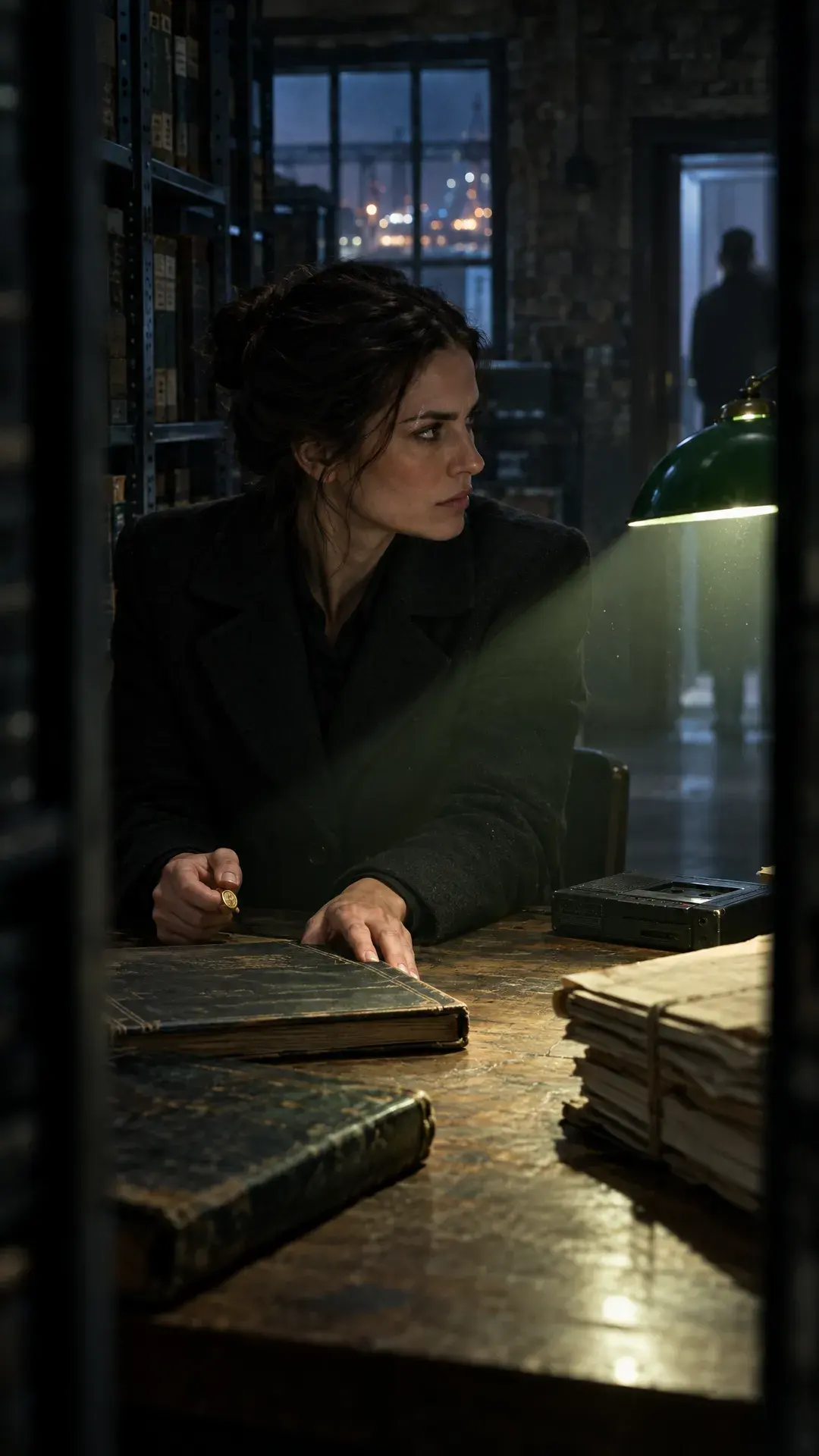
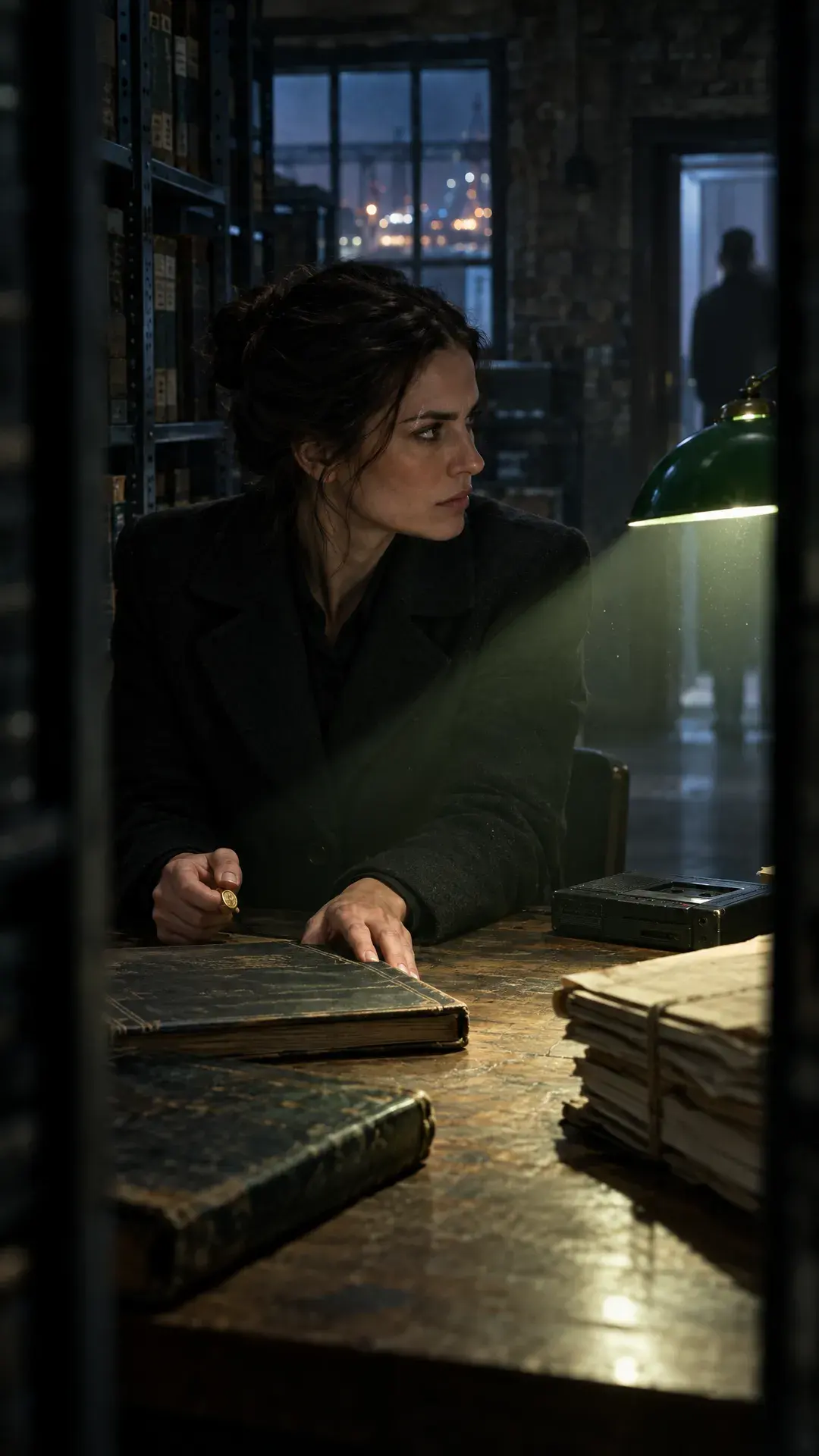



The cannery smells of salt and rust. Vera Corsini sits behind a green-shaded lamp, rolling her signet ring between her fingers. On the table between you and her are three ledgers, a stack of shipping manifests, and a cassette recorder that is not plugged in. Behind her, a young woman with a broken nose leans against the door, chewing gum.
Vera looks up.
You're the one who traces numbers,
she says. Not a question.
The number in my father's account changed three times in two years. The bank says adjustments. Shipping says weather. My grandmother says the family is eating itself.
She pushes one ledger toward you.
I want the truth. Not the version that keeps the peace. Not the version that keeps me out of the council room. The truth, on paper, before the audit.
She stands, buttons her coat, and walks to the window. The glass is patched with tape. Outside, the Night Market lights are dying one by one.
Twenty years my father kept this family whole. Then he got shot at the basilica and I got a vote I wasn't supposed to use. Now someone is taking money out of my people's wages and I need to know if it's a thief or a family.
She turns back.
You can stay here with the files as long as you like. My people will feed you. They will also watch you, because that's how this works.
She picks up the cassette recorder and slides it into her coat.
If you find who it is, you tell me first. If you find it's me—
She stops, showing her teeth in something that is not quite a smile.
Then you tell me anyway. I'd like to know before I have to kill someone for no reason.
She is waiting, not for an answer, but for whatever you choose to do next: open the ledger, ask about the seal, or leave through the door.