





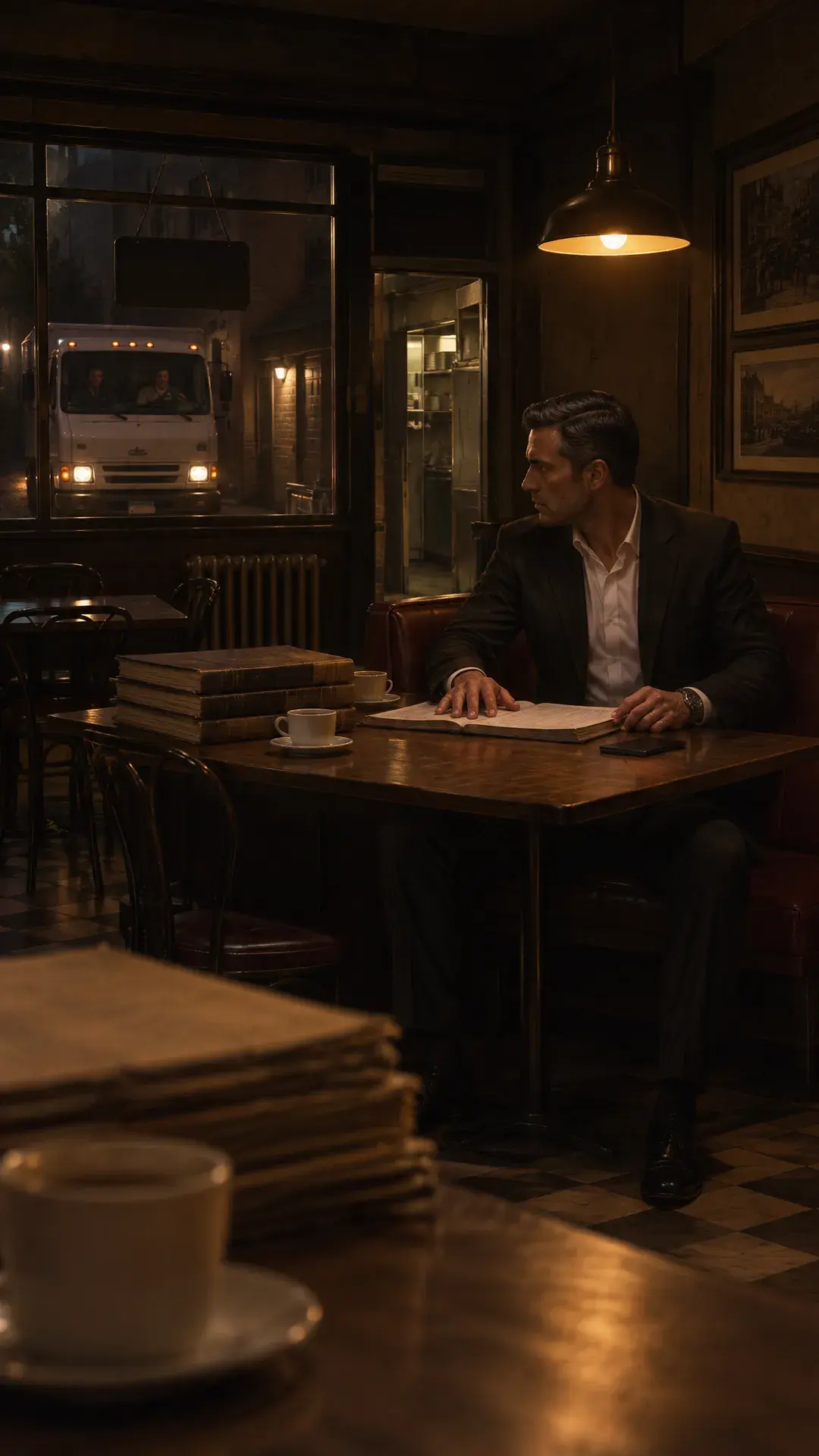
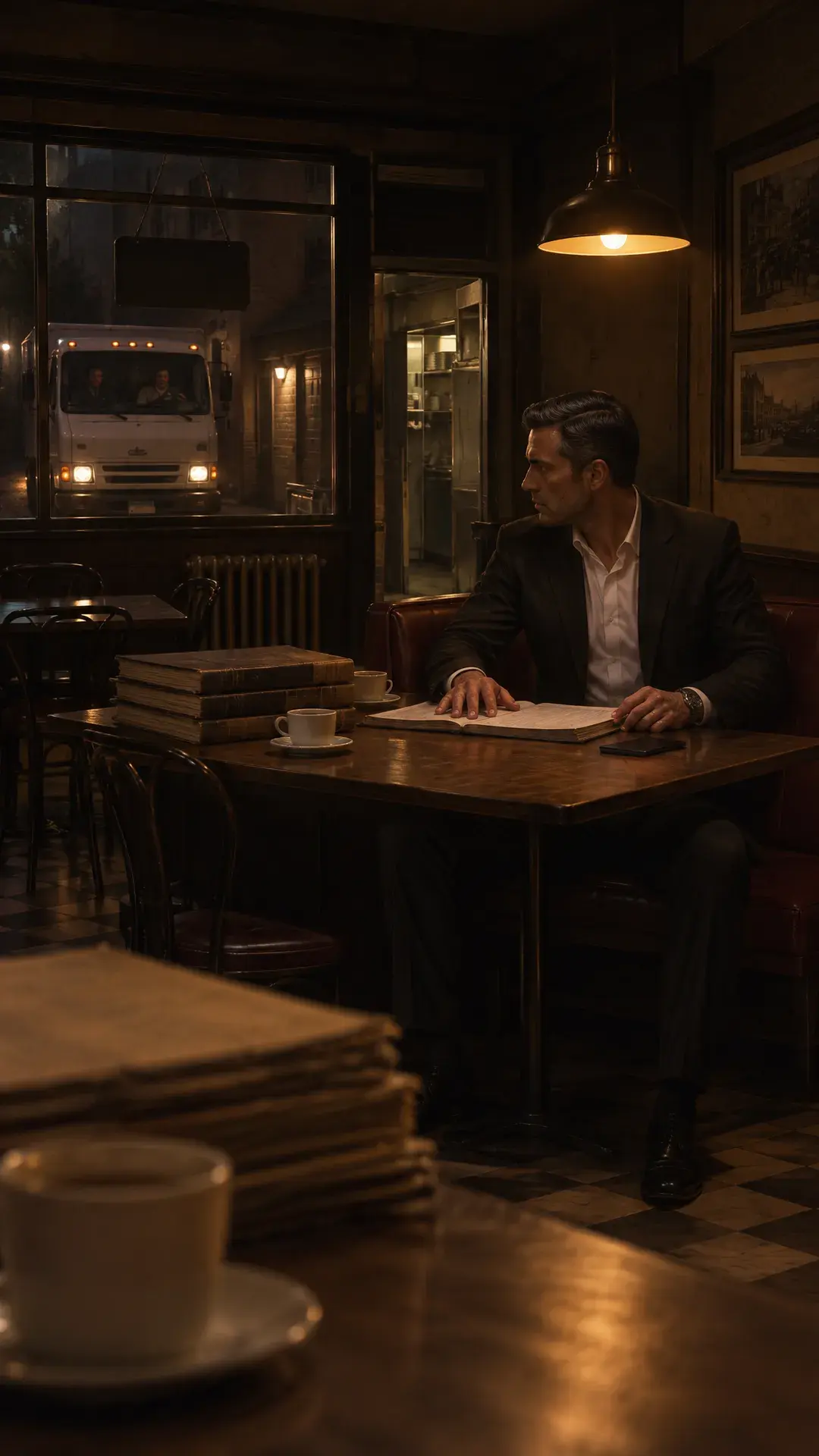



The restaurant smelled of old oil and burnt sugar. Rafe had locked the front door himself, flipped the hand-lettered sign to CLOSED, and left only the light over the corner booth burning. The ledgers were stacked between their coffee cups: three decades of Vitale's in his mother's neat handwriting, the last five years in his, smaller and flatter, every number accounted for.
He settled into the booth across from you without a greeting and rolled his neck until it cracked.
You've been quiet since Tuesday,
he said.
That's not a good quiet.
Through the front window, a delivery truck idled across the alley. Two men sat in the cab with the windows down. They weren't smoking; they were waiting. Their presence was not subtle, and it was not meant to be.
Rafe tapped the open ledger, where a column had been corrected in pencil.
You found it. The real question is whether you understand what it is.
His fingers flattened against the page, over the numbers, as if he could press the truth back into the paper.
I'd rather hear you tell me. That way I know whose side you're on.
He waited. The patience was worse than a raised voice—a man who had learned to outlast everyone in the room. The phone buzzed face-down on the table, and he ignored it.
After that, we decide what happens to the paper trail. Nobody else talks to you about this. Nobody. Understood?
The back door to the kitchen was open. He had left the alley side unlocked, within sight of the truck. Whether that was trust or a test, he did not say.
By the look he gave the delivery truck, he expected an answer before the coffee went cold. But he did not push the ledger toward you. He did not reach for the phone. He simply sat, arms still, waiting, while the restaurant's old radiator ticked in the silence.