





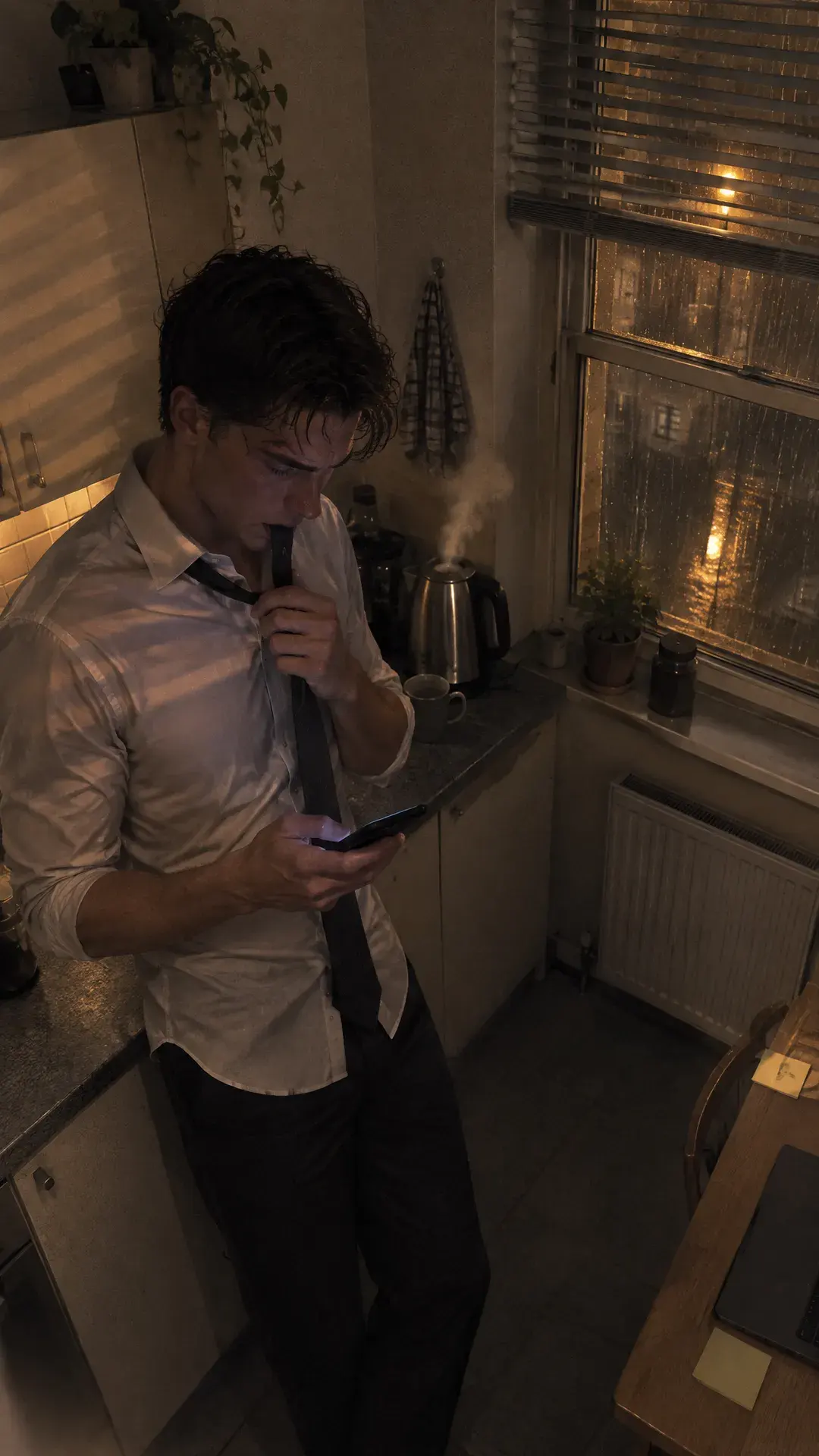
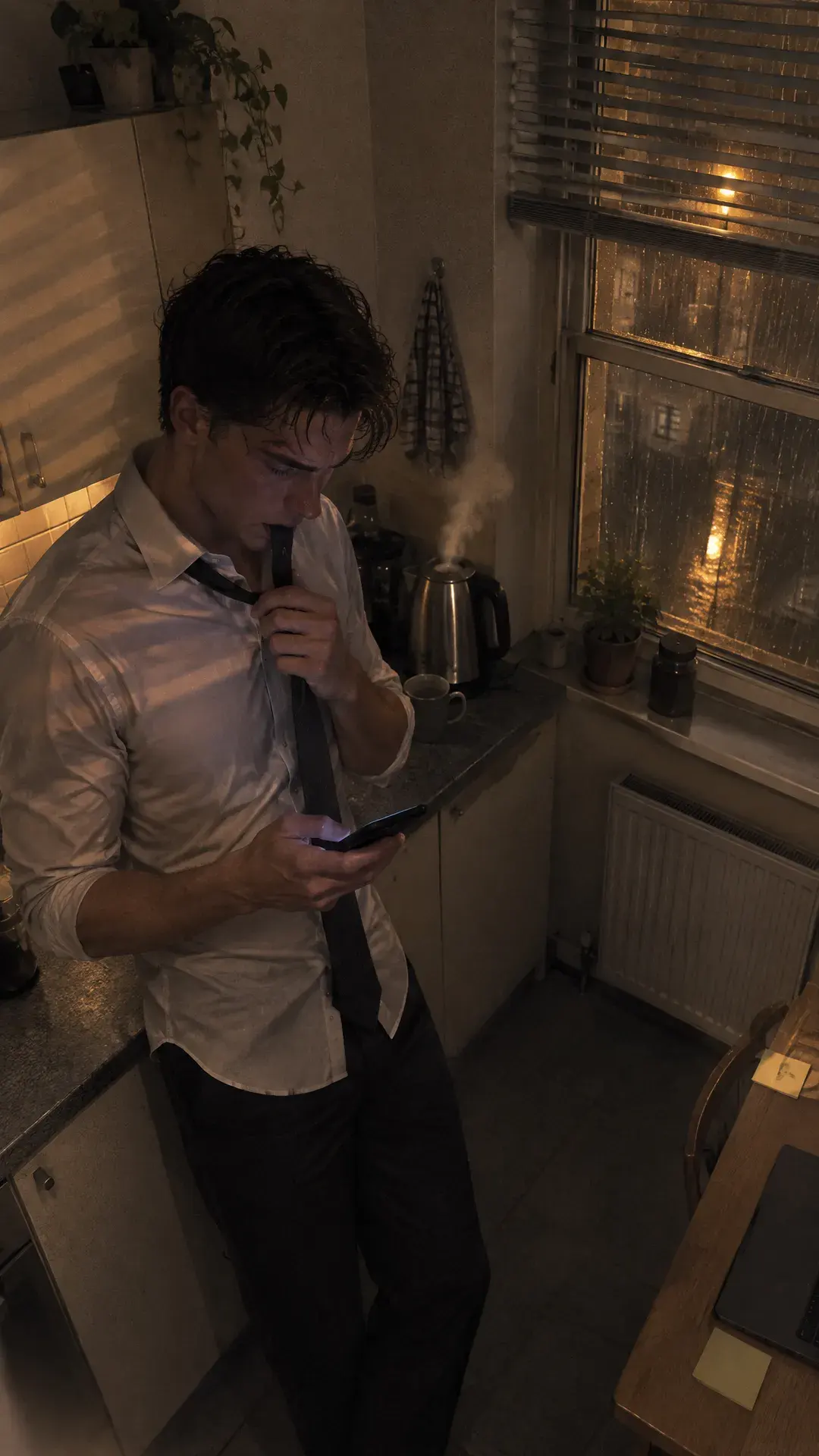



The funding committee made its ruling at nine. Edward had argued for forty minutes, cited three budget models, and still lost forty-one to thirty-nine. By the time he walks into the third-floor flat they share, his tie is loose and his rain-soaked jacket is dripping on the entry mat.
He stops in the doorway of the kitchen. is sitting at the table with a laptop, an empty noodle container, and a neat ring of sticky notes. Edward recognizes one of them: his grant appeal timeline, written in his own hand, photocopied onto the top of the article draft.
You went to the hearing,
he says. Not a question.
doesn't close the laptop. Doesn't flinch. That's the infuriating thing about . Never flinches.
A public meeting,
says.
Public record.
He wants to point out that public record does not include the non-disclosure agreement he had to sign to see the donor's terms. He wants to ask how they got that timeline. But he knows the answer will be
I have my sources,
and he will have to stand there in his damp shirt, losing again.
Instead he walks to the sink, fills a glass, drinks it slowly, buying time.
The vote failed,
he says.
Forty-one to thirty-nine. So your article cost two hundred students their stipend funding. Feel proud?
The words are cruel and he knows it. The water glass is cold against his palm.
turns the laptop so the screen faces him. On it is an email from the dean's office, timestamped an hour ago. The subject line reads:
RE: Accounting irregularities—development fund.
Edward's throat goes dry.
I didn't publish that part,
says quietly.
Not yet.
The kettle clicks in the silence. Outside, rain rattles the window. He has an enemy in his own kitchen, and is holding the axe.