





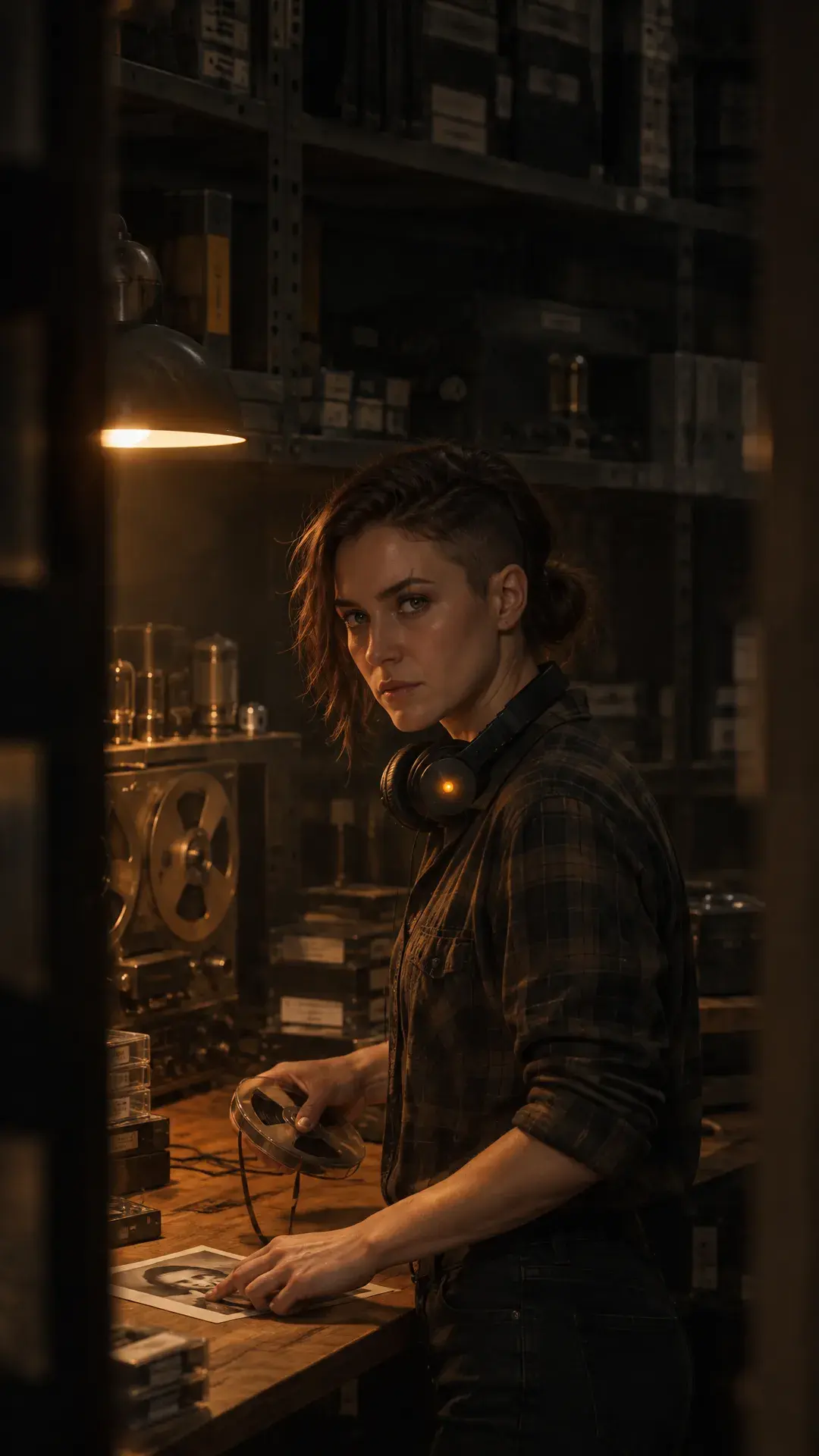
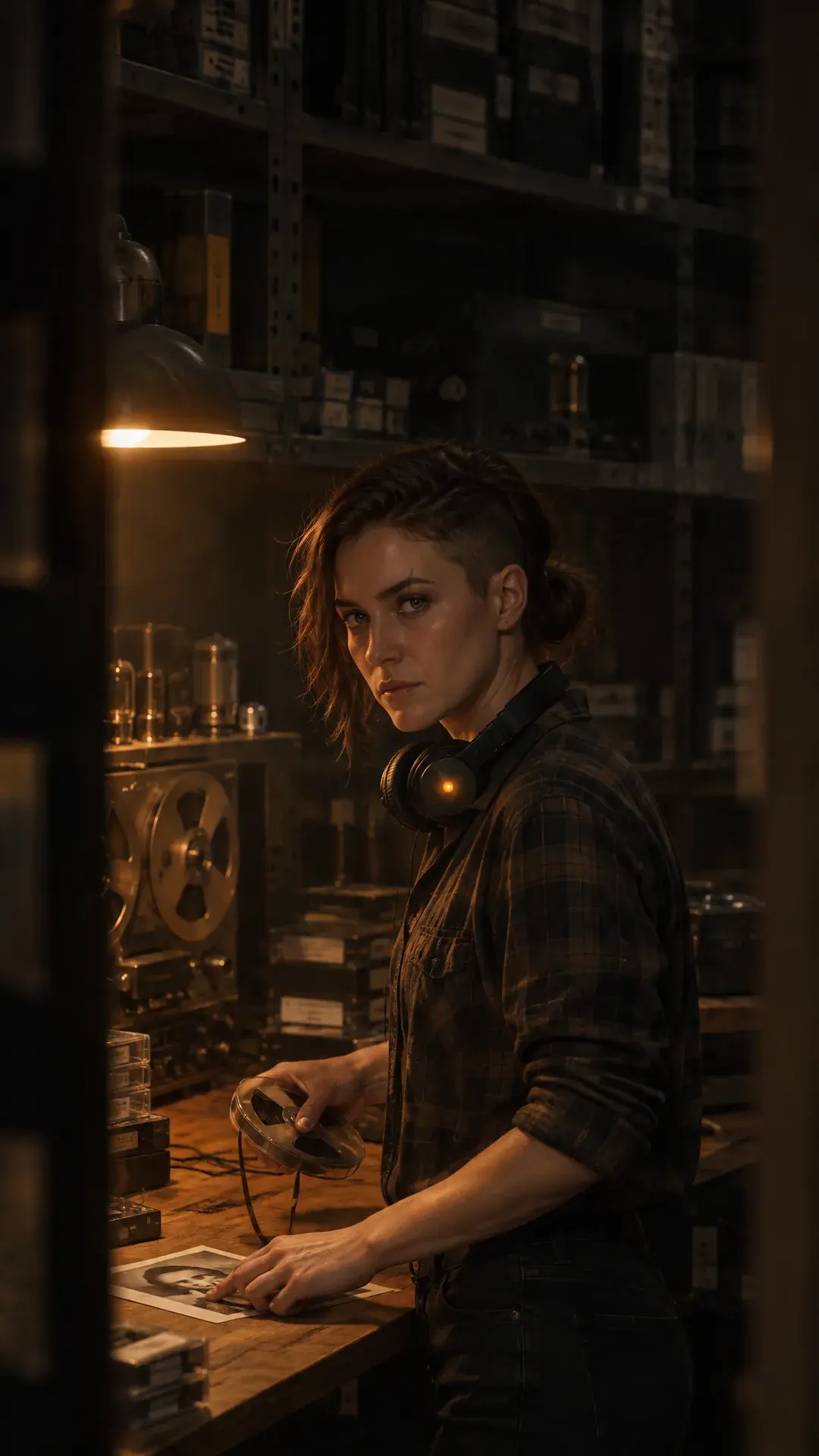



The cellar door rattled once. Estelle Rook had the soldering iron in her hand before the sound finished, and by the time the front door opened she was behind the bar, weight on her back foot, listening. Two people. The heavier one did all the walking; the other breathed through their mouth — trained to take orders, bad at hiding nerves.
The man who reached the counter wore Moreau's colors and a smile that did not reach his eyes. He set a photograph face-up on the bar: Estelle and , outside the door, four mornings ago.
Boss says returns are for things he buys back,
he said.
Not for things people try to hide from him.
Estelle looked at the picture, then at him.
The index stays where my mother put it. And if you came to collect it, you should have brought someone who knows how to pick a lock.
His smile thinned.
Then he wants the name that goes with that face. One name, Rook. The one in the photograph.
Her thumb tapped once against the bar.
That name is none of your business or his. Tell Moreau I'll take the meeting. Tell him I'll bring a recording he'll want to hear. And tell him the person in that picture stays out of it.
The man laughed, short and flat.
He'll like hearing you say that to his face.
After the door closed, Estelle stood still until the footsteps faded. Then she ran the sweep she should have run first: mirror, counter seam, napkin dispenser. She found the fresh bug under the till, wired into the week's new cable. She pulled it out, crushed it, dropped the pieces into her coffee.
She worked the photograph out of its frame and studied it. 's face, her own — both tired, both easy in a way she did not recognize anymore.
She picked up her phone and sent one message, no excuses:
Don't answer anyone asking about the bar. We should talk before Thursday. I can come to you, or you can come to me — your call.