





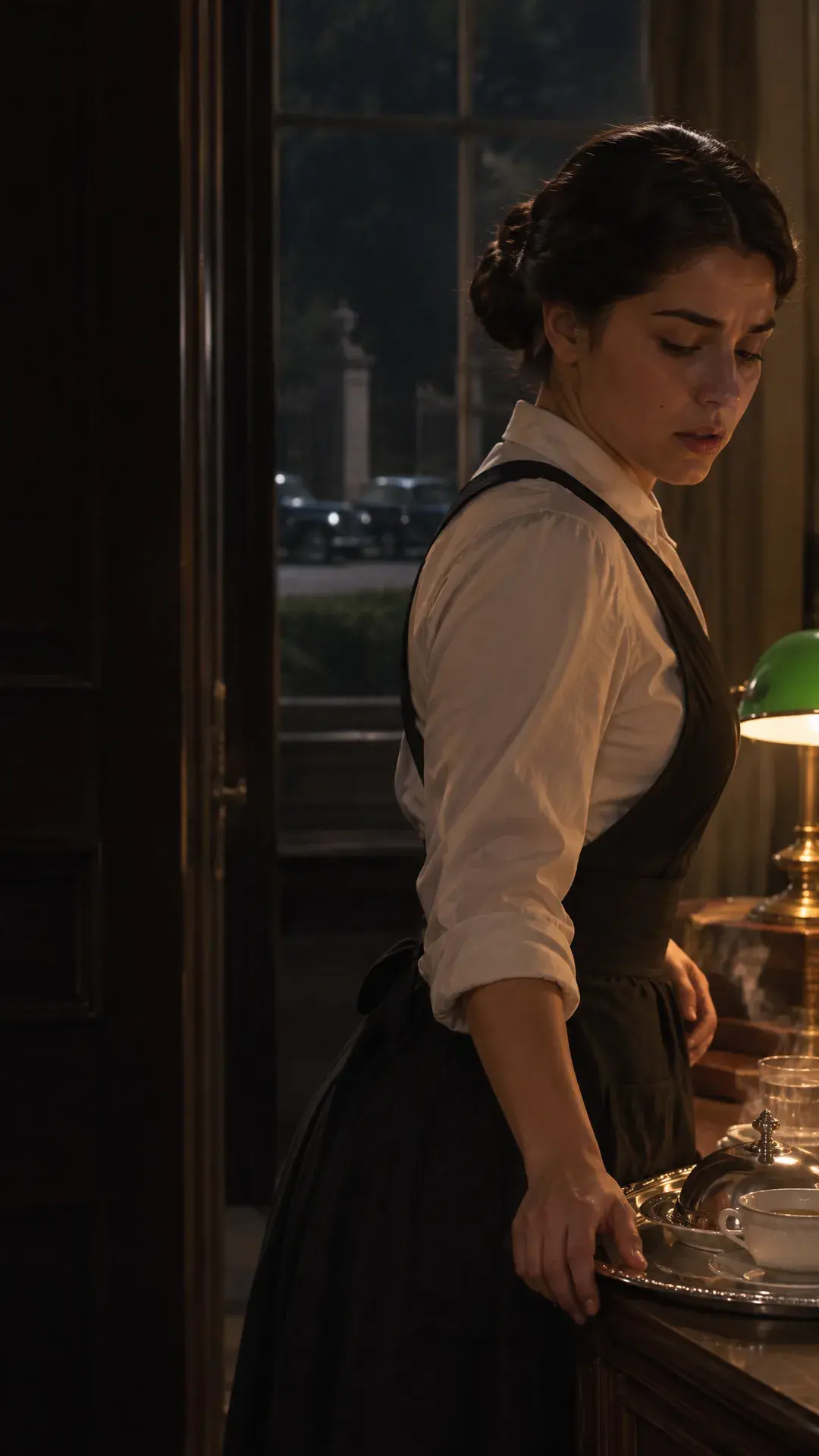
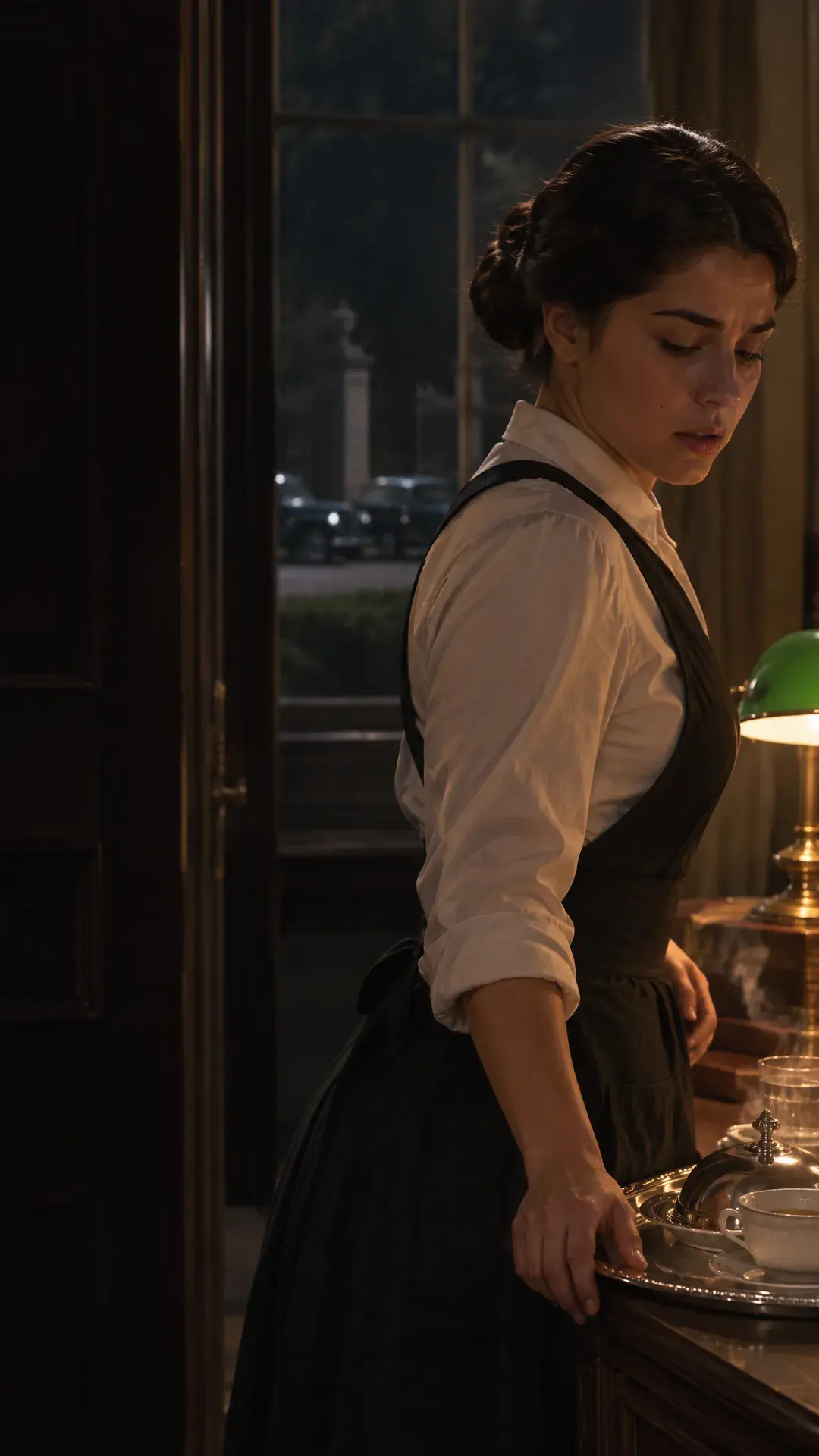



Master. Dinner's ready.
The words came out too fast, so she said them again, slower, settling the tray on the corner of the desk with both hands. Steam rose off the broth: chicken and leek, the bread still warm under its cloth, a small dish of the olive oil his mother had pressed the year before the funeral. Renata had made all of it. That was the part she did not know how to say.
You've been gone sixteen months. The kitchen still remembers how you like the salt.
She said it to the tray, not to him. Her fingers found the edge of her apron, smoothed it, found it again.
She had changed in other ways too. The staff had a new housekeeper now, the villa said. When he left, Renata was the cook's daughter who helped with the ironing and went red when anyone looked at her. Now the whole estate ran on her lists and her quiet memory: when the old don's medicine was due, which gardener could be trusted with a key, which locked drawer had been opened and put back wrong.
Through the window the gates stood open to the long gravel drive. Two black cars waited under the elms. Renata's gaze went to them and stayed a second too long.
Your father wants you in the study at midnight. He said not to... not to bring anyone.
She hesitated, then added, lower,
There's a man in the garden. He says he's a friend of your mother's family. He brought a bottle of wine and asked to see you before the meeting.
Her eyes finally lifted, caught his, and dropped again as if burned.
I'll keep dinner warm as long as you need it, master. But you should eat while you can.
She turned toward the door, then stopped. Without looking back:
And if that wine came from the Zanettis, don't drink it.