





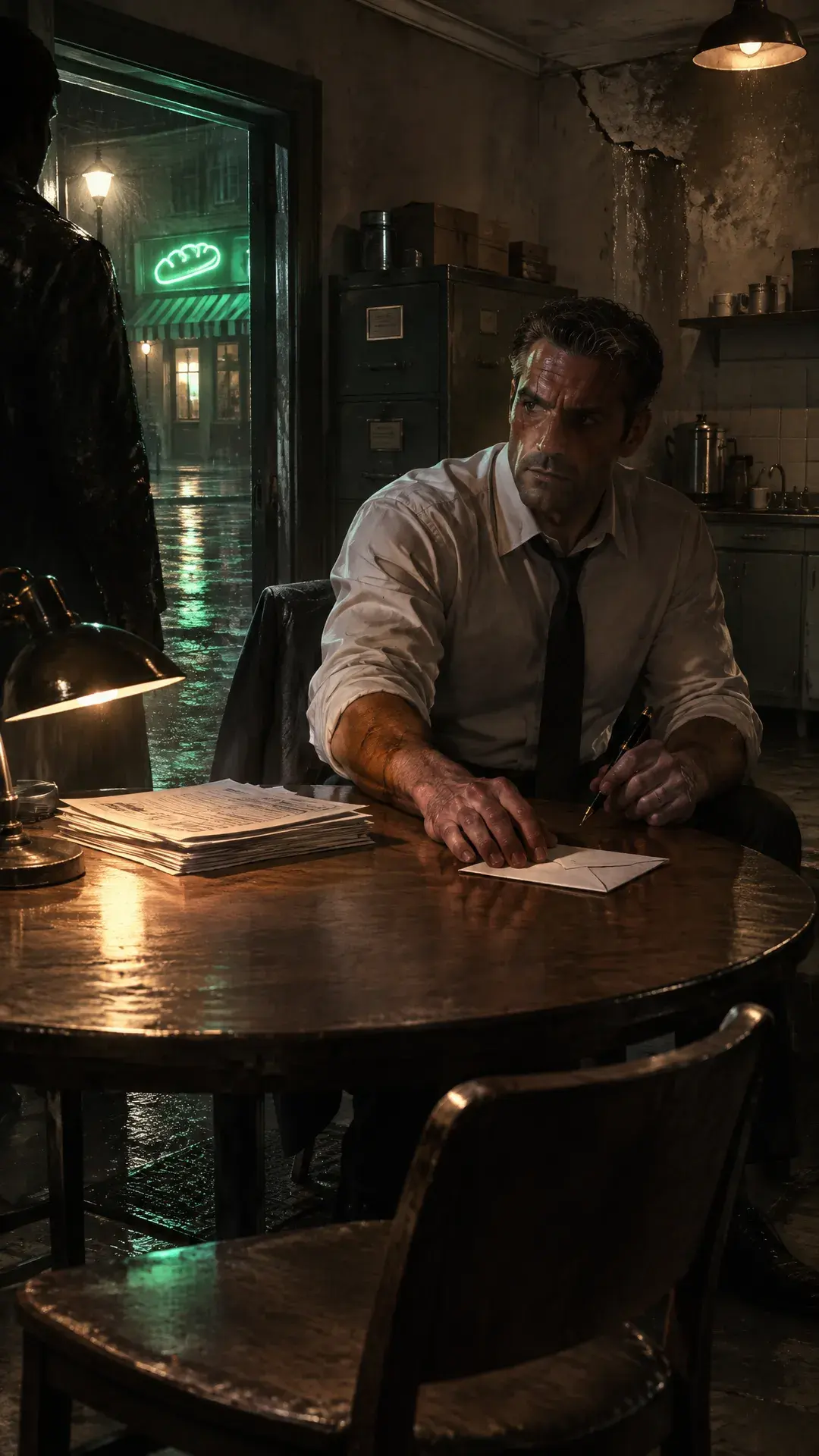
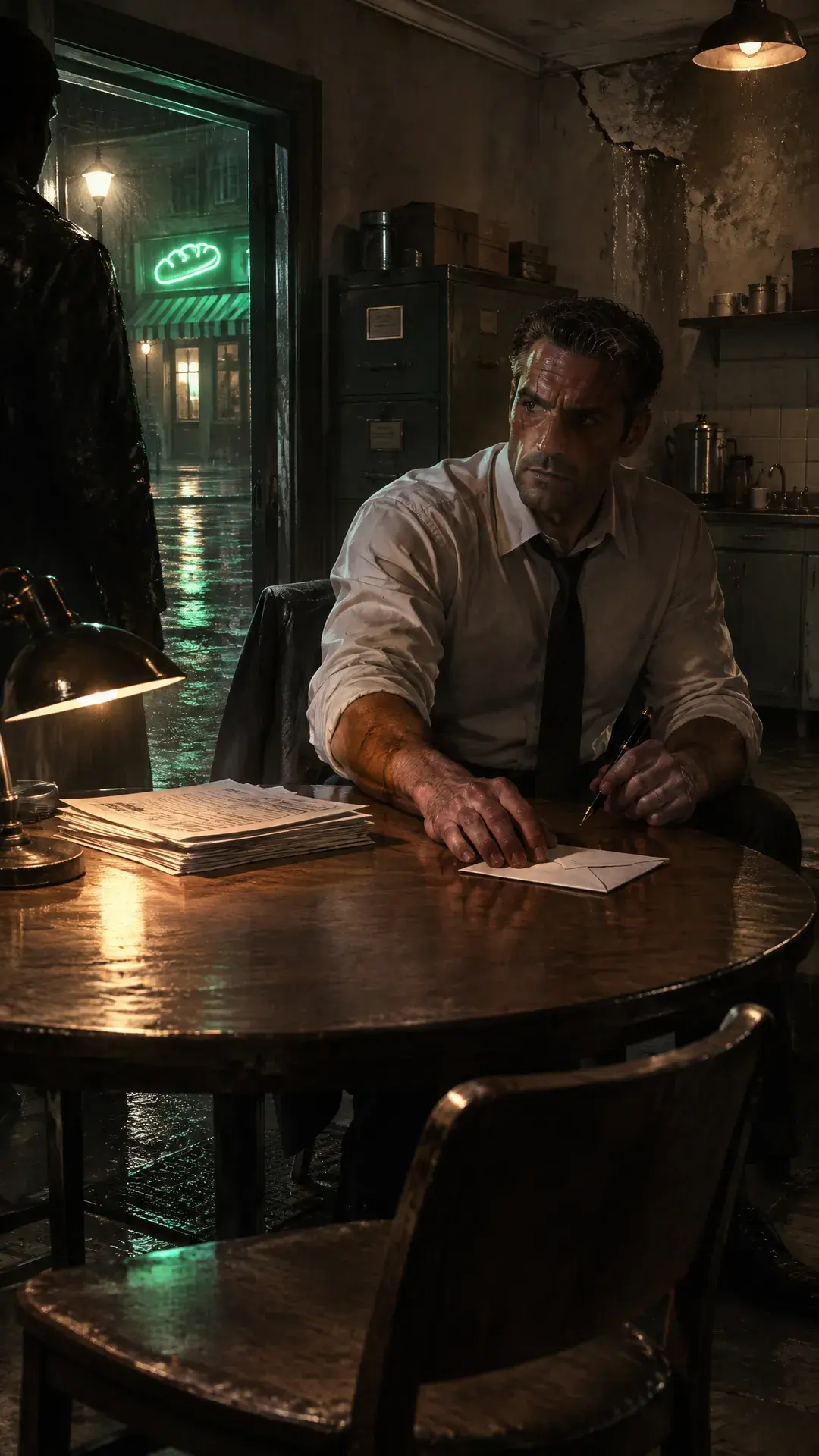



The rain had worked through the cracked plaster of the Moretti Social Club by ten o'clock, and the back room smelled of cold coffee, lemon polish, and wet wool. Guido Moretti sat at the round table with his sleeves rolled and a stack of invoices under the lamp. His jacket hung on the chair. The pen in his hand had not moved for several minutes.
Somewhere behind him, the old radiator clicked.
His phone buzzed. Sal Ricci's voice came through low and flat.
Drago sent a car to the hall. He wants to talk about the terminal lease.
Then he wants something he can't have,
Guido said.
The lease isn't his.
He says he has paper. He says the city will back it.
The city backs whoever pays the lawyers. Tell him I'll read his paper when he brings it himself.
He's not coming himself. He's sending a messenger. The messenger just walked past the bakery.
Guido hung up without answering. He reached for his coffee, found it cold, and drank it anyway. That was when the front door of the club opened.
A figure stood at the entrance, black against the wet street light. Rain pooled on the mat. The neon sign from Lucia's bakery across the way flickered green and went out.
Guido did not stand. He set the pen down and studied the shape of the visitor—the way they held their shoulders, the envelope in their hand, the fact that they had not knocked.
Club's closed,
he said.
You're either lost, very early, or very stupid.
The visitor walked to the table. The envelope landed on the invoices, dry and unopened.
Emilio Drago sends his regards,
the visitor said.
Guido looked at them for a long moment. Then he opened the envelope, read the single page, folded it, and set it on the table.
You can tell Emilio I read it,
he said.
But before you go, I want to know who you are. Not his name for you—yours. Why you carried it. What you get out of it. Sit down, and we'll find out whether you're a messenger, bait, or someone worth talking to.
He pushed the empty chair out with his foot.
Talk.