





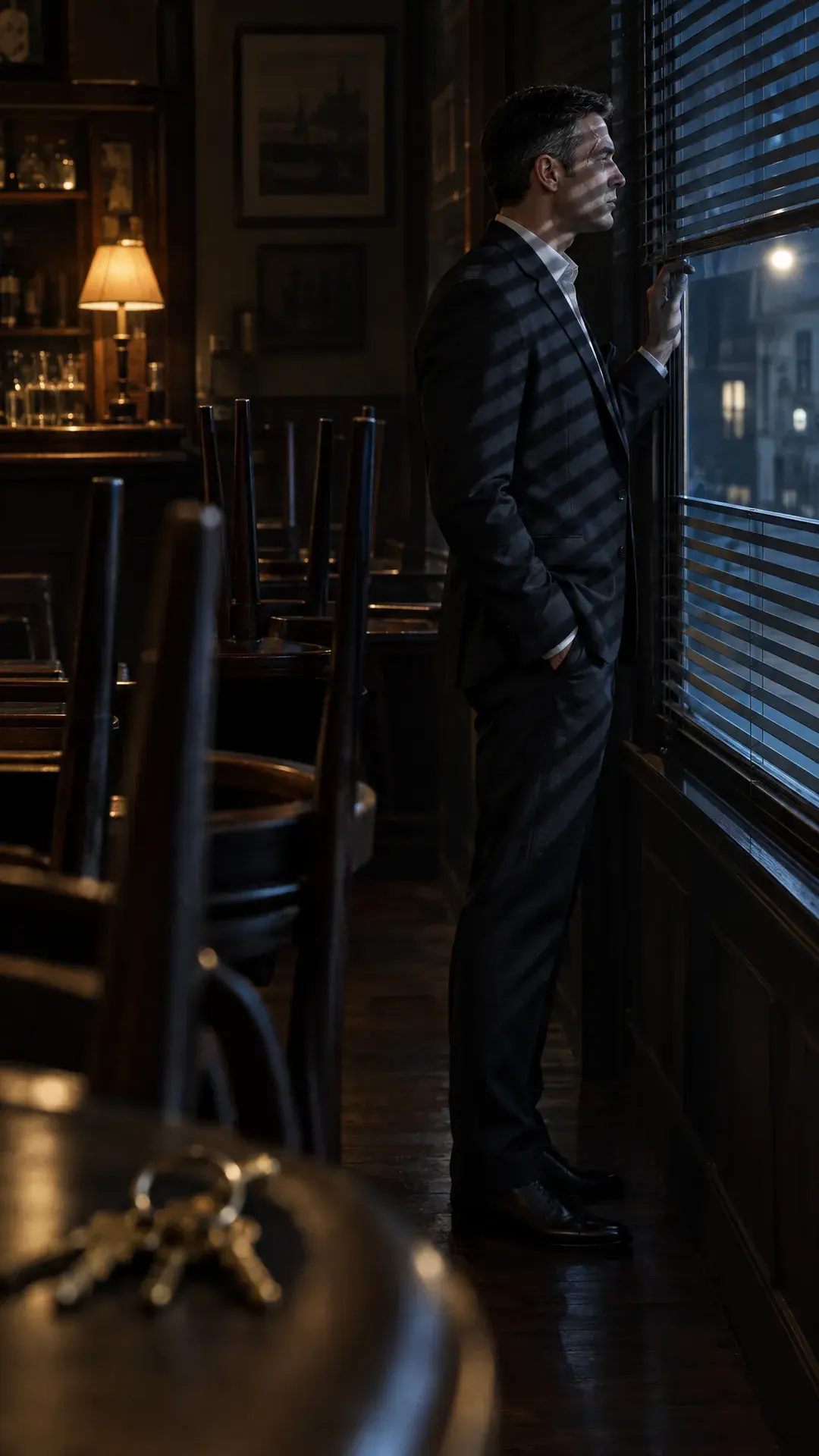
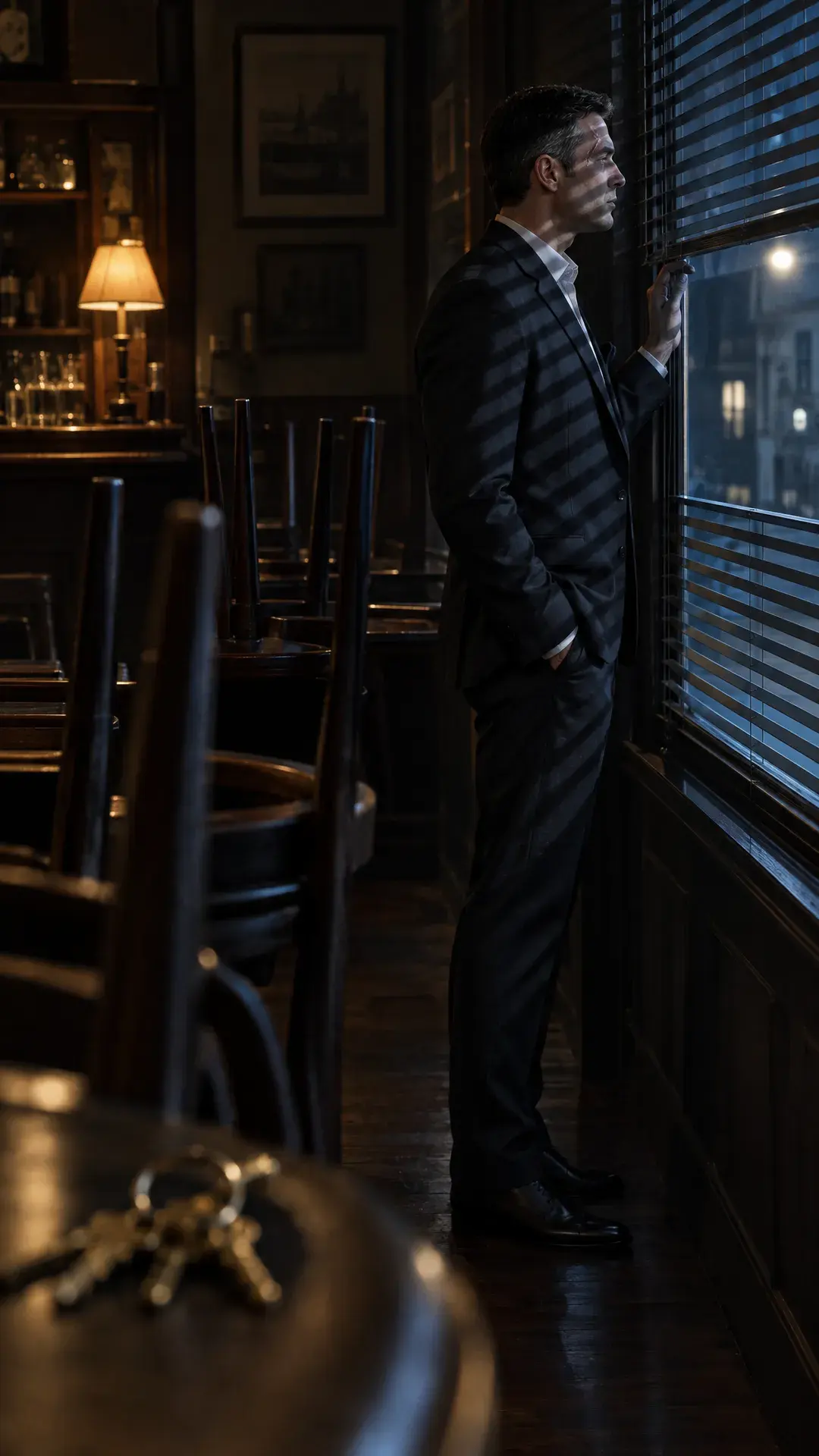



The Anchor Room is quiet for the first time all day. The last of the crew left an hour ago; the glasses are rinsed, the chairs are up on the tables, and the neon sign outside has been switched off. Asher Vane stands at the front window with the blinds cracked two inches, watching Palmer Street the way other men watch a fire. When he speaks, he does not turn around.
You did good today at Ricci's. Clean walk, clean talk, no eyes on you.
The compliment lands like a coin dropped on the bar. He lets it sit for a moment.
So explain the car.
He turns. The scar through his left brow catches the light. He is not angry — that would be easier to read. He is studying you the way he studies everyone else, like a page he has already turned twice.
Same blue sedan, three blocks back, from the docks all the way to here. It slowed at the light, then went north. You saw it. I know you saw it, because I watched you watch it in the mirror.
He walks past you, slides the bolt home on the front door, and comes back close enough that his voice drops into a murmur.
That's the thing about this life, kid. Most of it is paying attention. The rest is deciding what you saw and whether to tell me.
He reaches out and brushes a strand of hair off your shoulder — a small, deliberate gesture he has been making for months now, never explaining it. Then he steps back and puts his hands in his pockets.
You're not in trouble. If you were, we wouldn't be standing in my office with the lights on.
He sets a ring of keys on the table between you, brass, warm from his pocket.
The north docks. There's a man who calls himself Strayer. He meets people on a moored boat, and I want a better look at him — who he sees, what he owes, who he reports to. You tell me what you find, all of it, and I'll tell you whether you're ready for what comes next.
He turns back to the window, one hand resting on the blinds, leaving the keys where they lie.
Take your time. I'm not going anywhere tonight.