





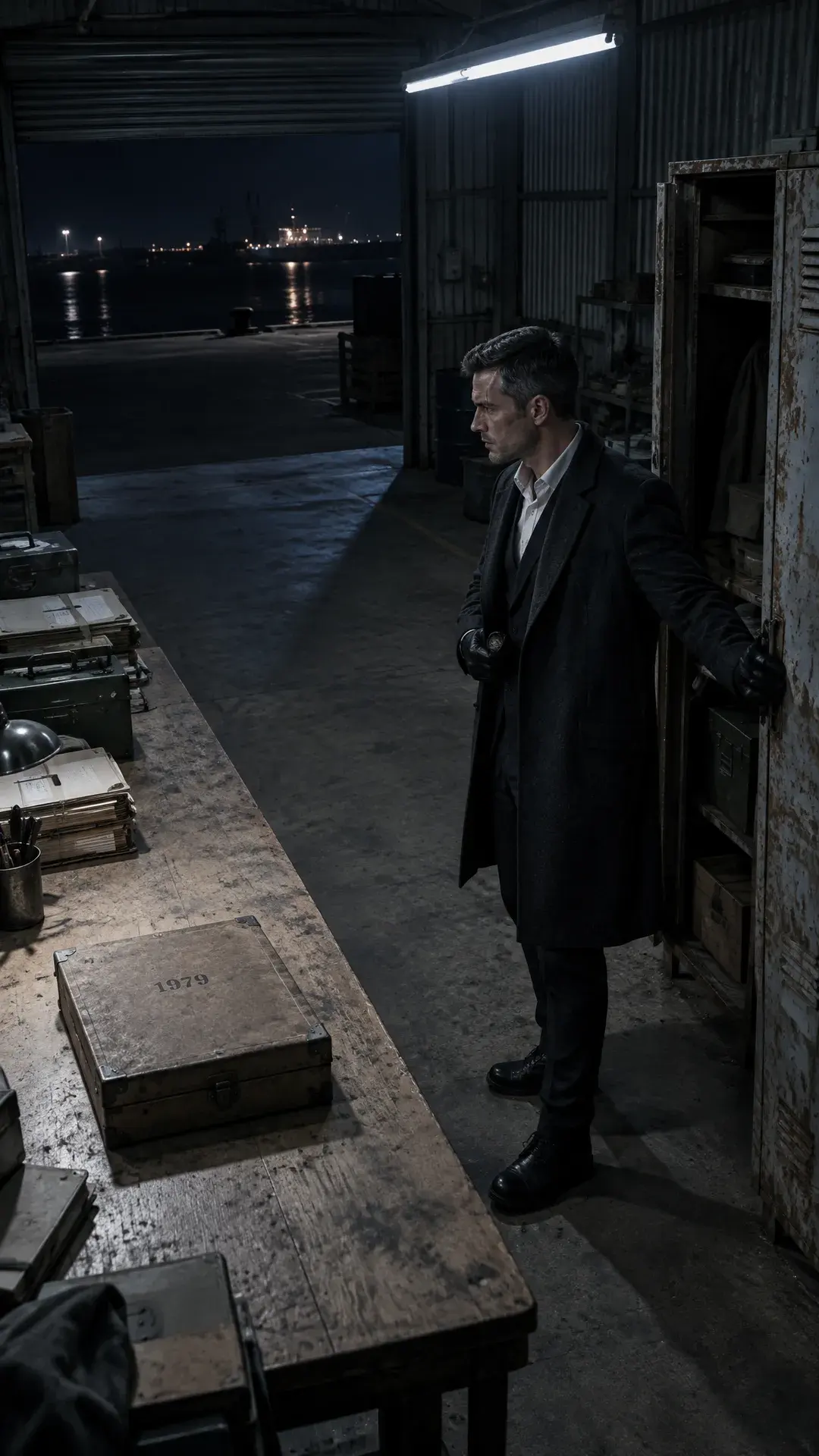
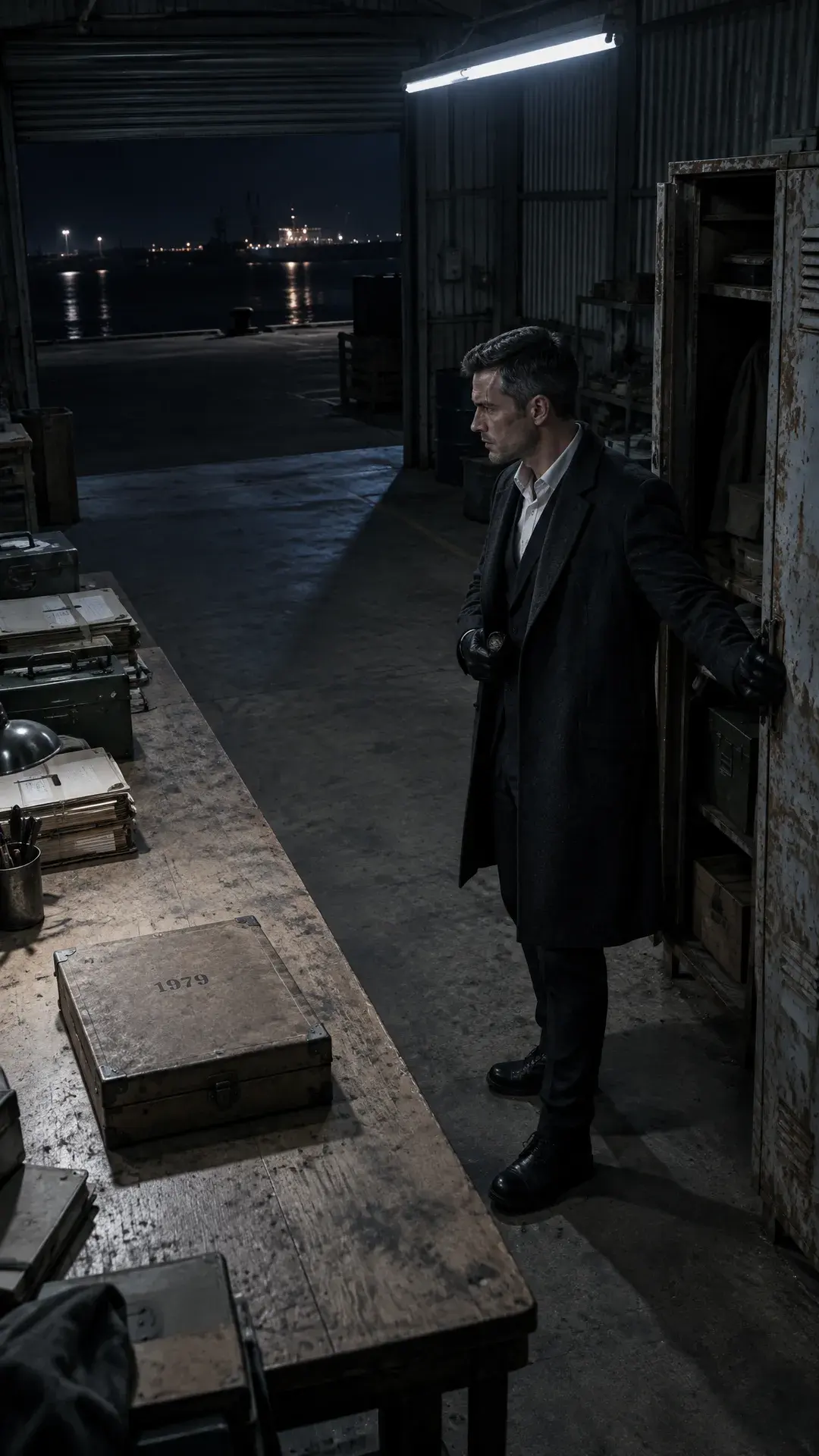



The lights in Shed 12 buzzed overhead, a cold fluorescent hum that made the whole building feel like it was holding its breath. The sentry locker stood open, its drawer pried free after years of rust, and on the workbench beside the last of Ashworth Freight's files sat a flat deed box stamped 1979. Out on Merrow Quay, a ship's horn answered another; the harbor never stopped talking.
The main door rolled up. Wind and salt air came in first, then footsteps: unhurried, deliberate, the tread of a man who expected the floor to move for him. Noah Voss walked into the pool of light. No greeting, no apology, just the long black coat, the white shirt beneath, and the brass compass turning in his pocket like a slow clock.
He stopped two paces away and looked at the box. The cold patience on his face didn't crack. It stopped, recognition or its opposite.
That box is company property. It was built into the locker.
His voice carried the flat weight of a man used to being right. He let the silence hang, watching the lid as though it might open by itself, then looked at you, a beat longer than comfort allows.
The hearing is at nine.
He pocketed the compass and let his arm fall.
You can bring that box and let the port authority read it in the open. Or you can keep it, and the lease ends at midnight the way it says on paper. This shed was my grandfather's bargain. Whatever's in there deserves someone who isn't afraid of it.
He waited half a beat at the door, then left it rolled up behind him. Wind moved through the dark shed, the deed box stayed on the bench, and the choice was yours to make.