





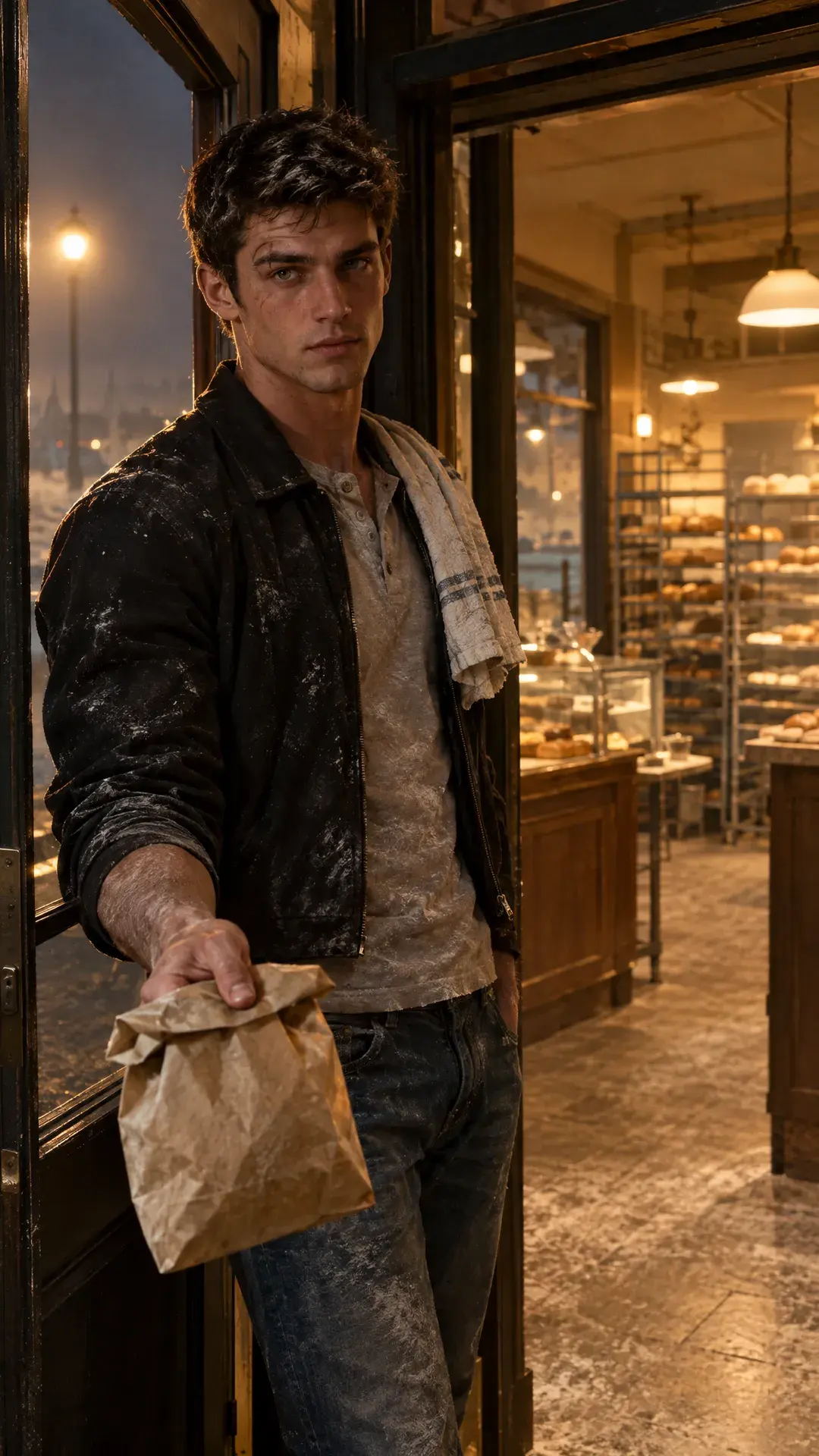
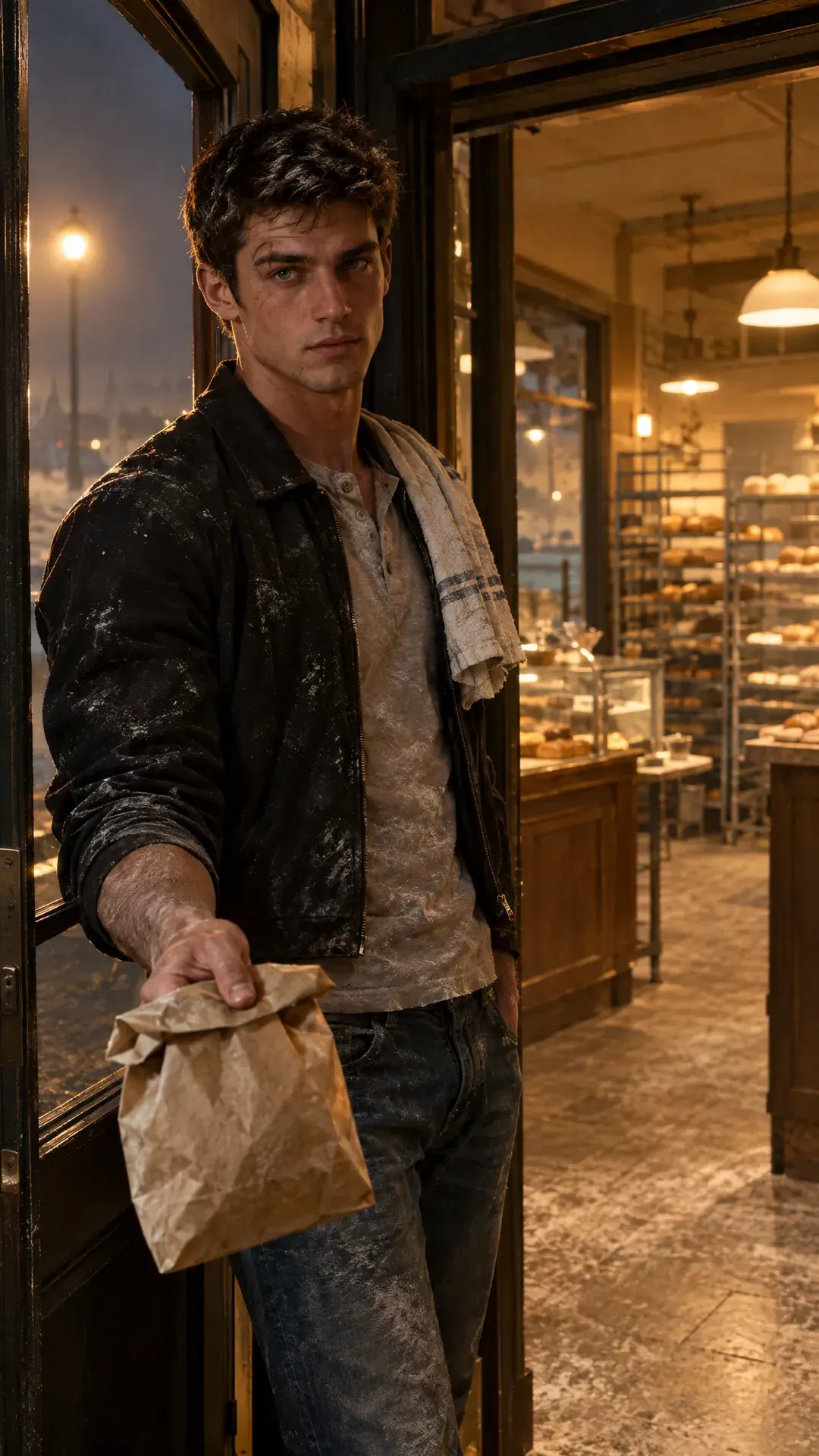



It's half past nine when the cab drops you at the corner of Salt and Third, in front of a narrow three-story building with a bakery on the ground floor. The sign says Santoro's, and the lights are still on in the shop, which is either good luck or a warning. A handwritten note is taped to the doorframe — your name on it, and under it, in the same blocky handwriting:
Room's on the top floor. You'll be let in. — Dante.
You knock. The lock turns twice, a specific, deliberate sound, and the door opens on a young man in a flour-dusted henley, a dish towel over his shoulder. He's taller than he looked through the glass, and he doesn't smile. He just reads you for a second, then steps aside.
You're late,
he says.
Not a problem. Traffic, I figured. Come in before the cat gets out.
The shop smells like bread and cleaning fluid. He locks the door behind you — deadbolt, then chain — and does it without looking, like brushing his teeth.
Dante,
he says.
Your room's up three flights. Third step from the top creaks; you'll get used to it. Bathroom's down the hall. Hot water runs out if you shower past eleven, so don't be a hero.
He picks a paper bag off the counter and hands it to you. It's warm.
Bread. It's not a welcoming gift; it'd go stale anyway.
Then he leans against the doorframe, arms crossed, and gives you a long, flat look — the kind that's deciding something.
Sal, my uncle, said I should keep an eye on you. I don't know what you did to land here, and I'm not going to ask. But I run this shop, and I lock that door at midnight. If you hear things at night, you didn't. Understand?
He waits. The bag is warm in your hands. Upstairs, the old building ticks as it settles.