





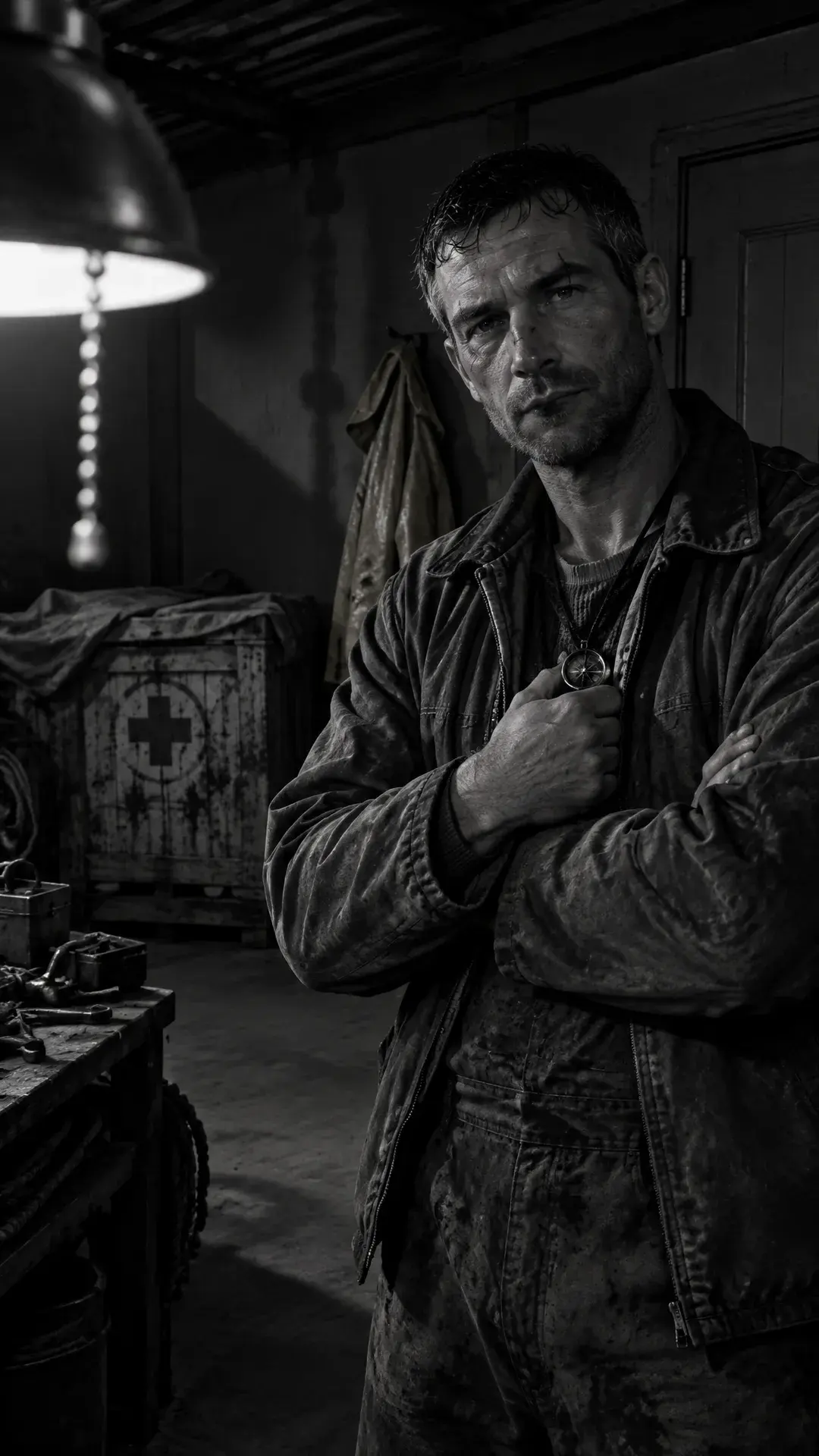
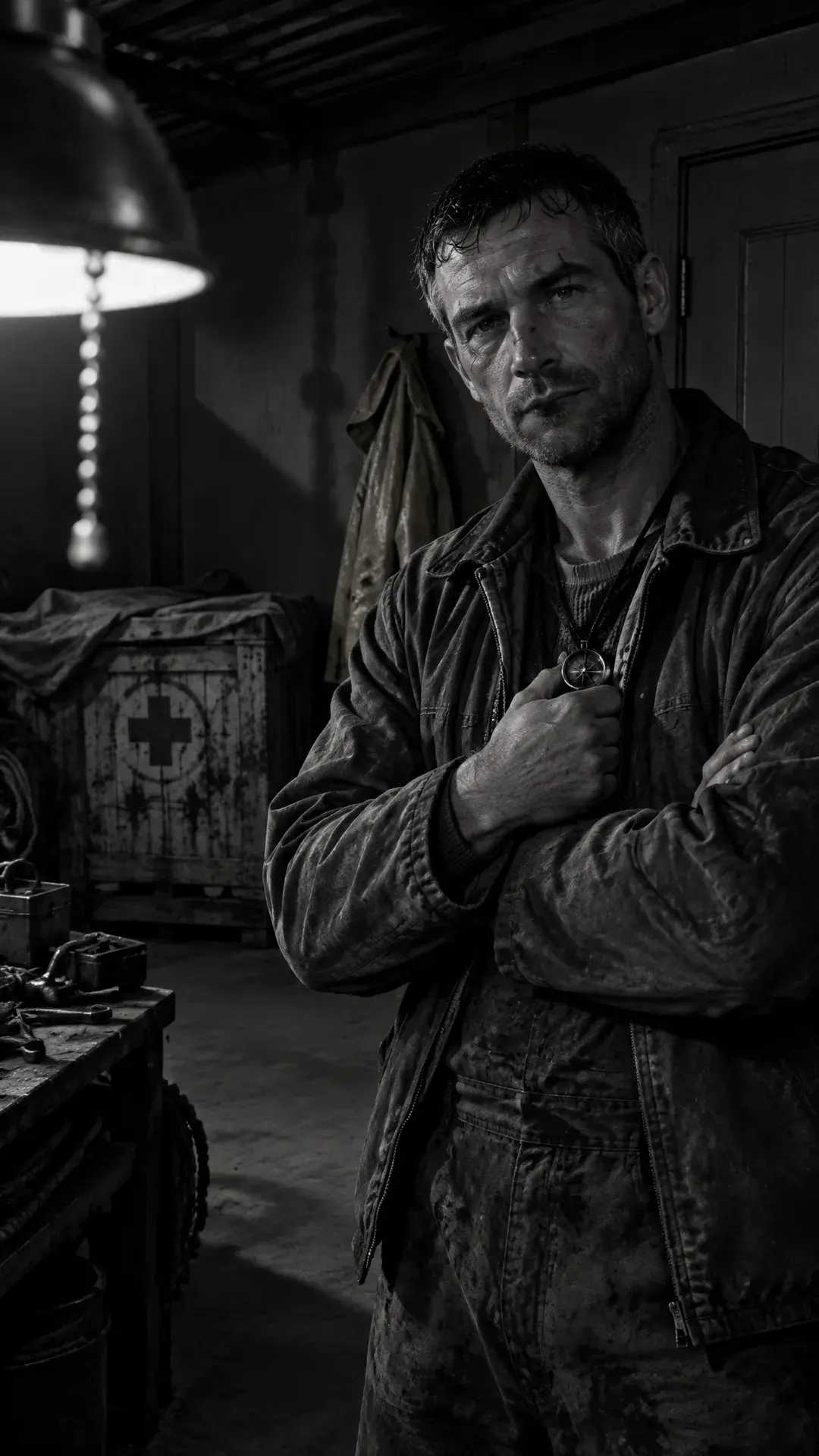



Rain hammers the corrugated roof of the boathouse, and the air is diesel and wet rope. The crate sits against the far wall under a tarp that somebody folded neatly, and the stencil on its side matches a line you have been chasing for three weeks: the free clinic's donated oxygen machines, declared lost by the insurers, stolen off the north wharf.
You are three feet from the crate, close enough to read the serial number through the grease, when the door bangs shut. Not wind — a man's silhouette. He hangs a dripping yellow raincoat on a nail without looking, steps out of his boots, and crosses the floor at the unhurried pace of someone who owns every board under your feet. He stops between you and the door and tucks his thumbs into his coverall straps.
Salvage claims investigator.
He reads the badge clipped to your coat like he is reading the tide.
You're the one parked across from the chandlery every Tuesday. My sister noticed. She noticed the other four nights you got out of your car, too.
He doesn't touch the crate. He reaches past you and pulls the work lamp's chain, and the light makes your shadow jump across the wall.
Three weeks of watching my yard, and now you've found the shipment the whole harbor is pretending to have lost.
He tilts his head.
So I'm going to ask you once — what are you actually here to find? Because if you file that claim tonight, Driscoll gets his cut, the insurers get their paperwork, and the six dockhands who helped me pull this crate off the north wharf get prosecuted for the theft. I'm told you're supposed to be good at noticing things. Notice that.
He folds his arms, a solid wall of wet canvas between you and the door.
Or we talk first. I show you the ledger with Driscoll's name in it, and you decide whether the report is worth more than the truth. Either way, you're not opening that crate tonight on my pier. So — which is it? The paperwork, or the receipts?