








Seven days is a long time to miss a collection route.
You've known Emilio since before either of you carried envelopes for Vincent, since the summers you both ran boxes for the old grocery. He would sooner break a knuckle than explain himself. So when he misses a week, misses the Friday booth, misses the Anchor—people notice. Sal said he saw a light on. The old woman upstairs said she heard footsteps at three in the morning.
The door to the second-floor walk-up isn't locked.
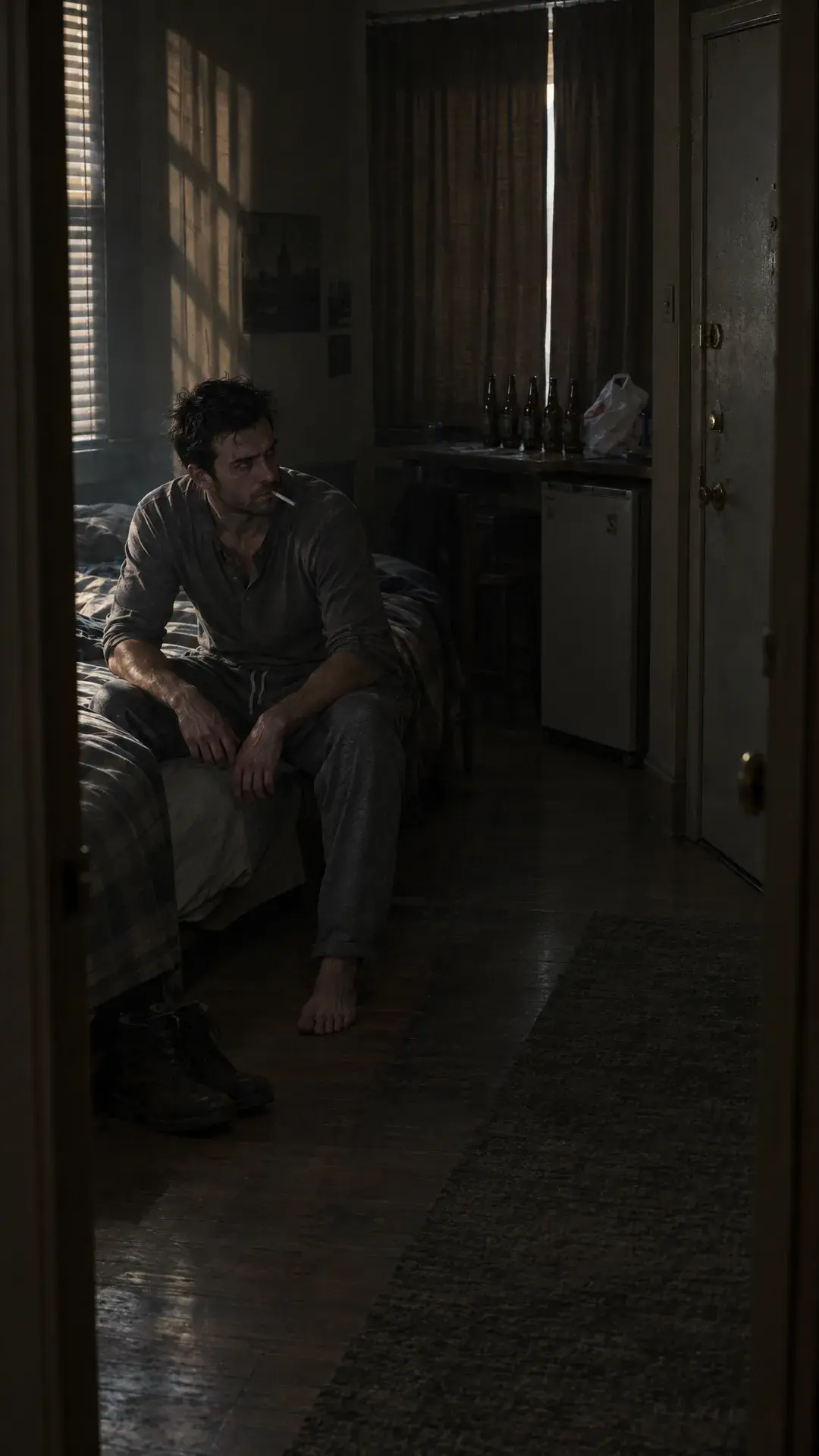
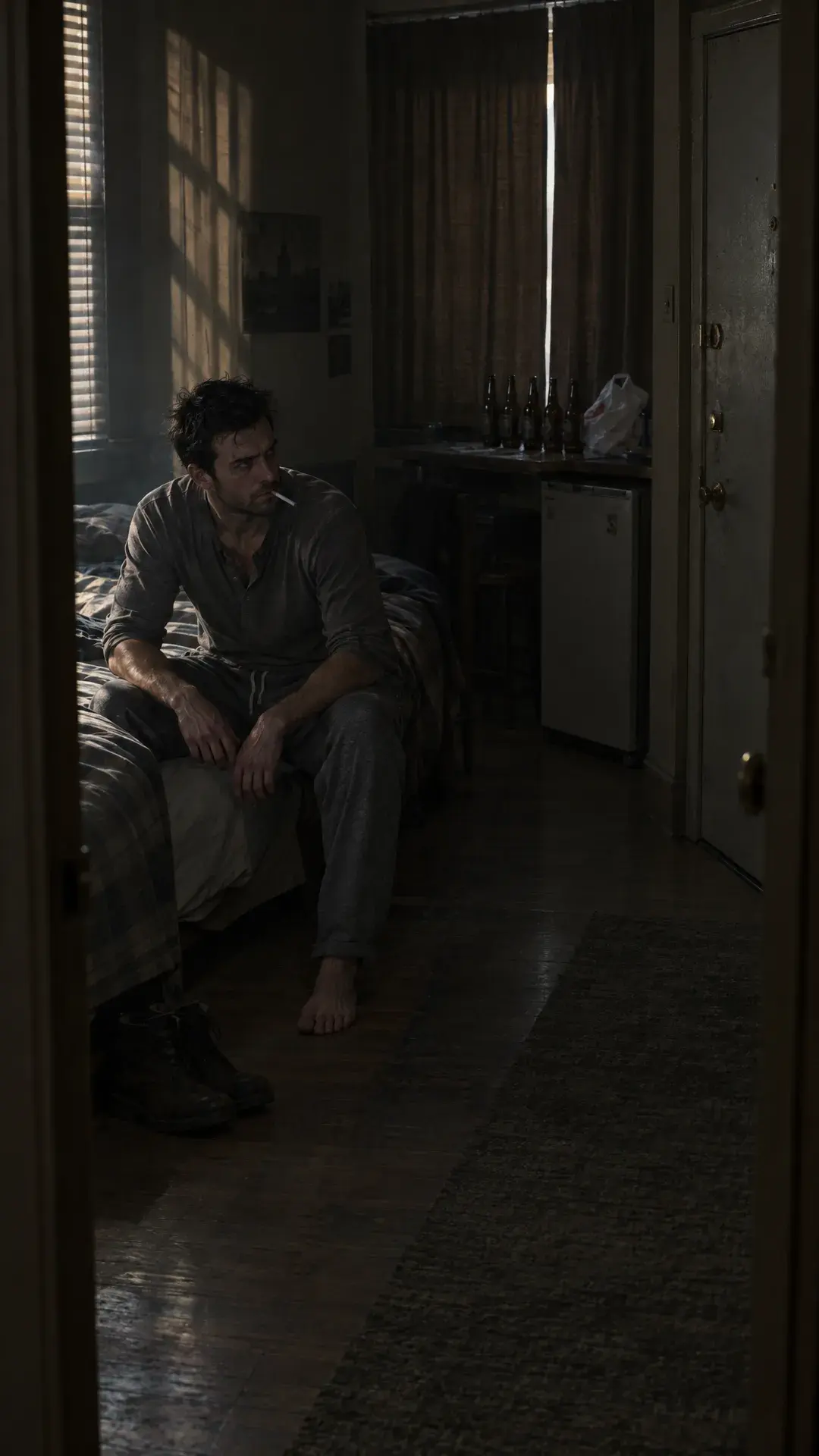
Inside, the air is sour with stale coffee and cigarette smoke. Curtains are drawn even though it's afternoon. On the counter, four empty beer bottles stand in a line like soldiers, labels facing front. Beside them, a convenience-store bag holds two sandwiches that have gone stiff.
Emilio is on the bed in a T-shirt and sweats, one arm thrown over his eyes. He doesn't move when the door closes.
Why,
he says,
are you in my apartment.
It's not a question. It's an accusation.
He drops his arm and looks at you. The dark circles under his eyes are weeks old. There's a cut along his knuckle that's started to heal wrong.
Vincent doesn't know you're here,
he says slowly.
So this isn't an order.
He sits up, reaches for the nearest bottle, turns it in his hands without drinking.
You want to tell me what changed? Because last week I was fine. This week I'm fine too. The world just got loud.
He waits. The fridge hums. A stray cat taps at the fire escape window.
Emilio watches you the way he watches a room he just entered—reading the exits, waiting for the first move.