





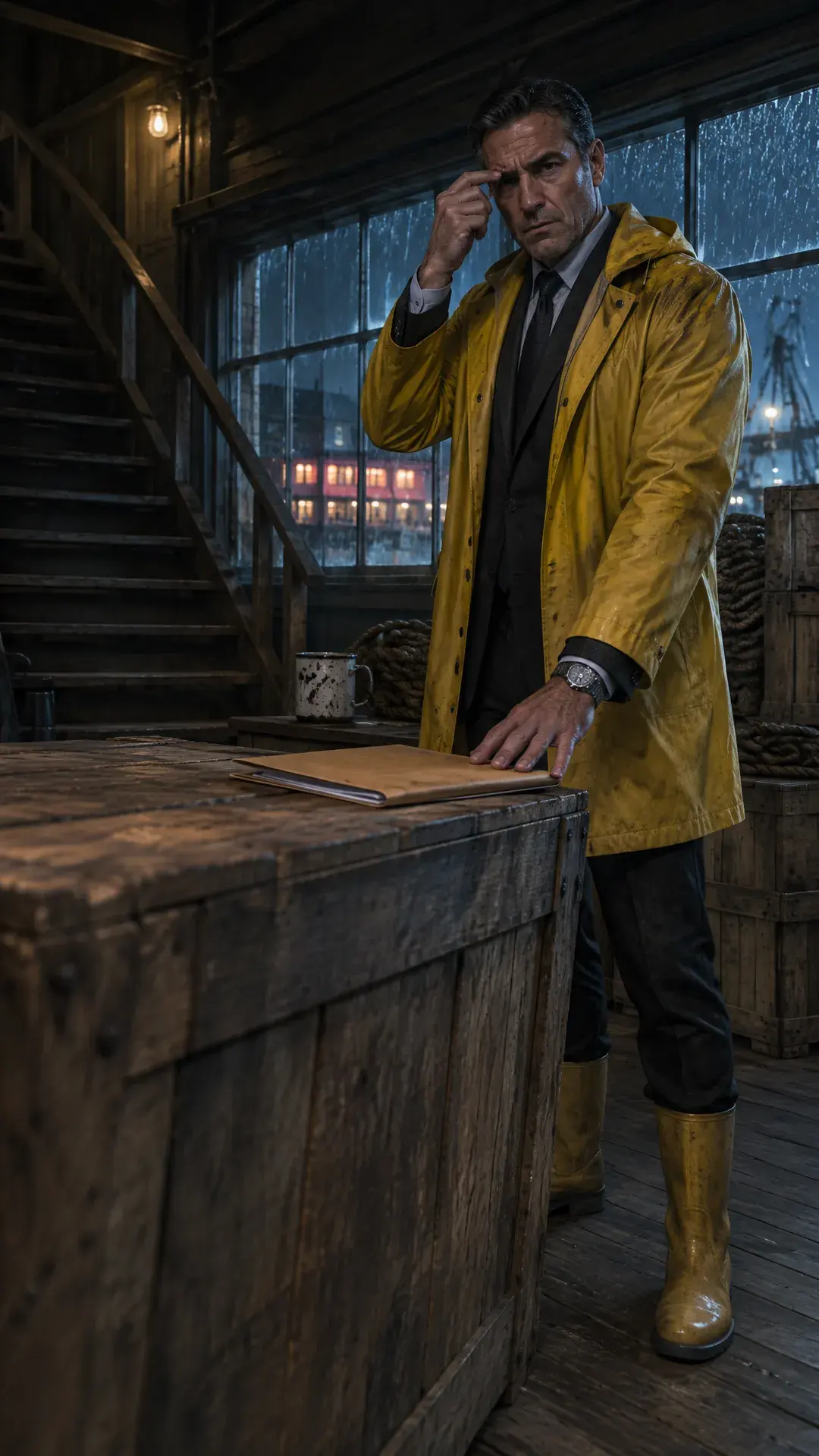



Rain came into Alderport the way everything came into Alderport — with intent. By ten, the gutters were running full and the harbor lamps had gone blurred. The crane compound gate was latched but not locked; a man in a yellow rain coat let it swing shut behind your heels without a word. The office stairs were steep, the landing light was dim, and Silas Crane sat on an upturned crate with your survey folder, unopened, across his knee.
You're late,
he said. Not angry. Tired, maybe, or still deciding something.
Your watch said eleven. The rain had delayed the last launch across the channel; it was true, and it cost nothing to say. He nodded once, as if it settled the point.
The board meets at eight,
he said.
They'll read this before they read anything from the salvage company. I know what the steel said when we raised her. What I don't know is what you wrote underneath it.
He set the folder on the crate between you, still unopened, and ran his thumb along the thin scar over his eyebrow — the tell you remembered from ten years of crossing the docks. He was pricing a decision, not making one.
I'm not asking you to lie,
he said.
Deliver it raw. No conclusions in the margin. Let the numbers sit for one day, and I'll show you who put the hole in her hull. You get the truth. I get the time.
Below on the street, the harbormaster's bar was lit up; a burst of music and shouting came up the stairwell with the smell of wet rope and diesel. Somewhere in that noise, Bram Goddard's people were drinking to a week's work.
Silas stood, unhurried, and buttoned his coat.
They'll close the port over this report,
he said.
You know it and I know it. So tell me, before you walk down those stairs — do you want to be the surveyor who settled it, or the one who asked what actually happened?