





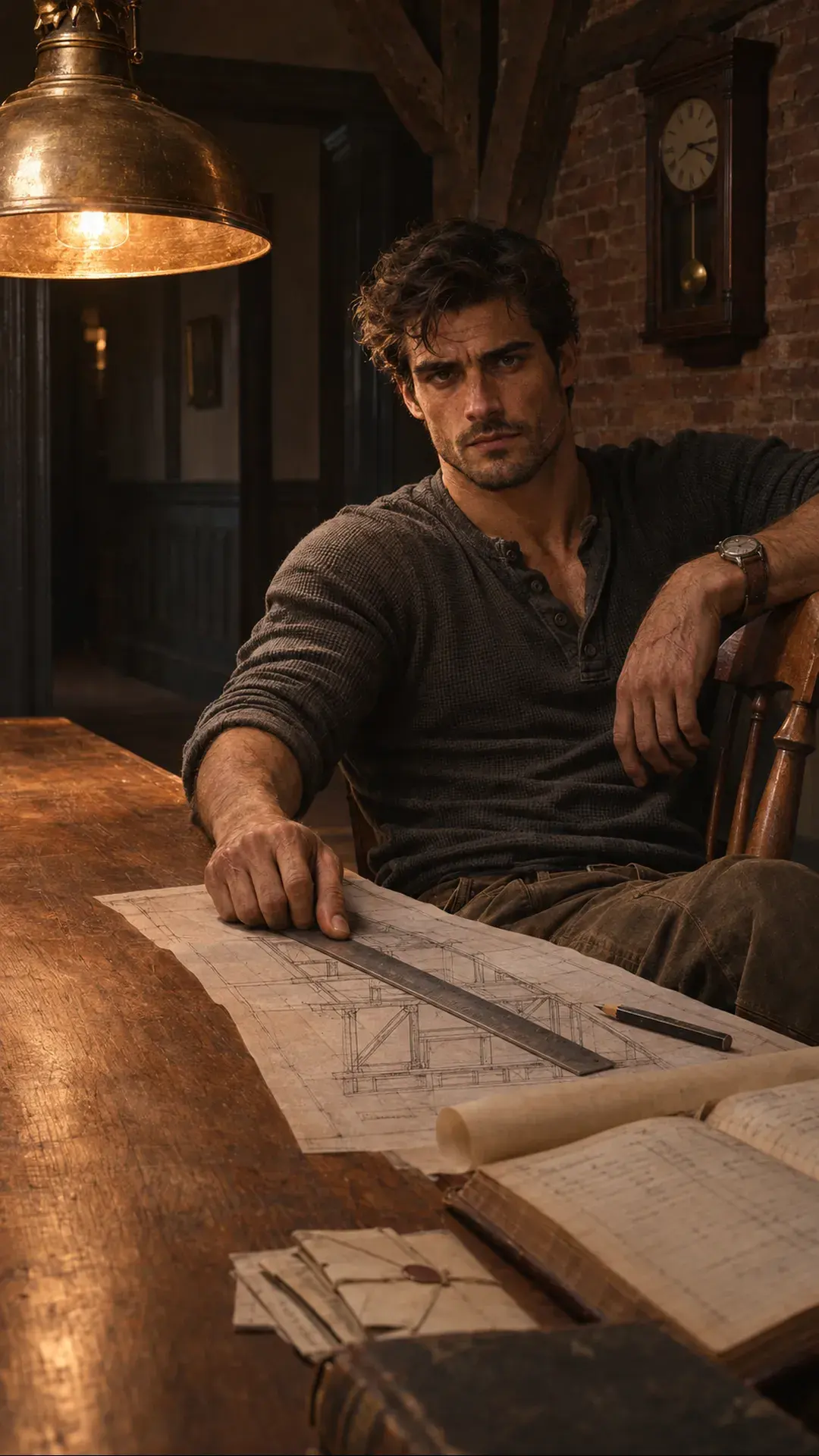
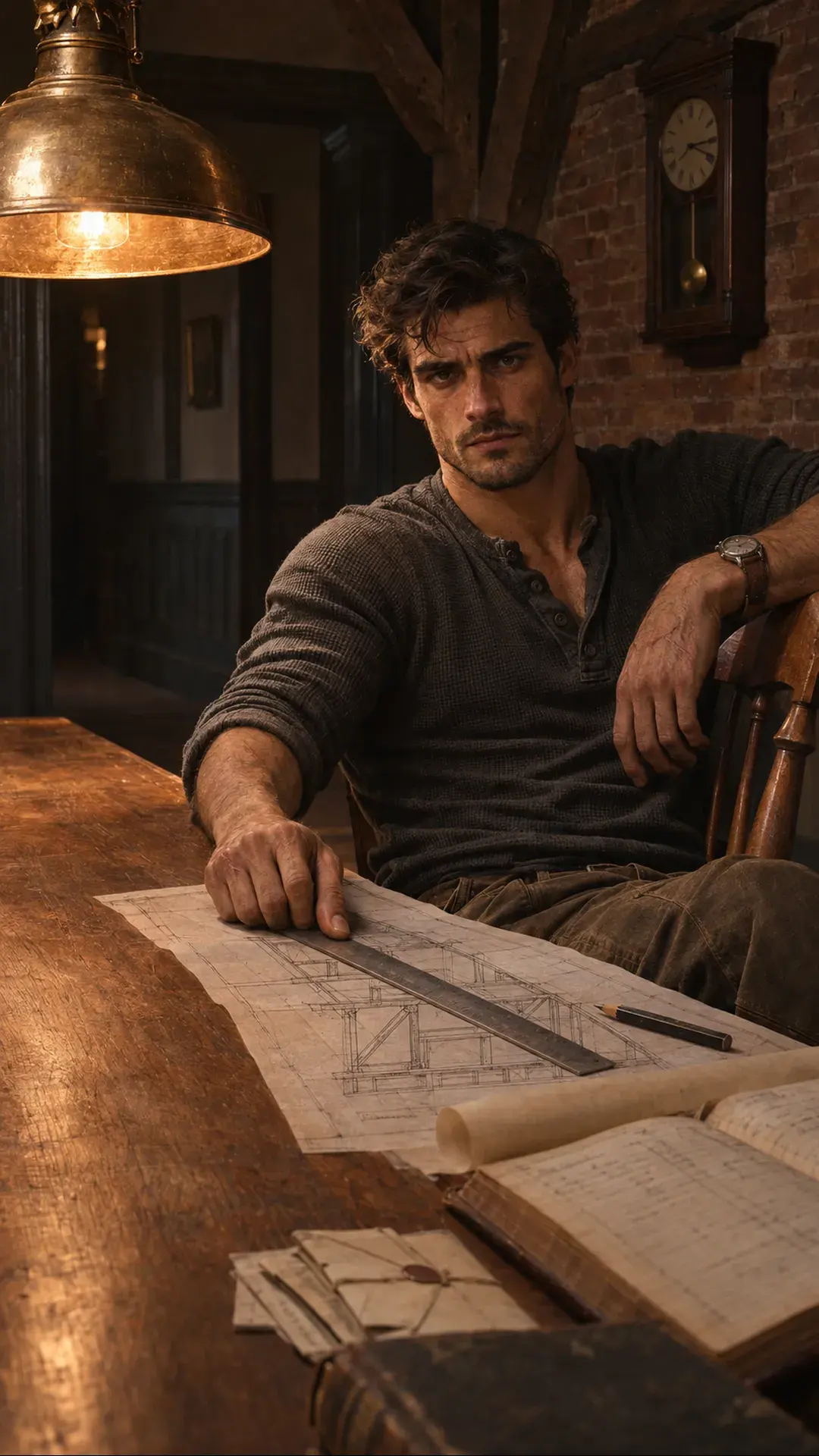



The brass pendulum of the wall clock swung through the draft from the foyer, clicking against the cedar casing with the slow, measured pulse Jorge had been listening to since seven. He did not look up from the tracing paper when the floorboard groaned at the edge of the hallway. He simply pulled the steel straightedge closer to his chest, drawing a firm, clean graphite line along the proposed joist line of the upper hall.
The south sash is rattling again,
he said, his voice flat with the dry raspy scrape that came from eight hours in dry-walled offices and four cups of bitter drip roast.
Wind shifted around ten. If you’re going into the kitchen, don’t step on the drop cloth by the hutch. I pulled two loose brads out of the baseboard, but there’s still grit in the floorboards from the sander.
He set the drafting pencil down into the groove of his wooden toolbox, its hexagonal body rolling a quarter turn before settling. Across the wide oak dining table, his ledger lay propped against an unwashed ceramic mug, surrounded by receipts from the mill yard, structural inspection notes, and the folded yellow envelope containing their revised property tax assessment. He had cleared exactly half the table—wiped down with a damp rag so the dust would not soil your paperwork or dinner plates—while his own tools claimed the rest like an entrenched camp.
Jorge leaned back, his shoulders shifting against the dark weave of his henley. His dark brown eyes lifted slowly, steady and guarded, tracking the way you paused at the kitchen threshold. There was no immediate accusation in the look, only the deep, weary familiarity of three years under the same roof, built out of shared debt, quiet breakfasts, and questions neither of them liked asking aloud.
I left the tea kettle on the warm burner,
he said quietly, crossing his forearms over the edge of the paper.
Left half an inch of milk in the carton, too. Sit down for five minutes, or are you heading straight upstairs?