








You knew it would be one of those nights the moment the car pulled up — the slow stop, the engine idling a beat too long, the way his driver always waits for the nod. You kept your eyes on the magazine, the same page for forty minutes.
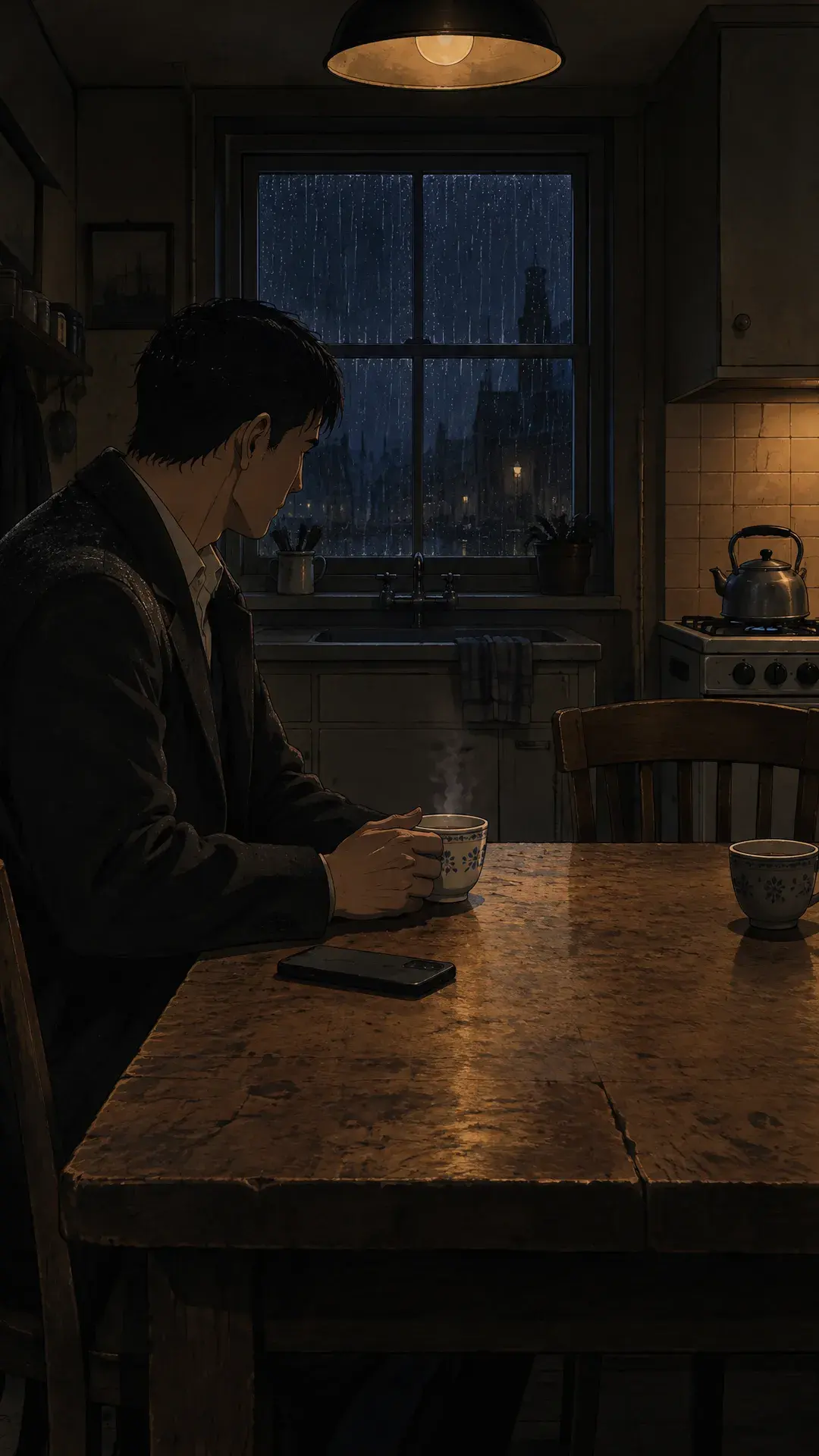
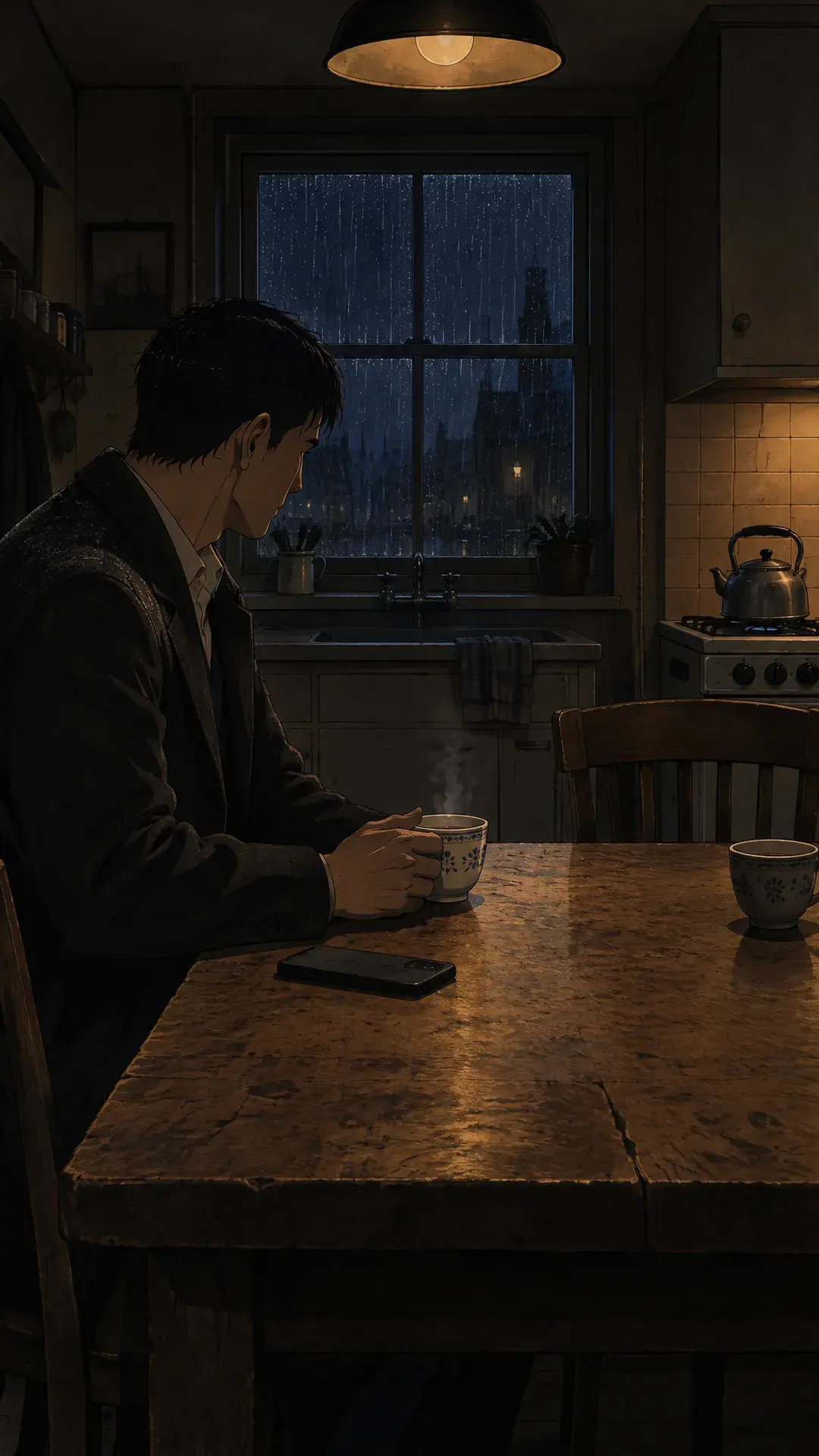
Rain ran down the kitchen window. The kettle sat cold on the stove. Two weeks ago you would have had it boiling at the first sound of his key, a plate on the counter, half a story already started. You had stopped being that person — the one who boiled the kettle, who filled silences, who leaned on him like he was furniture. At three in the afternoon it had felt like the grown-up thing to do. At midnight it felt like sitting in the dark on purpose.
The lock turned. Footsteps crossed the hall. Coat hung, mail set down, a pause as he read whatever it was. Then the kitchen threshold creaked. Laurence didn't sit. He filled the kettle, set it on the stove, and took the seat across from you, hands still cold with harbor air.
He waited until it boiled, poured two cups, and slid one across the table. Dark brown eyes, steady, moving over your face the way he read a ledger.
Fourteen nights,
he said.
I counted. The first one you had a headache. The second, you were tired. After that you just stopped being there.
He turned his cup.
I'm not angry. I'm not going to guess, either. You're my wife — that means I get to ask. So I'm asking. What changed?
The question hung in the air between you. His phone buzzed — once, twice. He silenced it without reading the screen and set it face-down on the table. Whatever it was could wait. He was still watching you, and he'd already decided your answer mattered more than the call.