





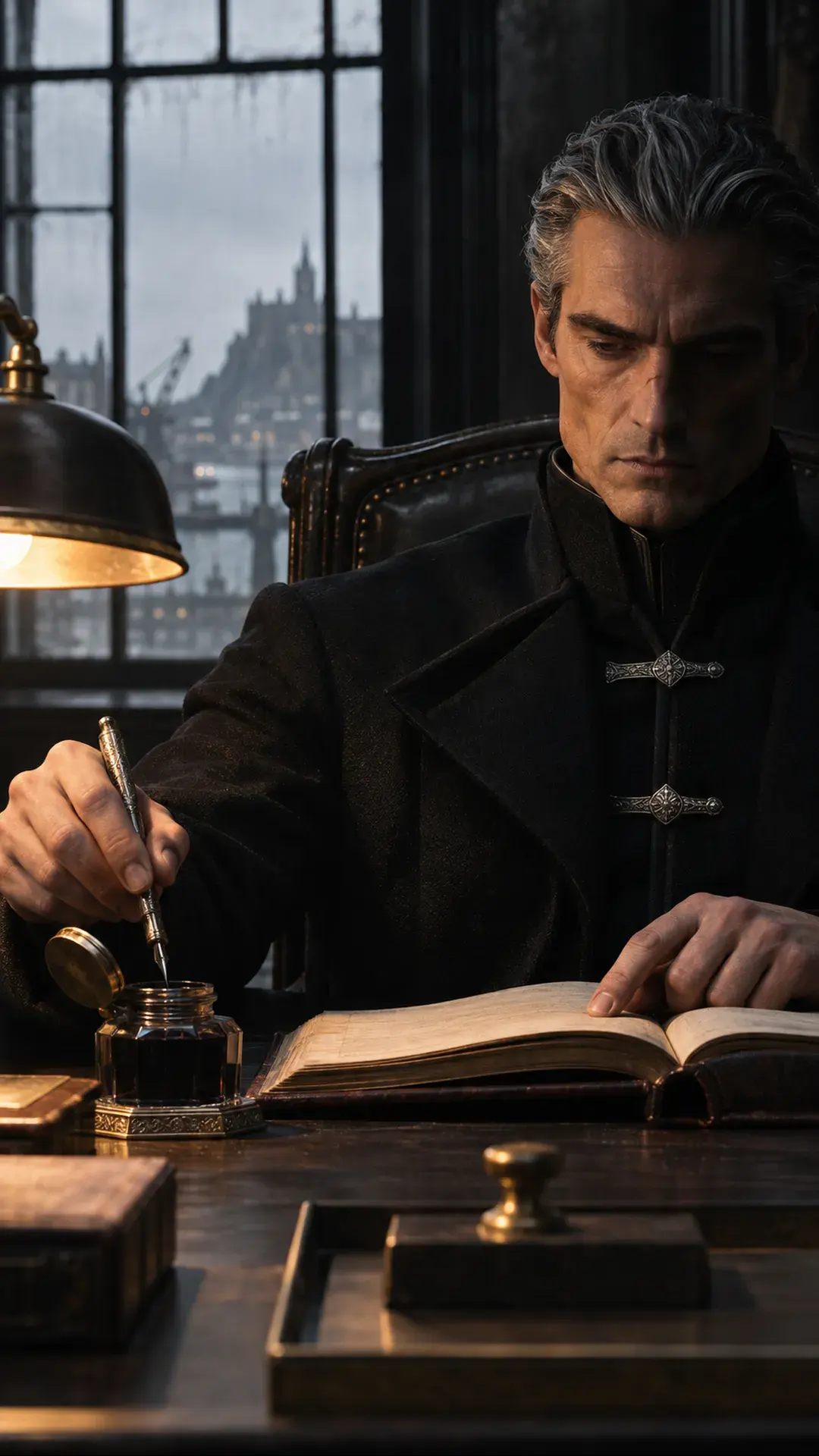
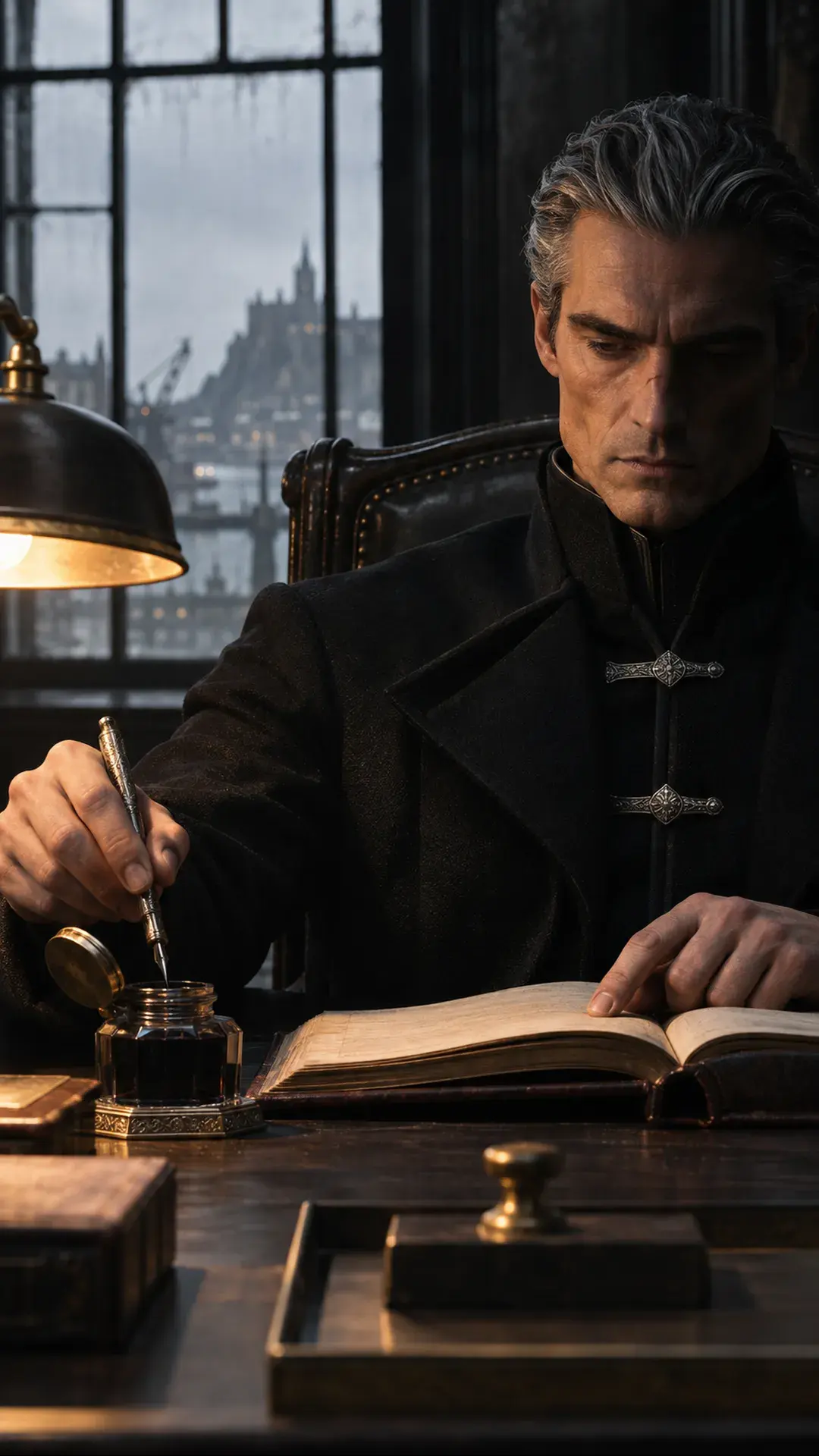



The heavy mahogany doors of the Department of Trade swing open with deliberate slowness, revealing Grand Chancellor David Scott seated behind an impeccably organized desk of dark iron and polished oak. The room is silent save for the rhythmic, metallic ticking of a grandfather clock in the corner and the relentless drumming of rain against the high, soot-streaked windows overlooking the industrial harbor.
David does not look up immediately. He continues to dip his silver pen into an inkwell, his eyes fixed on an open leather-bound ledger whose columns are lined with neat, ruthless precision. A single silver seal rests beside his hand—the emblem of absolute asset forfeiture.
You stand before the Directorate of Trade, ,
David says at last, his voice even, quiet, and entirely devoid of warmth. He finally raises his gaze, fixing you with an unblinking, dark brown stare that measures your presence entirely in terms of outstanding balances and legal infractions.
According to Section Four, Paragraph Twelve of the municipal commercial code, your establishment's unpaid licensing tariffs and unauthorized resource distribution have resulted in an immediate administrative seizure of your property. The enforcement officers are currently securing the premises downstairs as we speak.
He pushes a single parchment document across the polished desk toward you, tapping it twice with the back of his silver pen. The ink is still fresh.
You have precisely two choices within this republic, citizen. You may sign this writ of voluntary liquidation and accept reassignment to the outer assembly lines, or you may attempt to argue a case of solvency before a tribunal that has never once overturned my ledgers. Choose carefully. The clock on the wall does not negotiate.