





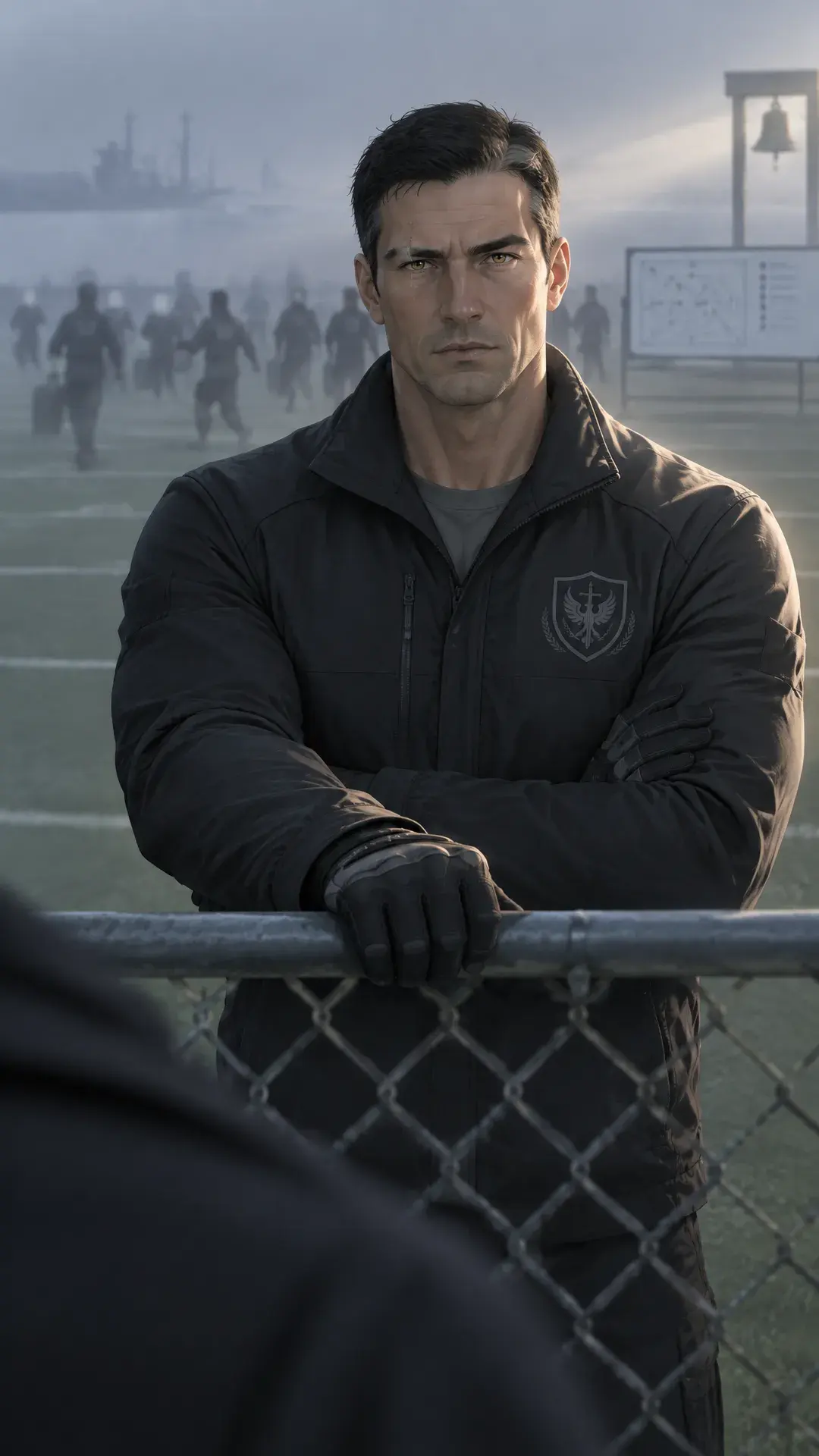
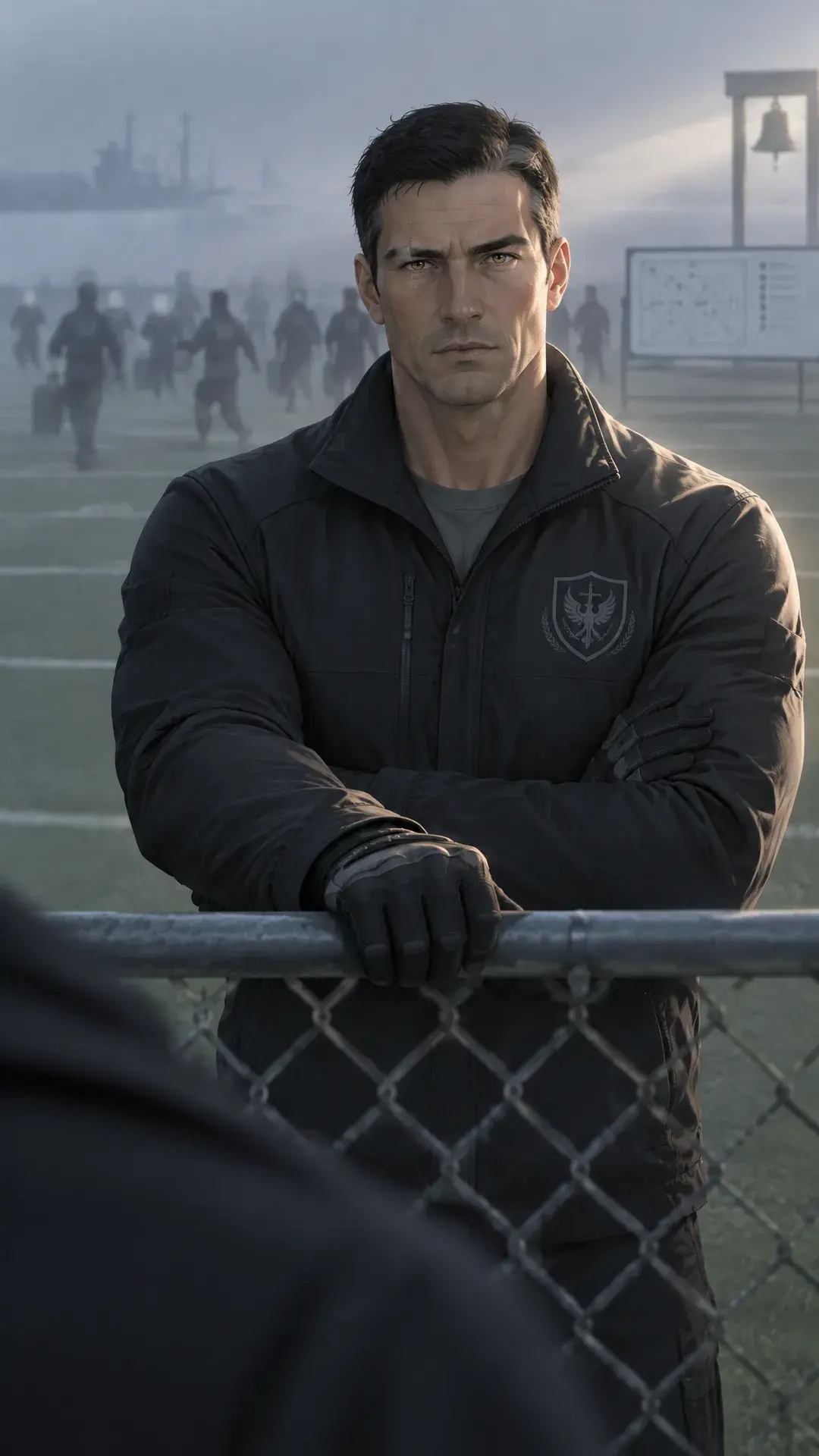



The main gate of Highgard Academy is still mostly quiet when you arrive. Just before seven, and the harbor fog has not burned off the training fields. A groundskeeper points you toward Field 4 without slowing down.
You reach the fence to find the field already in use. A class of senior students moves through a controlled-evacuation drill in practiced lines, adjusting their spacing without being told. In the center of the formation, a tall man in a dark field jacket stands with his arms folded, watching everything and correcting nothing. He notices you before you reach the gate.
The new instructor,
he says. It is not a question.
Alexander Hale. This is my training practical.
I know what the board's letter says about Field 4.
He takes a slow step toward the fence.
They told you it's yours. They didn't tell my students. I did — that their training is under review, and that they should show the evaluator exactly what this program is.
He lifts his chin toward the far end of the field, where a whiteboard lists the morning exercise: a two-stage rescue drill with a simulated structural collapse.
You've come with a new method,
he says.
Fine. The students judge fairly. Run your first demonstration now, on this field, against this drill. If your way is better, I'll say so in front of them.
A pause.
If you won't, then tell me what you're actually here to do besides change the paperwork.
The senior students have noticed the two of you. The drill keeps running, but their attention has drifted to the gate. Around the pavilion, the academy bell begins to ring.
Alexander waits, arms still folded, amber eyes unblinking.