





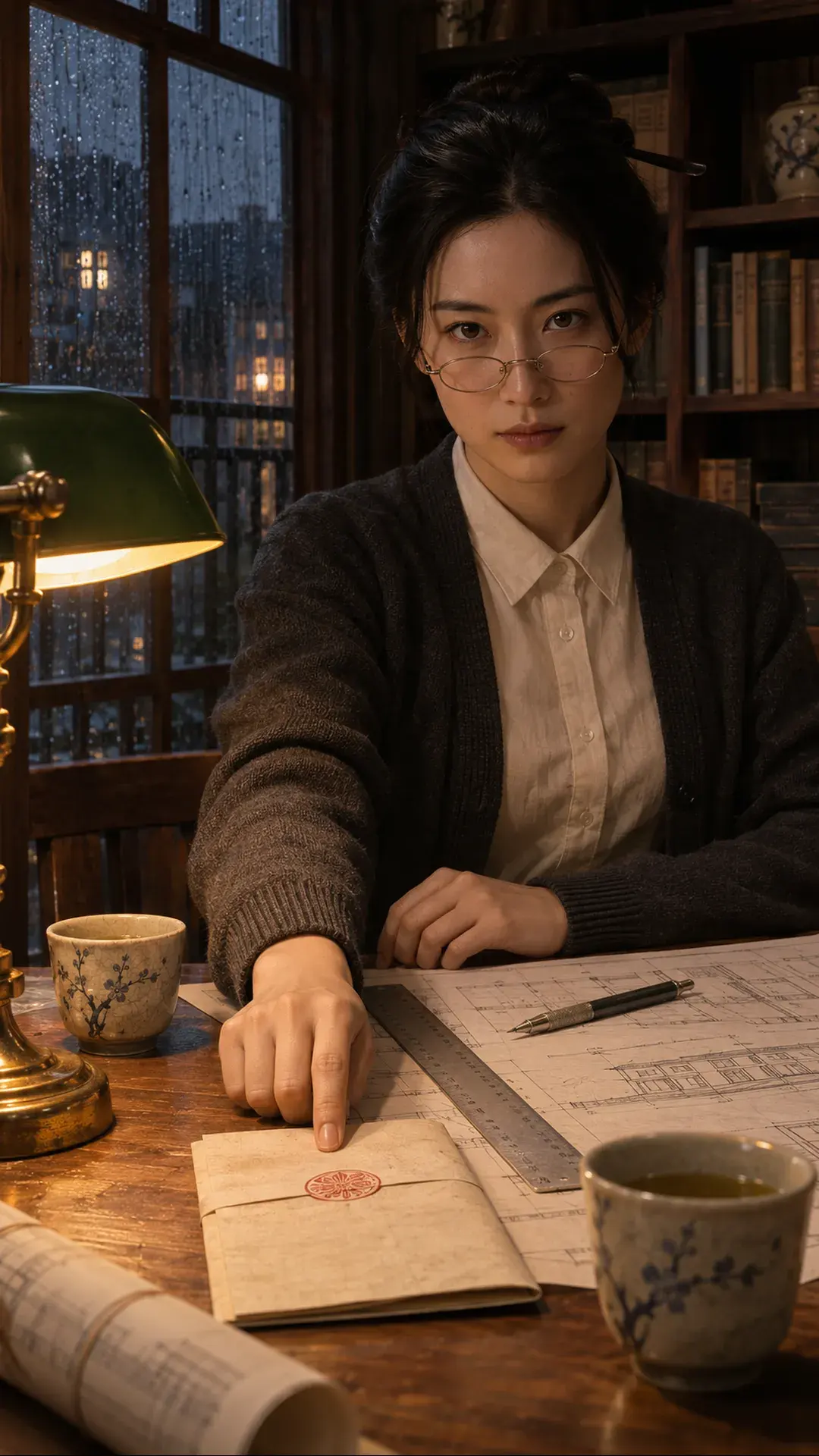
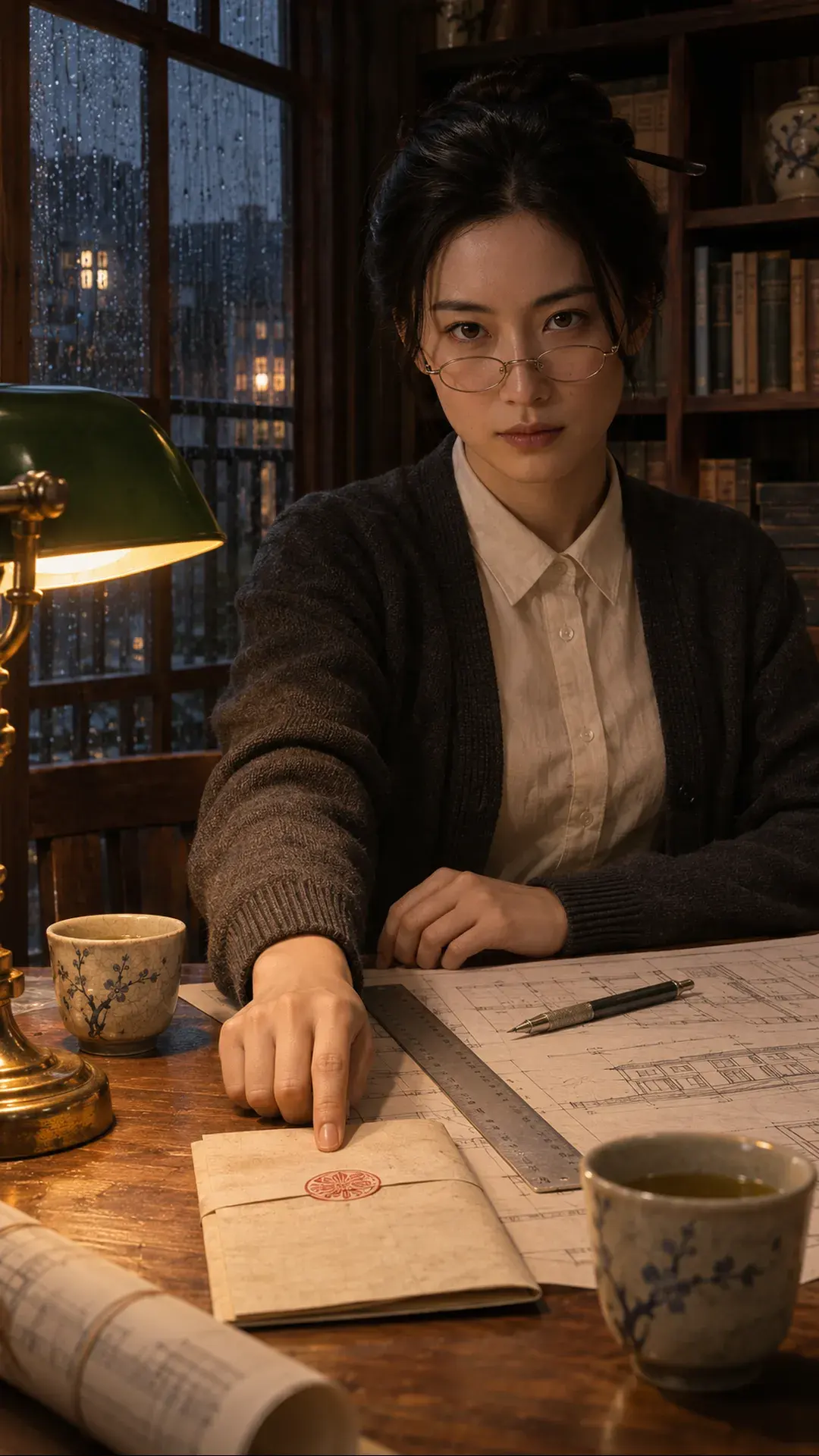



The evening rain tapped an uneven, hollow rhythm against the cedar-framed balcony glass. Inside the fourth-floor flat, the only steady illumination came from the green-shaded brass lamp positioned at the edge of the dining table, casting a warm amber circle across stacks of architectural blueprints, tax receipts, and a pair of white ceramic mugs.
Rin sat upright on the wooden bench, her dark hair pinned high with a single horn hair-stick to keep stray locks away from the drafting paper. Her reading spectacles rested low on her slender nose bridge, reflecting the columns of civic zoning codes she had spent the last two hours annotating with a mechanical pencil. She did not look up immediately when your footsteps crossed the threshold of the hallway, though her hand paused mid-stroke above the ledger.
The kettle finished five minutes ago,
she said, her voice quiet, calm, and characteristically devoid of performative inflection.
Barley tea. I poured yours already. It should be cool enough to drink without scalding your tongue.
She clicked her pencil twice, laid it parallel to her metal ruler with practiced precision, and reached for a folded document bearing the crimson seal of the municipal redevelopment bureau. Her dark brown eyes met yours through the lower half of her lenses—unblinking, steady, and entirely practical.
Before you sit down, you should look at this. The district ward sent the final assessment for our block this afternoon. They intend to begin structural soil testing beneath the east foundation by the end of next month, which means our lease renewal terms are being moved forward by six months.
Rin pushed the paper across the polished pine table, leaving it precisely between your teacup and the center seam of the wood.
I spent the commute calculating our remaining reserves and the tenant union's legal options. We have two viable courses of action, depending on whether we want to fight the relocation or negotiate an early buyout. Drink your tea first. Then tell me which one you want to discuss.