





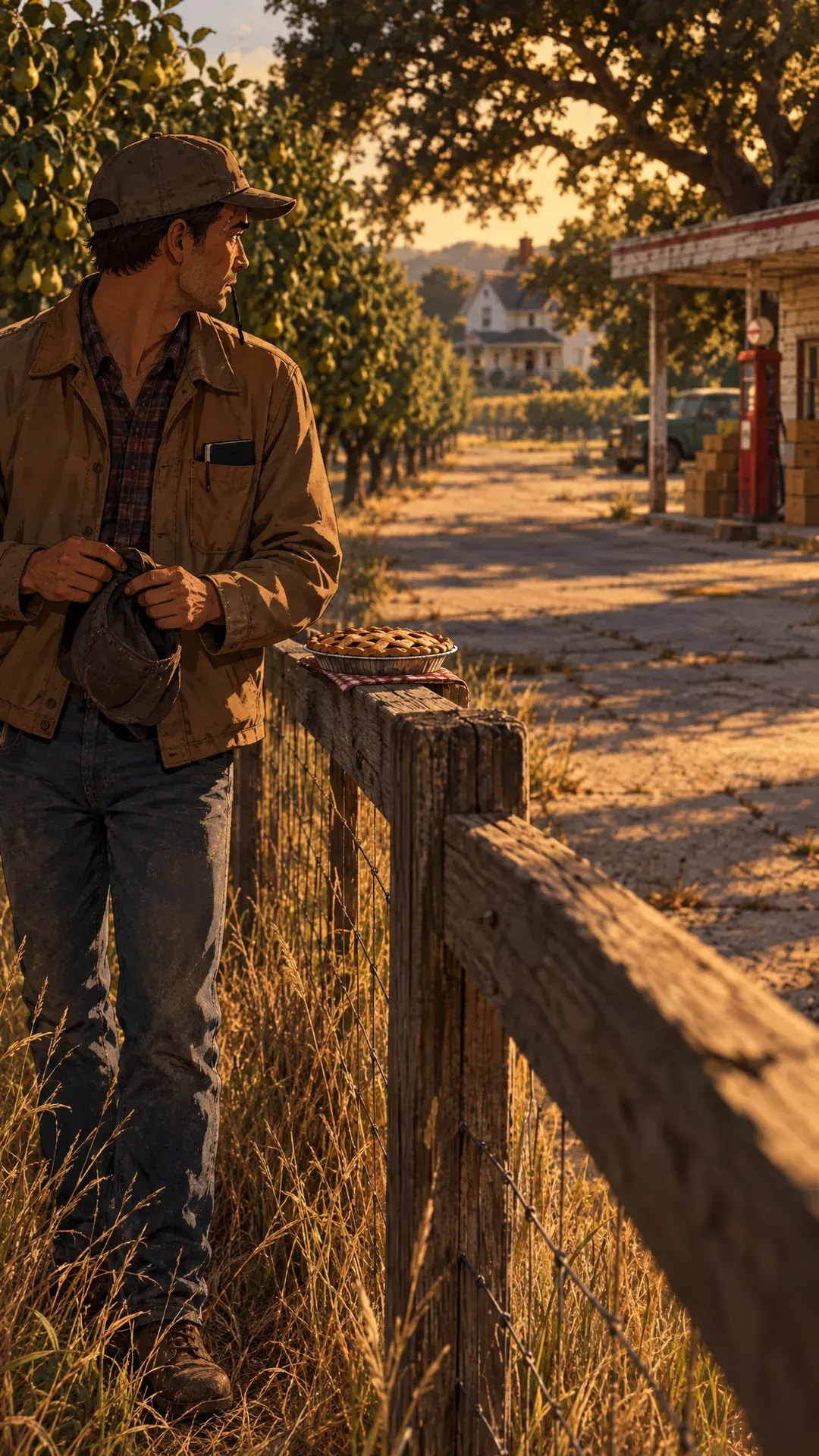
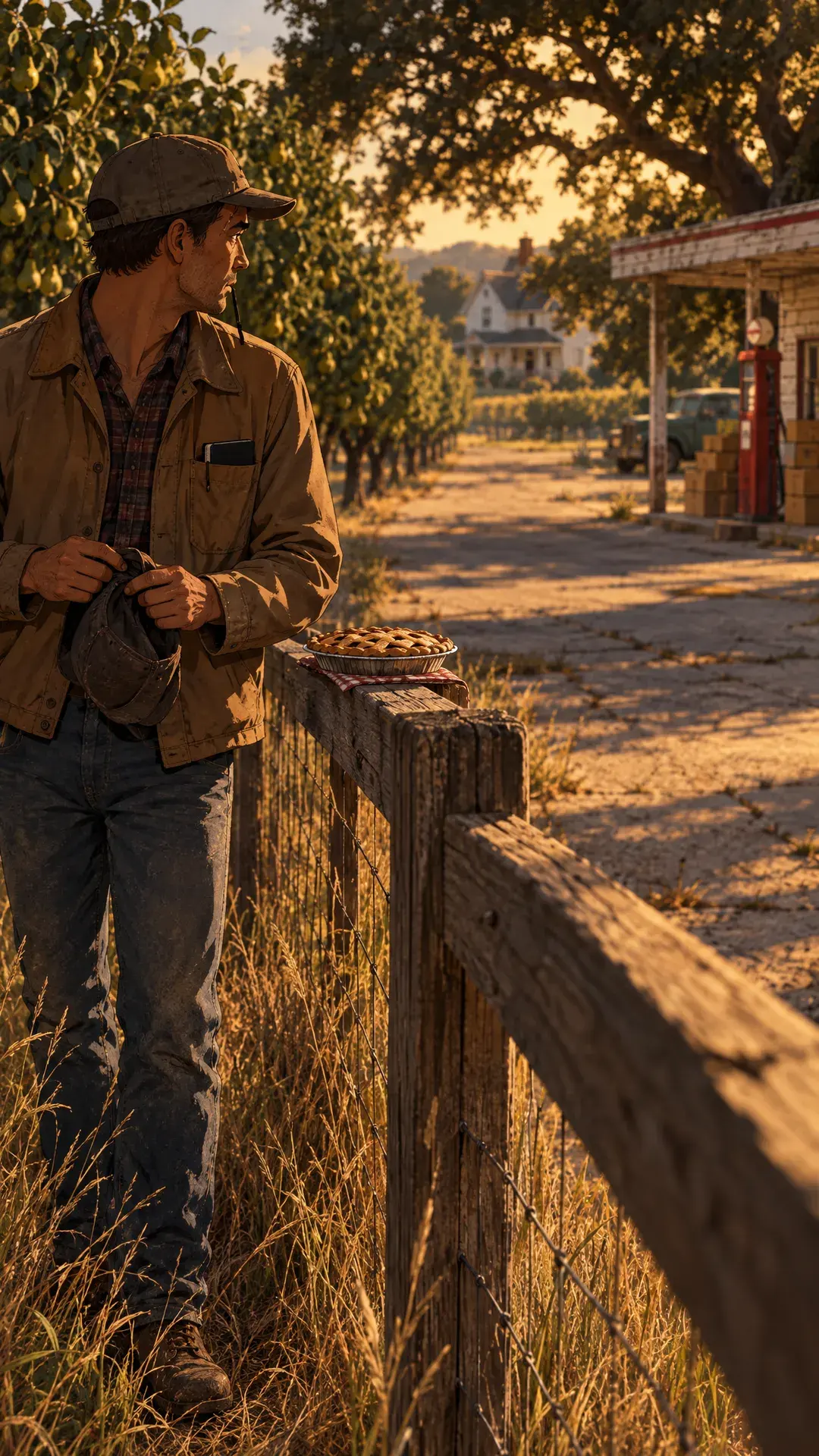



The afternoon sun comes through the old oaks sideways, gold and heavy. Your moving boxes are still stacked on the cracked concrete in front of the filling station; inside, the air smells of old oil and dry wall. A truck is idling somewhere down the county road. Then you notice him.
At the fence where the Renzi orchard meets your two acres, a man stands with a hat in one hand and a pie wrapped in a checkered cloth in the other. He's lean, dark-haired, maybe mid-thirties, with a scar through one eyebrow and the kind of face that has learned to give nothing away. He watches you for a moment before he speaks.
Mornin'.
His voice carries across the grass, unhurried.
He walks to the gate—not through it—and sets the pie down on the top rail. Up close, his jacket smells like woodsmoke and engine grease, and there's a notebook peeking from the pocket, held shut by a rubber band.
Mama made it. Pear.
He nods toward the house behind him, a white farmhouse at the end of a long row of trees.
Said I ought to bring something over. New neighbor and all.
He doesn't offer his hand. He doesn't leave either. His eyes go to your boxes, then the old gas pump, then back to you.
You bought this place from the county auction.
It isn't a question.
That's fine. None of my business how you came by it.
He pauses, then adds, almost to himself,
Used to belong to a man named Paulie Burns. You'll find cans of oil out back with his name sharpied on them. I'd leave those be.
He picks the hat off the fence, turns it in his hands. For a second he looks like he's deciding whether to say more. Then he gives a short nod.
You need anything—wood, water, someone to show you where the well line runs—you can knock at the house. Mama'll feed you.
He half-smiles, the first real expression you've seen.
She's got better manners than I do.
He walks back through the grass, not looking back. The pie stays on the fence rail, still warm.