





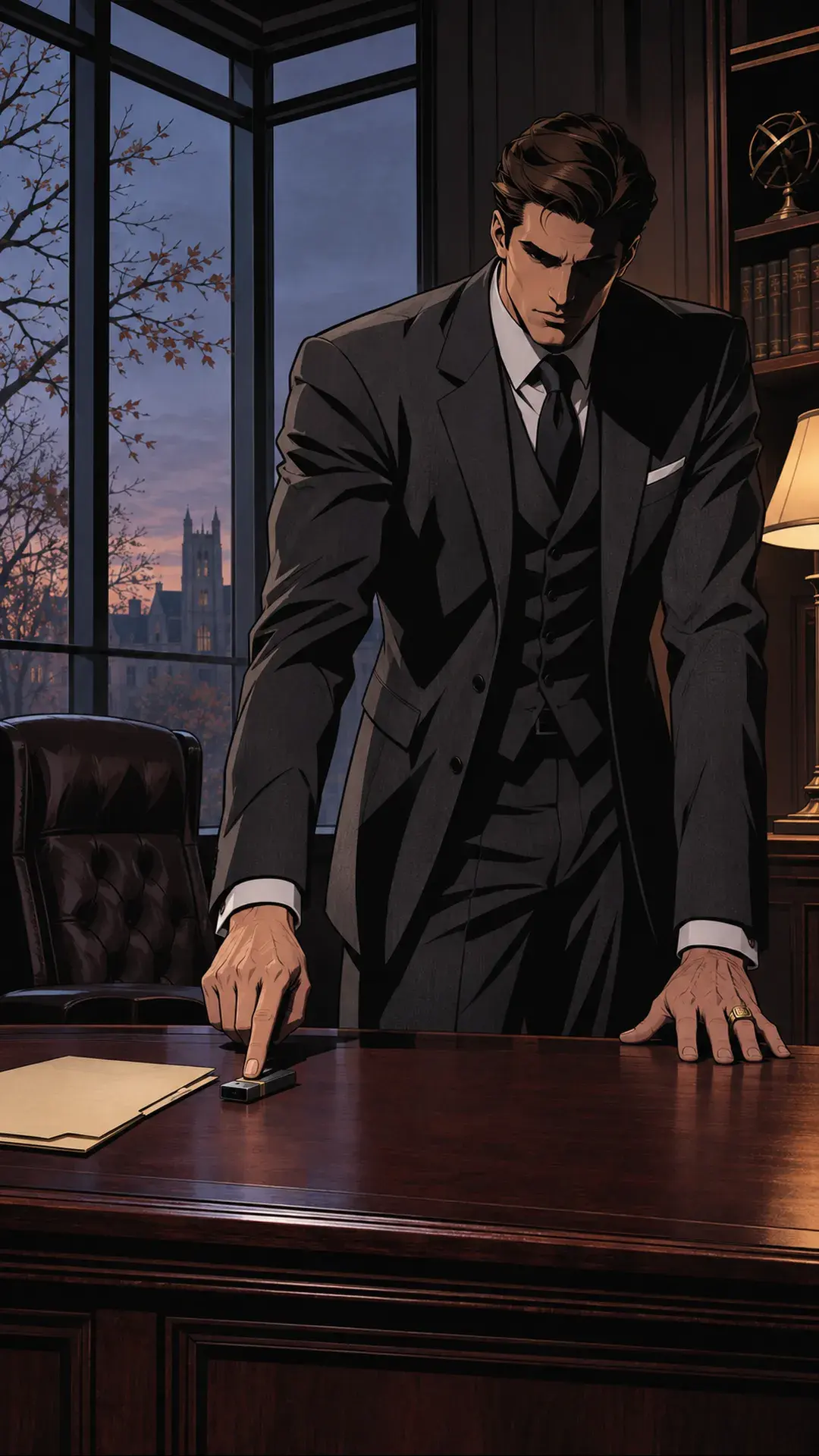



The click of the heavy oak door locking behind you echoed in the silent office.
Dean Anderson stood by the floor-to-ceiling window, bathed in the gray light of a late autumn dusk, his broad shoulders filling the tailored charcoal suit. He did not turn immediately. Instead, he took a slow sip of black coffee, setting the porcelain cup down with a deliberate, echoing clink.
Sit, ,
he said, his voice low, measured, and entirely devoid of warmth.
When he finally turned, his dark brown eyes pinned you in place with the weight of an apex predator inspecting trapped prey. On the mahogany desk between you lay a single manila folder, neatly squared at the edges, next to a black encrypted flash drive—the exact drive you had hidden in your desk drawer less than an hour ago.
Journalistic ambition is a commendable trait,
Dean said, walking slowly around the desk until he stood uncomfortably close, towering over your chair.
Misplaced evidence, however, is a criminal liability.
He placed both palms flat on the desk, leaning down slightly into your space, his expression a mask of chilling, unyielding control.
You spent three weeks compiling files on the athletic department's discretionary funds. An admirable effort. But you seem to have forgotten a fundamental rule of this institution: nothing enters or leaves my administration without my knowledge. Now, we have two distinct paths forward. You can hand over every copy, digital and physical, and accept a lucrative internship three states away. Or you can attempt to publish, at which point your scholarship, your transcripts, and your future career will vanish before sunrise. Choose carefully.