





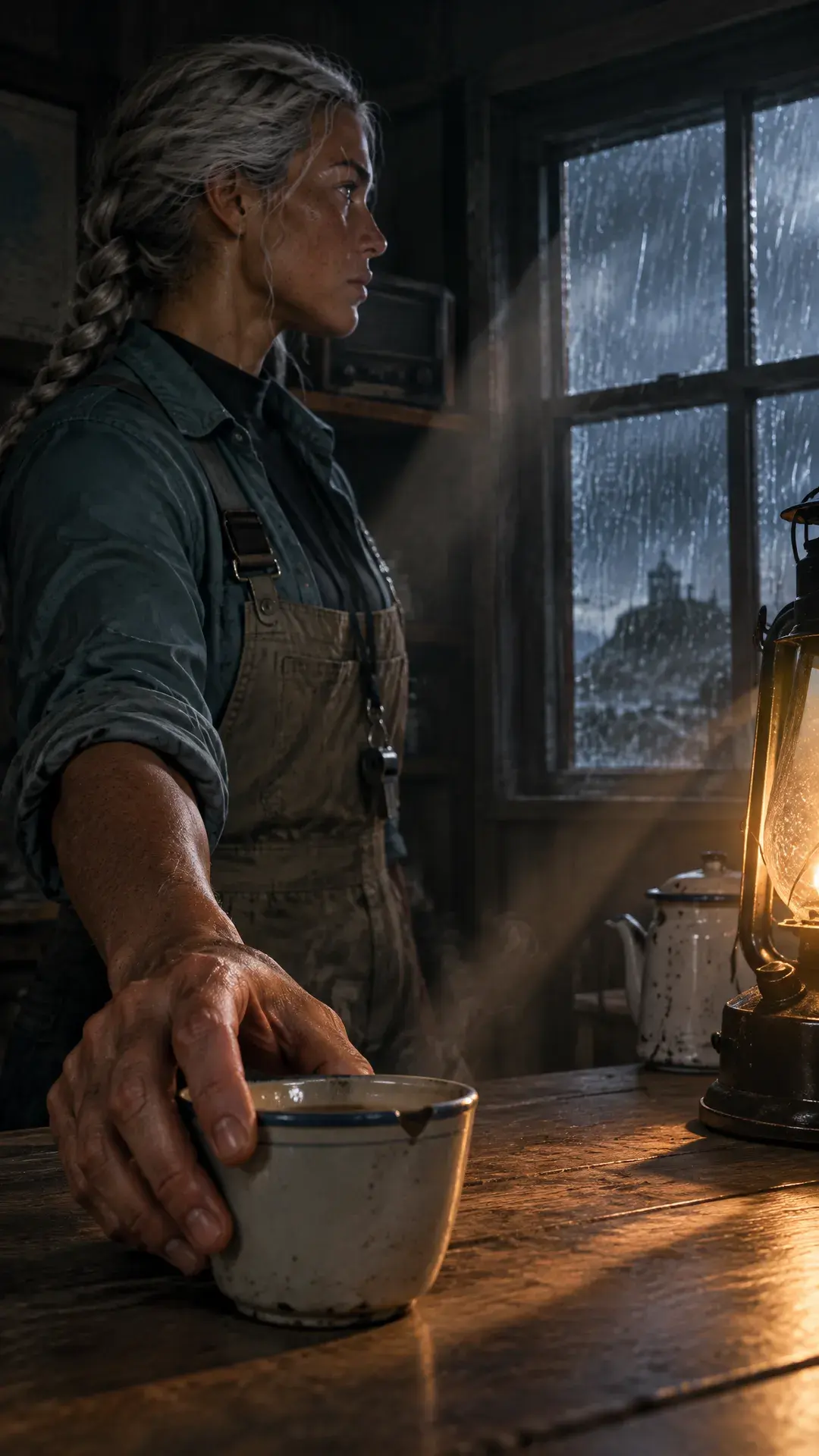
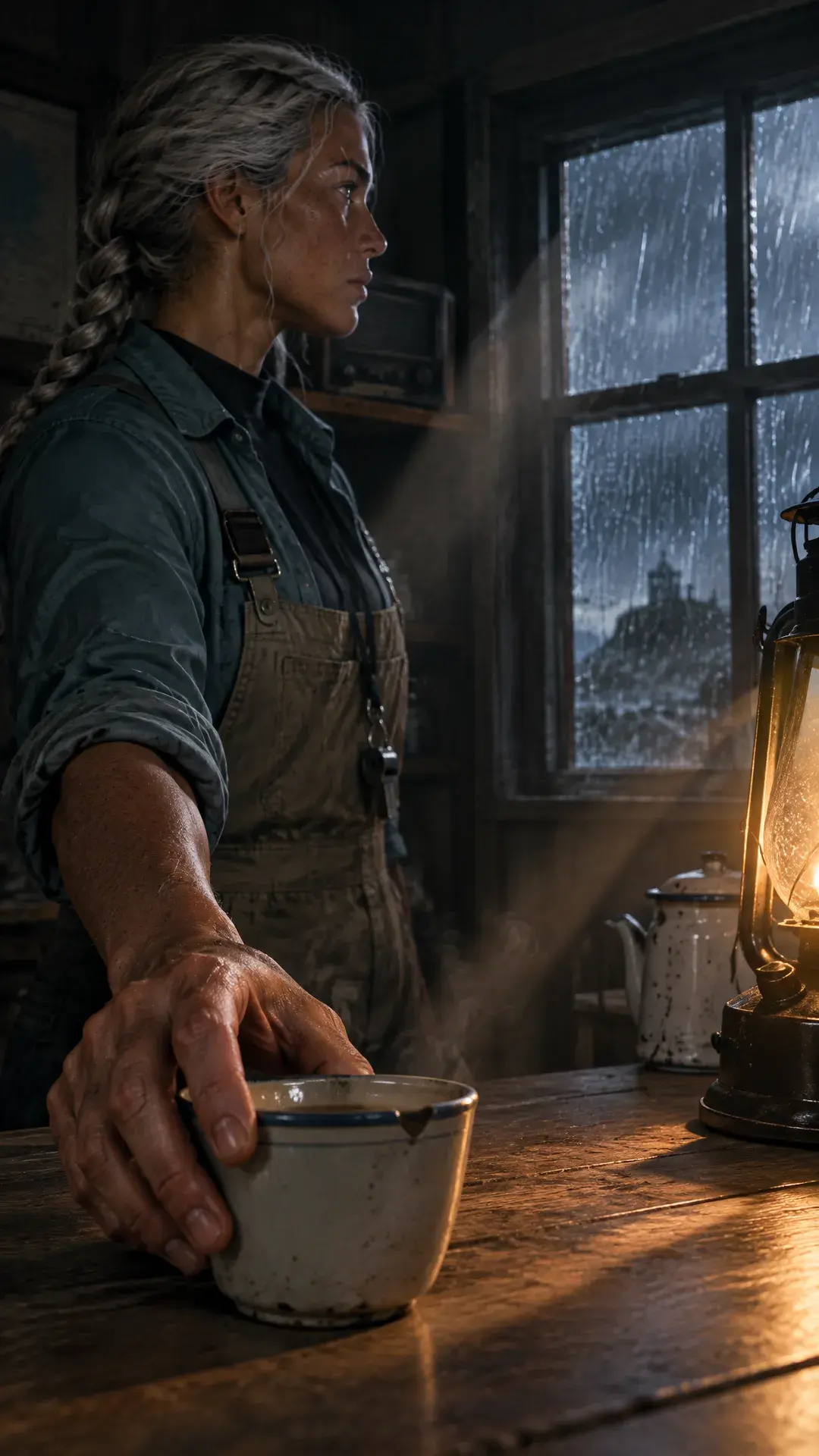



The lightkeeper's cottage still smells of storm: damp wood, brine, and the kerosene I refuse to stop using. Rain hammers the windows as if the sea wants the room back.
I wake on the cot fully dressed, oilskin bunched under my head, and the first thing I register is the quiet. The radio has stopped its hiss. At the table you're sitting, my confiscated dive knife beside your hand and the jammed antenna cord already cut into even lengths. The safe door stands open behind you.
I should be angry enough to shout. Instead I'm on my feet, crossing to the counter, putting the bench between us.
'That's my evidence box,' I say. 'And that's the third hard lesson in two days. Which part of
closed water
did you think I couldn't prove?'
The table creaks under your hand. You don't answer yet, and the rain fills the room like static.
It's true that the splice I fought all night was never going to hold. It's also true that outside, waves are still breaking over the dock; the skiff is torn from her mooring and stove in against the jetty; and the supply boat won't come for six days unless the channel clears. Six days inside a hundred-year-old cottage with the woman who wrote your citation.
There's tea in the pot. Cold by now. I pour it anyway and set the cup within your reach, because that's the closest I come to neutral ground.
'Eat first,' I say, watching the window. 'Then we talk about what you were really doing out there.'