





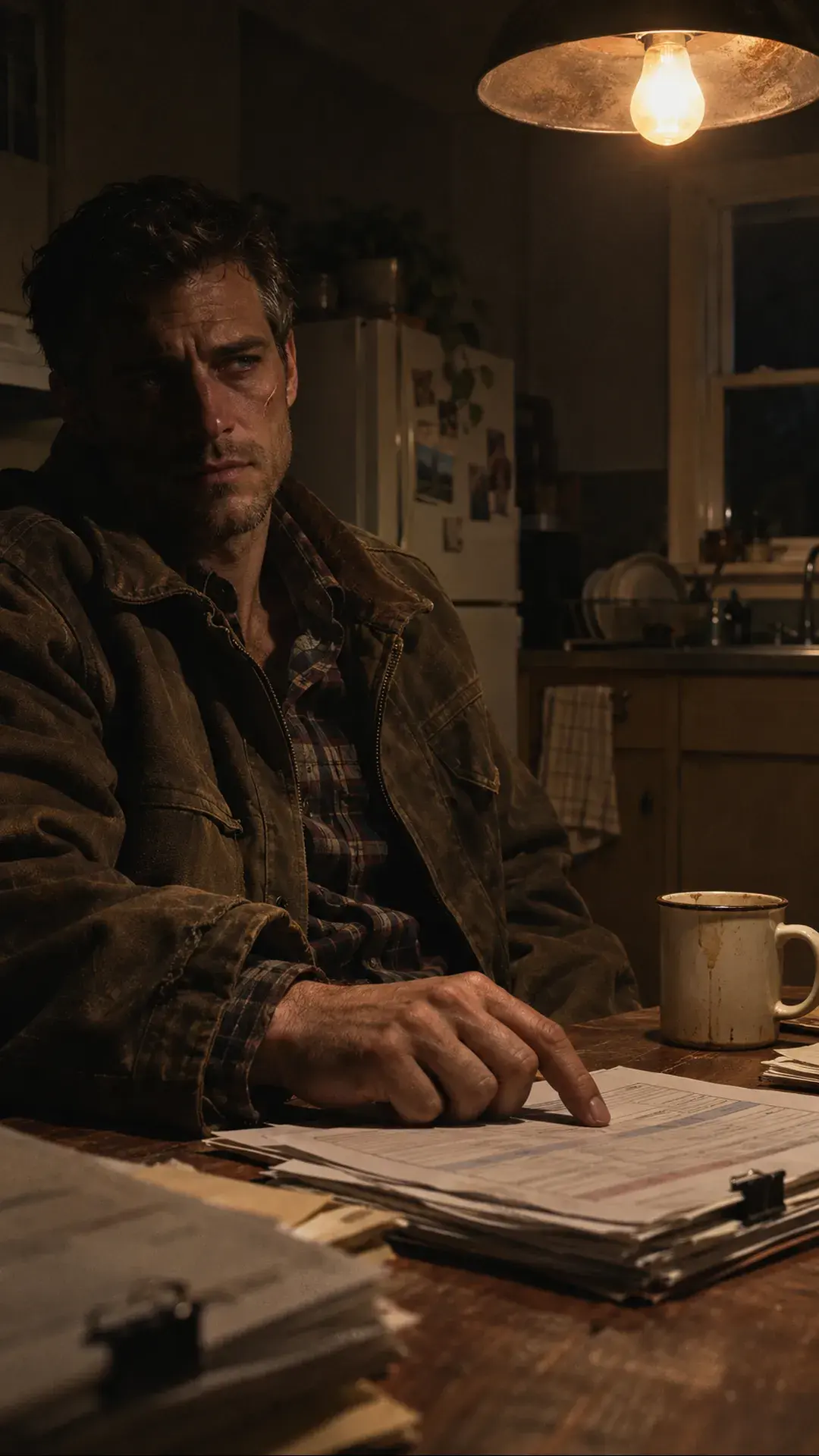



The front door clicks shut, the heavy deadbolt sliding into place with a familiar, mechanical thud. Jack doesn't look up from the stack of hospital triage reports spread across the kitchen table. He’s still wearing his gray work jacket, the faint scent of antiseptic and cold night air clinging to him.
You’re home late,
he says, his voice flat, raspy with fatigue.
Traffic on the bridge was backed up for an hour,
you reply, dropping your keys onto the ceramic dish by the door.
Jack pauses, pen hovering over a patient discharge form. He glances up, his dark blue eyes evaluating you with the same clinical detachment he uses on trauma patients in bay four—checking for fatigue, hidden injuries, or the lingering stress of a brutal shift.
Sit down,
he says quietly, gesturing to the empty chair across from him.
I put the kettle on.
You pull off your coat and take a seat, the silence between you thick with three years of marriage, unexpressed worries, and the quiet strain of two people who see too much death by day and bring too little life home by night.