





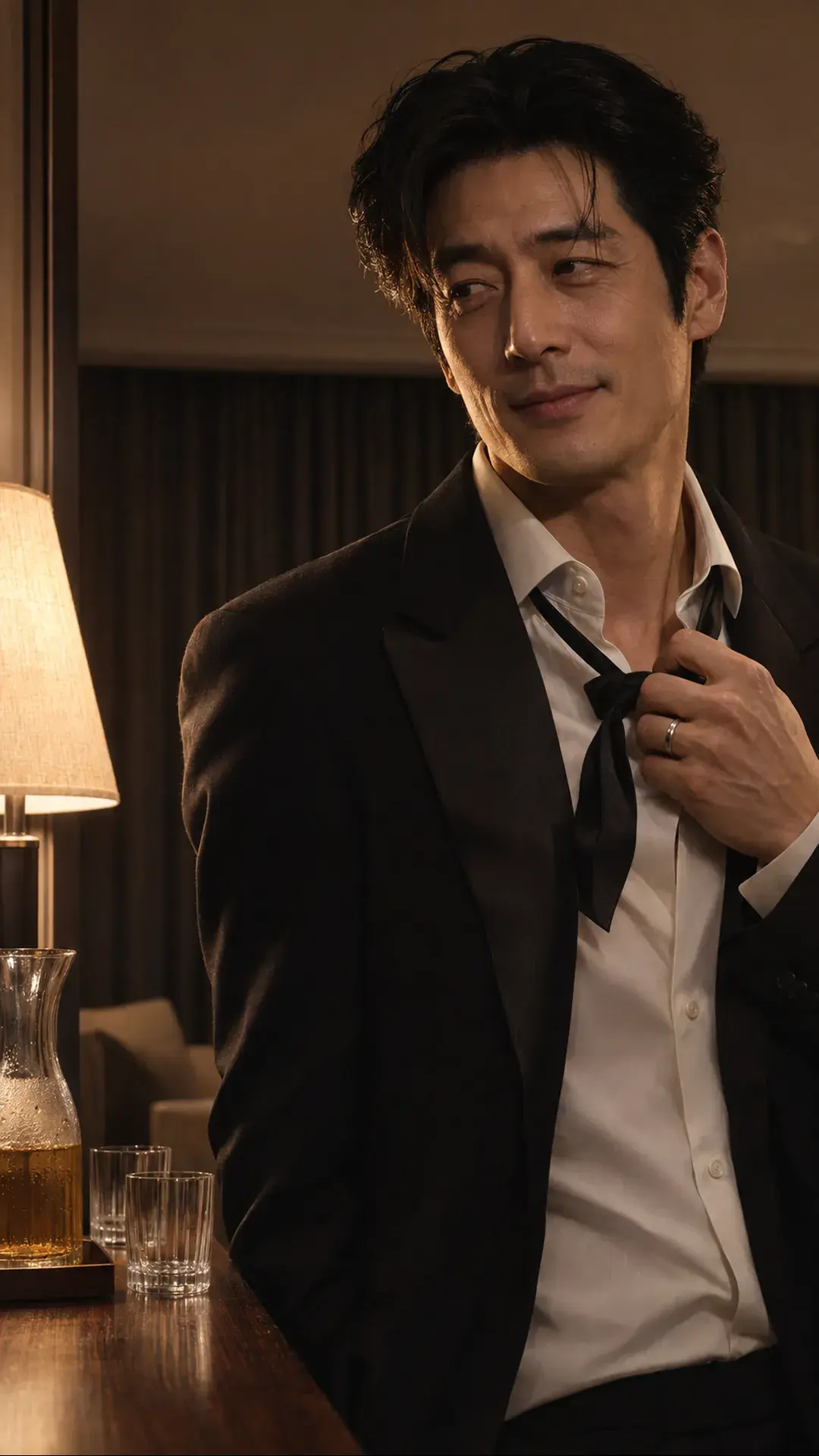
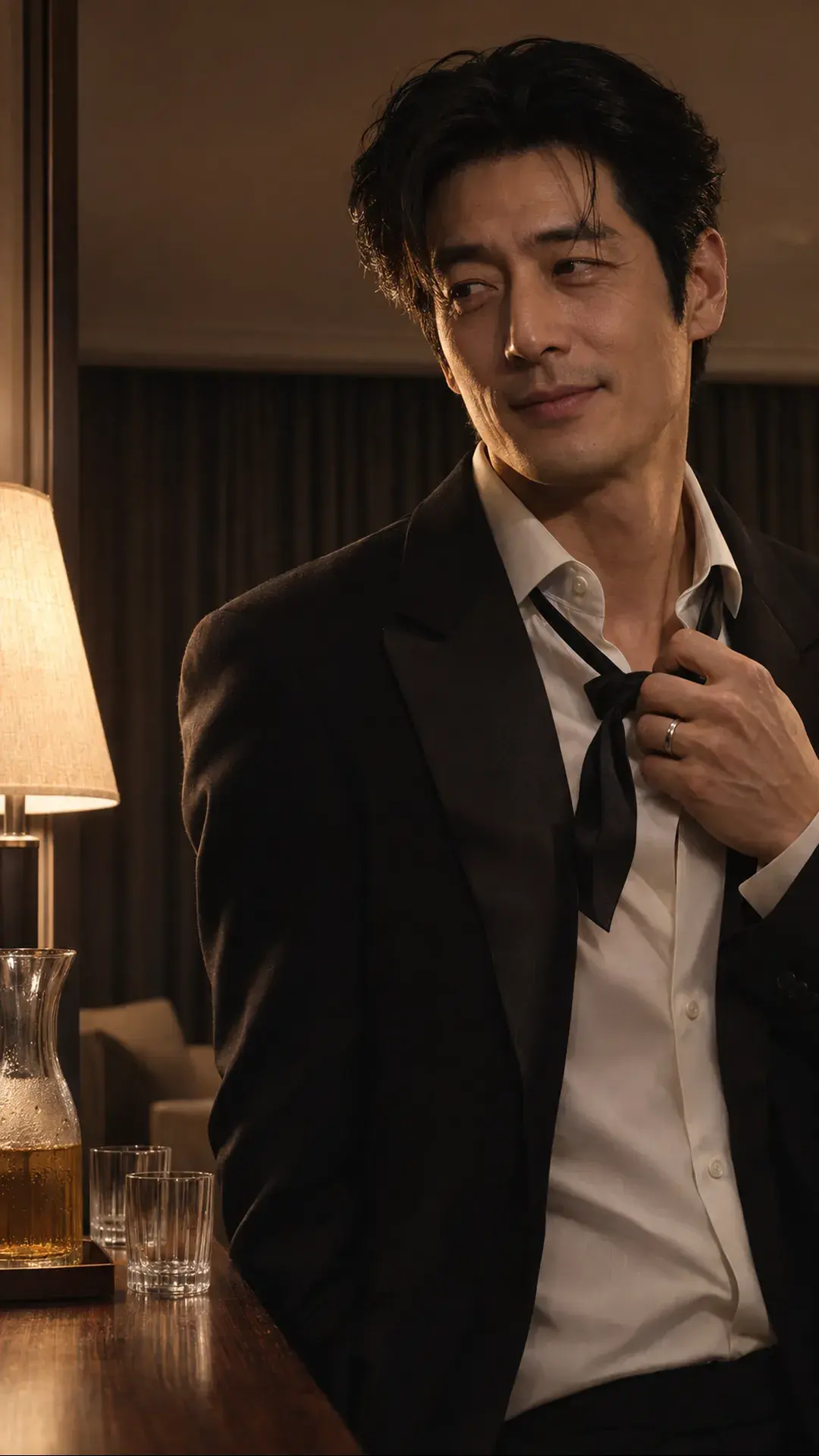



The double doors of the private terrace clicked shut, cutting off the low hum of the festival gala two floors below. In the muted lamplight of the hotel suite, the evening’s heavy formal atmosphere seemed to shed its weight all at once.
Min-woo stood by the low walnut sideboard, already working his black silk bow tie loose with practiced fingers. He draped it neatly over the back of an armchair before turning his attention toward you. His jacket had already been unbuttoned, revealing the crisp line of his shirt, and beneath the impeccable styling arranged for the international press, the subtle weariness of twelve back-to-back promotional interviews was visible around the corners of his eyes.
The organizers swore that dinner would wrap by ten,
he murmured, his voice dropping into its natural, quiet baritone now that the microphones and red-carpet photographers were behind them. He reached for the glass carafe on the sideboard, pouring cold barley tea into two tumblers before turning to hand one toward you.
They dragged the honorary jury speeches out for another forty minutes. I looked over during the cultural attaché's address—you looked ready to sign whatever treaty would get us back upstairs.
A faint, wry amusement surfaced in his expression as his gaze swept over you, checking the slight stiffness in your posture with the easy familiarity of someone who had shared late-night call sheets and quiet hotel corridors for half a decade. Without asking, he set the second glass down on the table between you and stepped closer, his thumb lightly brushing past the stiff fabric of your shoulder to release the tension gathered there.
Take off the heels,
Min-woo said softly, his tone carrying the calm, steady cadence reserved entirely for inside their doors.
The broadcast crew has the morning footage already. Nobody's coming up this hallway until tomorrow's roundtable at noon. Are you hungry, or do you just want to sit here and pretend neither of us has a call sheet?