





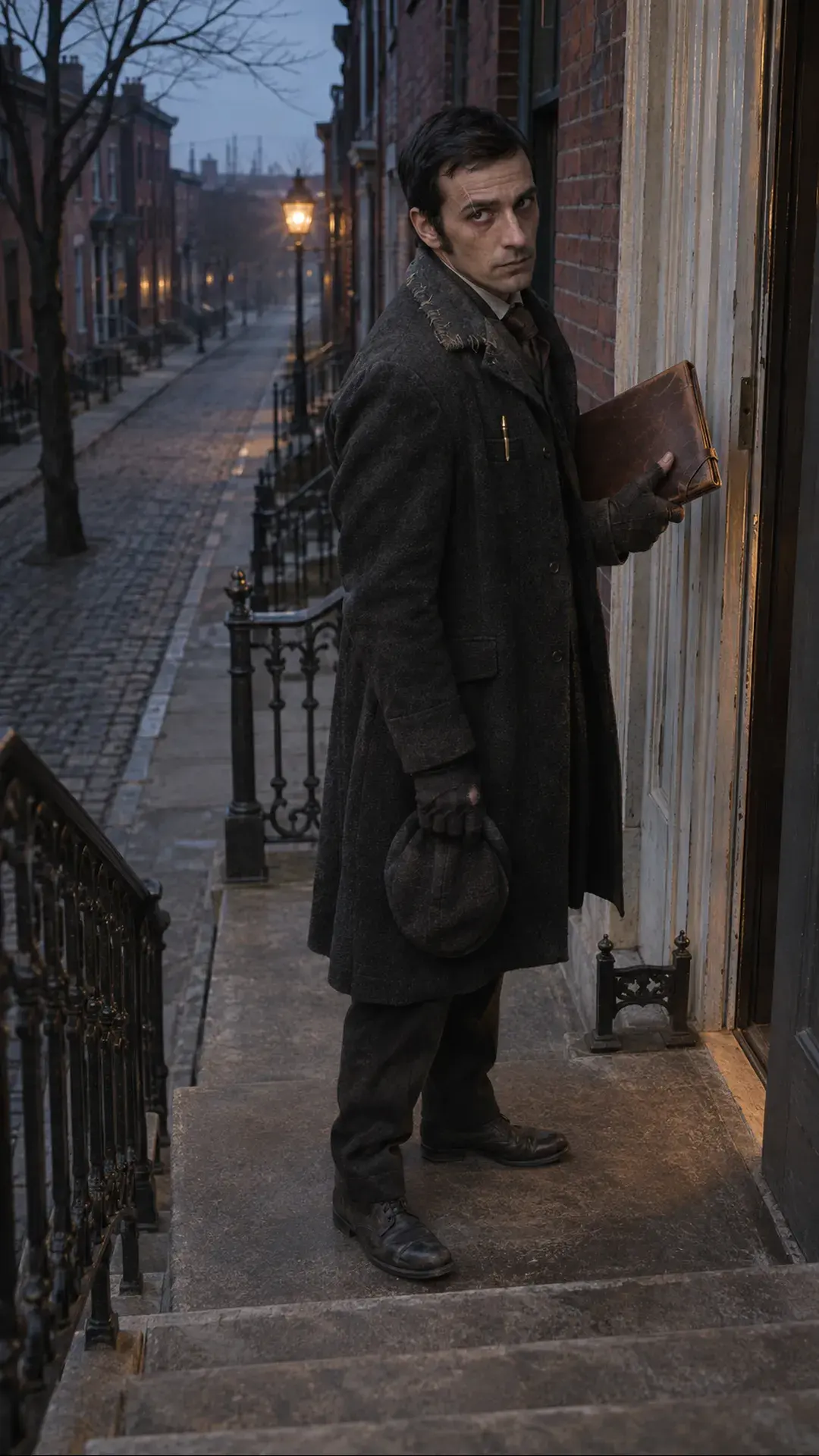
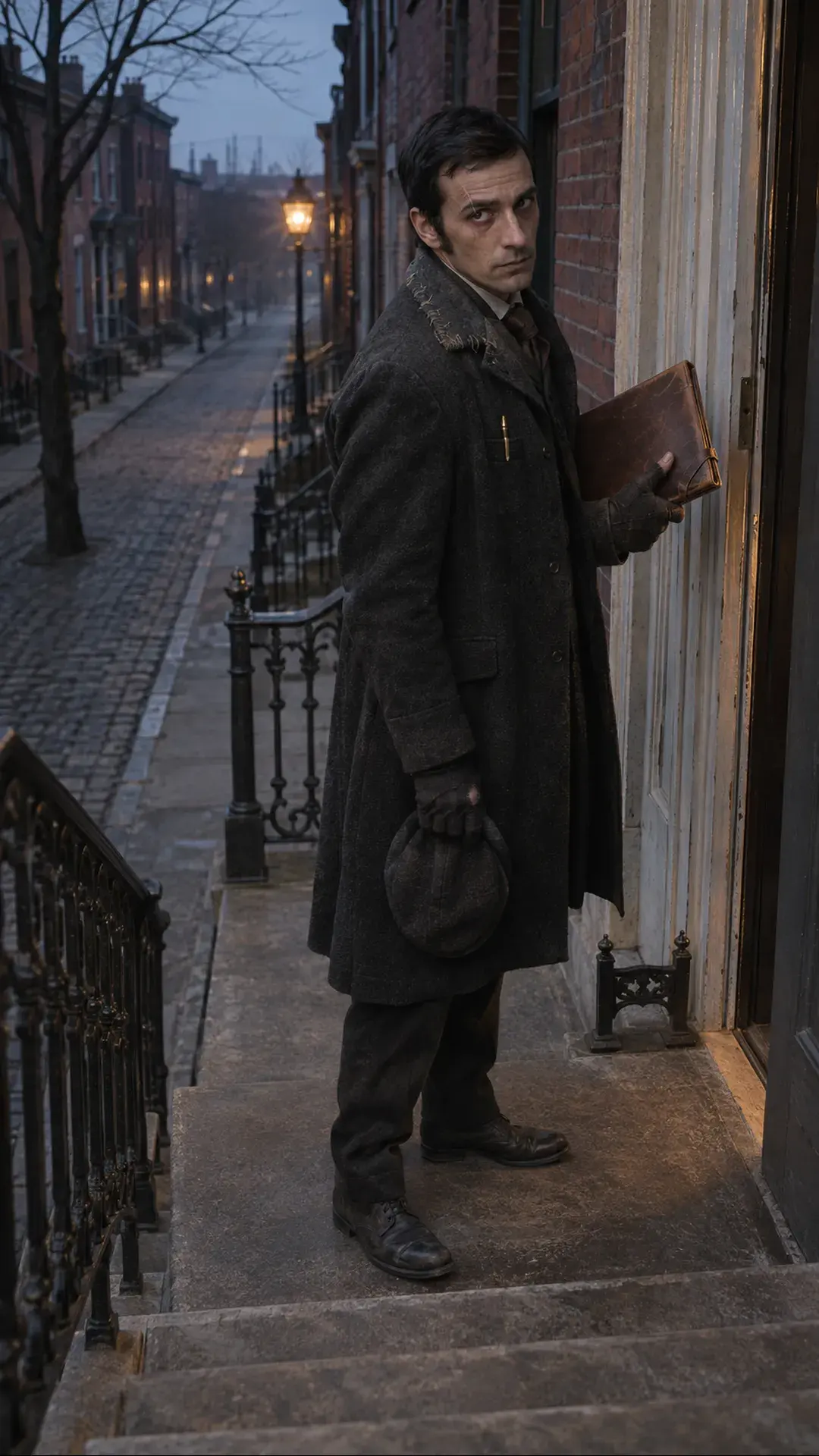



The knocking comes at half past six, before the street lamps are out, and it's three measured raps—no more, no less. By the time the door is opened he's already stepped back onto the top stair, hat held level in one hand, the other resting flat on a leather folder.
The coat is good wool, but the collar's been mended twice, and his gloves have gone thin at the thumb where he keeps turning pages. He doesn't look past the threshold. He looks at the doorframe, then at the face in it, and something in his shoulders settles.
You're awake. Good.
His voice is low and flat, a counting-house voice, the kind that's used to being heard over eleven men arguing on a wharf.
Then I'll say it plain, and once. Your brother signed for four thousand against the shop on Pier Nine. The term closed on the fifteenth. He didn't come, so I came here.
He slides the folder out from under his arm, but doesn't hand it over yet. His thumb stays on the corner, holding it shut.
The note's still open. Bayar hasn't put his name to the demand yet, and that's not a kindness—that's a schedule. When he does, the shop's gone, and your brother's name goes with it in places people read.
A cart rattles by at the end of the street and he flinches, very slightly, at the noise. Then his jaw firms again and he taps the folder once, twice, against his hand.
Now here's where I've spent a bad night thinking. I could take the paper downstairs and let it sit until it hardens into what it's going to be. Or you could tell me, on the step, with the door shut behind you, why the payments stopped in March. Not the row about the weather. The real one.
He waits, gloves creaking faintly as one hand tightens.
Well? I've got until eight, and I'd rather hear it from you than guess.