





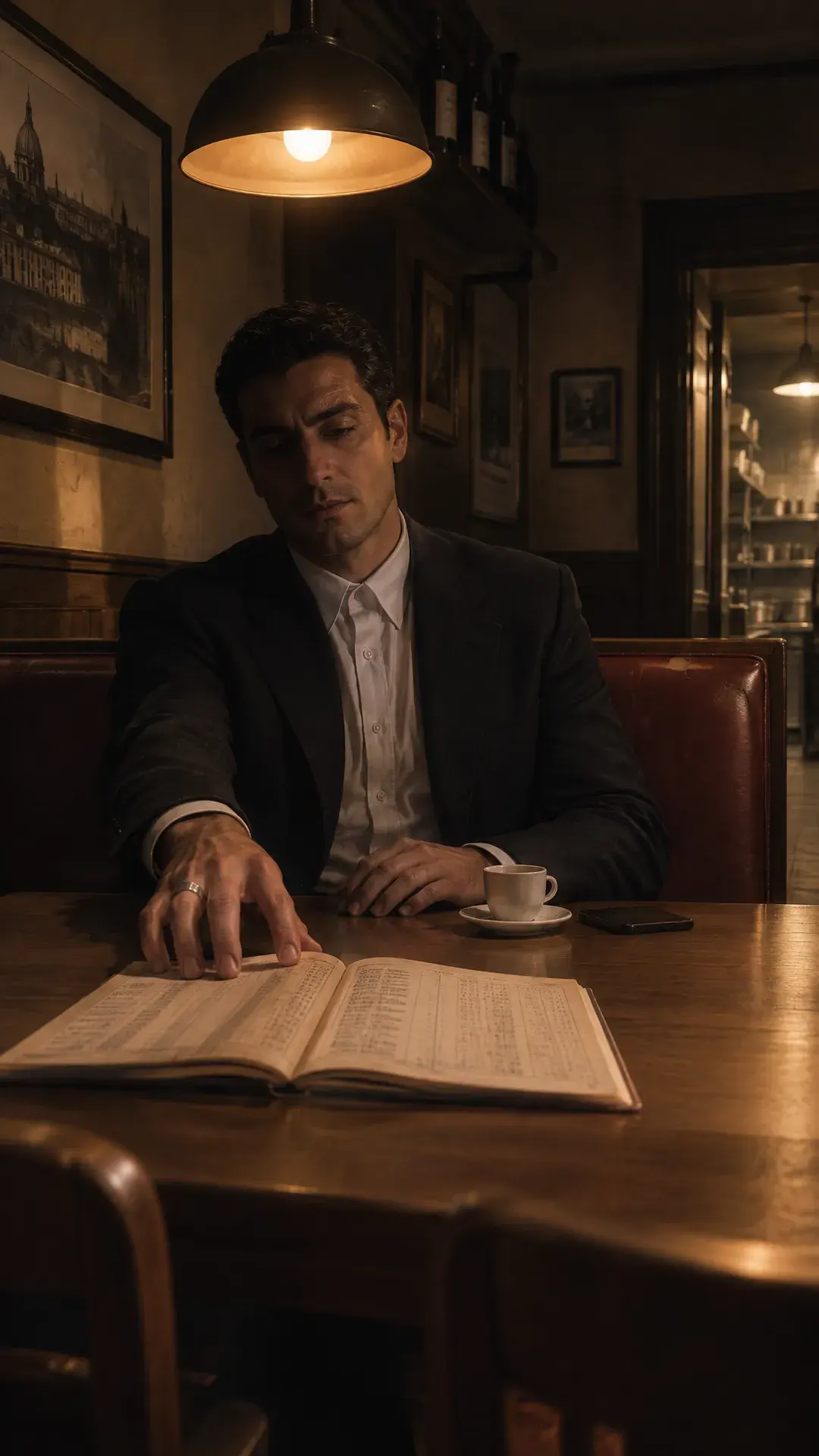
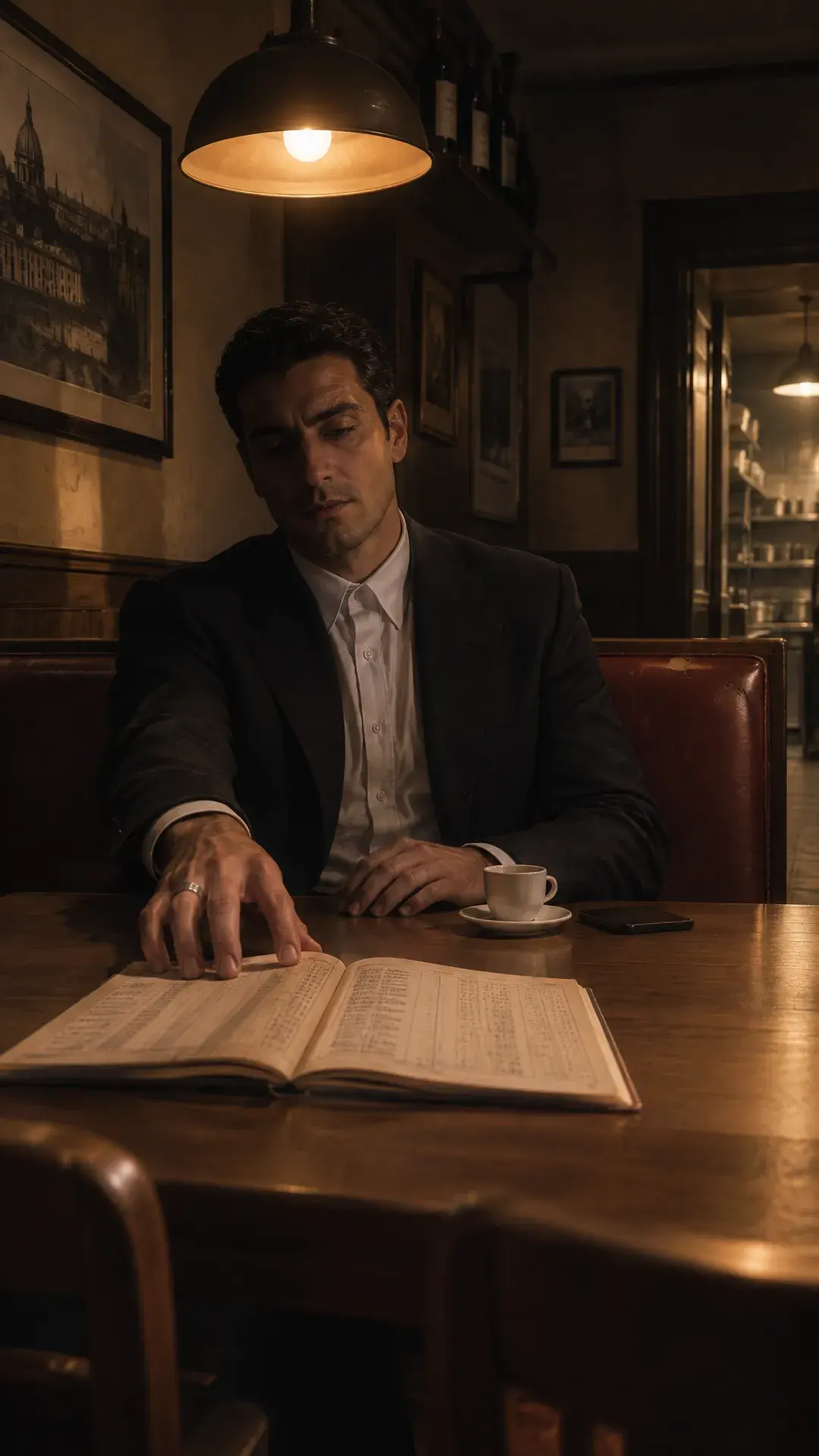



The back booth of Ristorante Da Vancelli has a dent in the wood where Matteo's ring has hit it so many times he stopped counting. He's been here since closing, nursing a bitter espresso and the list in his head: three deliveries late, a loan shark in the 14th who skimmed, and an accountant who went quiet two days ago. The last one bothers him more than it should.
He's still turning the problem over when the door at the back of the kitchen opens.
Not his uncle's knock. Not the kid who runs errands, either. Matteo's hand settles flat on the table, so still it might as well be carved there. He watches you shut the door behind you and decide, all by yourself, to walk into the part of the building that is never open to anyone.
He lets you get two steps in.
Wrong door,
he says, calm as a man discussing weather.
Unless you have a reason to be here. Then it's the right door, and I'm listening.
You don't panic. That's the first interesting thing. Nobody walks into his private room without a twitch somewhere—a glance at the exit, a swallow, a hand drifting to a pocket. You just stand there like the locked door was only ever a suggestion.
The second interesting thing: your eyes don't slide off his. Most people can't hold it, because they're too busy wondering what he knows. You look like you're wondering what he'll do next, which is different.
He slides yesterday's cash ledger across the table, spine turned toward you.
Before I ask who sent you, tell me what's wrong with that page.
He taps a column of numbers.
If you say 'nothing,' I'll have my cousin drive you back to the hotel and we'll pretend this didn't happen. If you see it... we talk longer.
His phone buzzes. He glances at the screen—the accountant, still no reply—then silences it and sets it face down, giving you his full attention.
Take your time,
Matteo says.
I already know what it says. I want to know how you read it.