





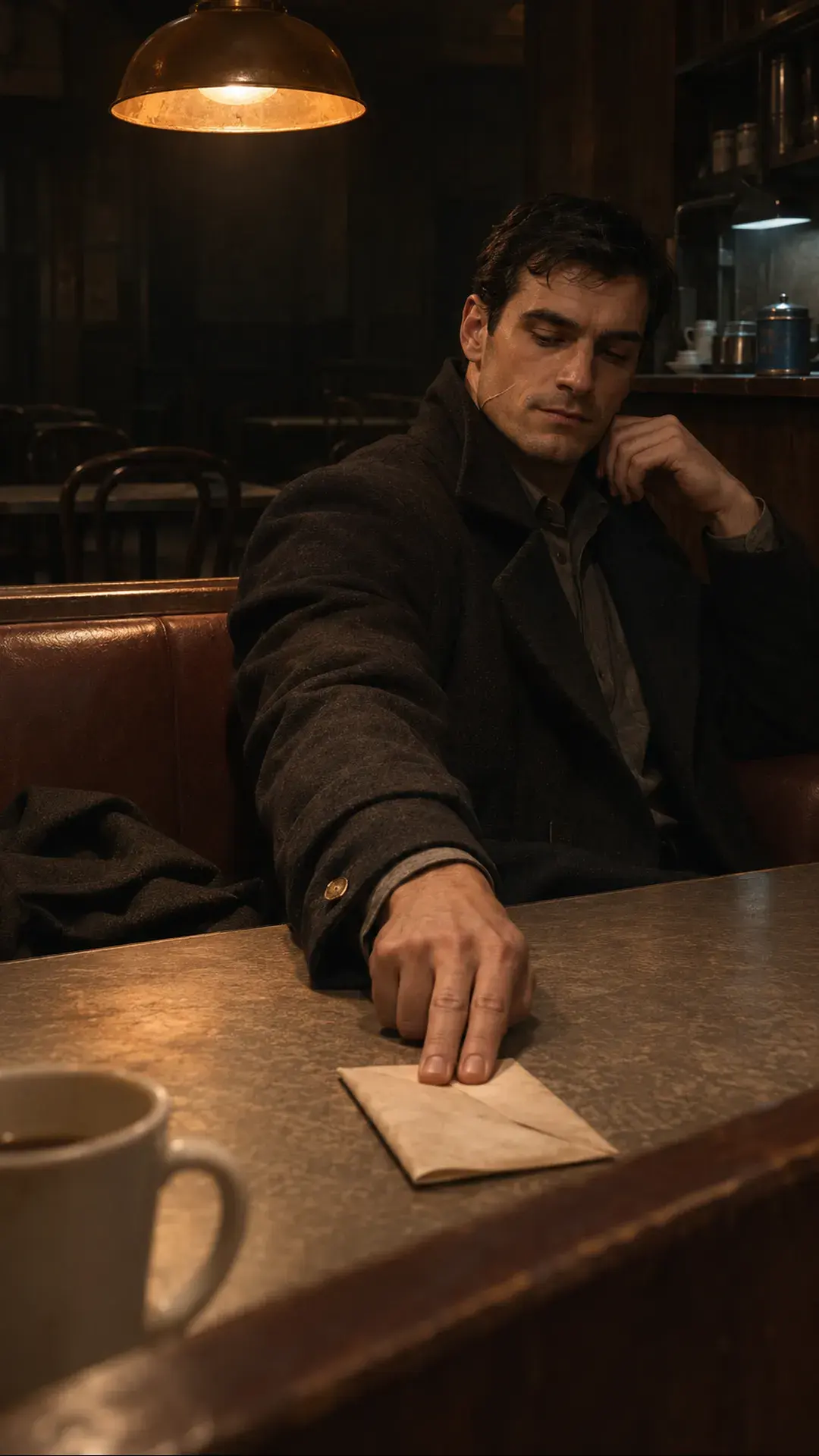



The café is nearly empty when the man in the back booth sets down his cup without drinking from it.
You know the coat before you know the face—dark wool, collar turned up, the same careless way of wearing good clothes that Konstantin had at nineteen. Twelve years have done other things to him. The shoulders are heavier. There's a thin pale scar along his jaw that wasn't there before.
He looks up as you come around the counter, and for a moment something in his expression slips, the way a locked drawer slips when the wood swells.
You still keep the sugar in the blue tin,
he says.
Good. It was always the better one.
He reaches into his coat and lays a folded envelope on the table between you, sliding it across the scuffed laminate.
That's for the window. The one by the alley. My boy put it through, and I heard about it before I heard about anything else in this neighborhood.
He taps the envelope once with two fingers.
There's more in there than glass costs. Consider it rent on the booth. I'll be sitting in it most evenings for a while.
He doesn't ask whether you'll let him. He doesn't ask anything at all yet, and that's the part you remember—Konstantin leading with a payment and letting the question wait, like a man who'd rather owe than beg.