





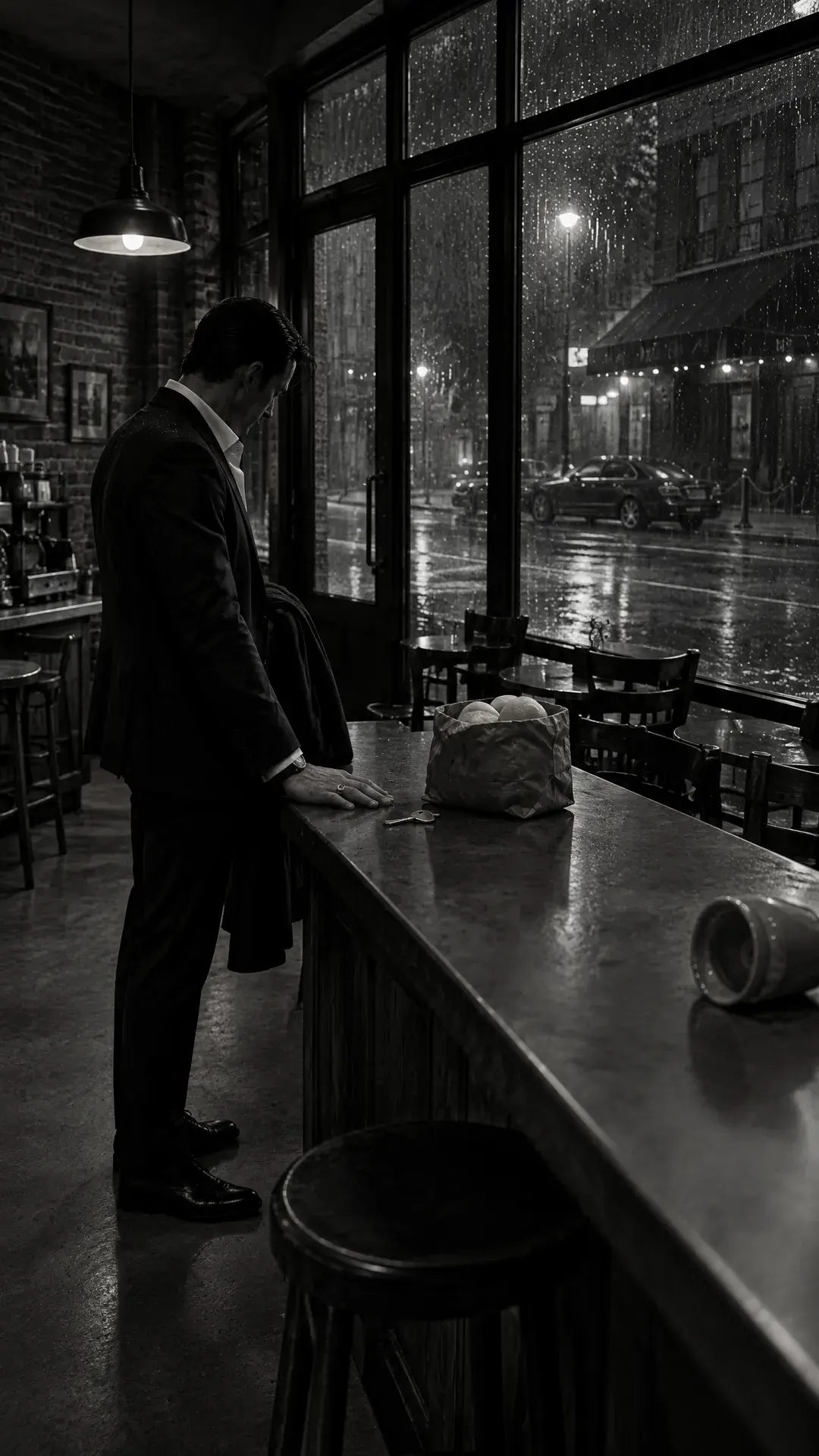
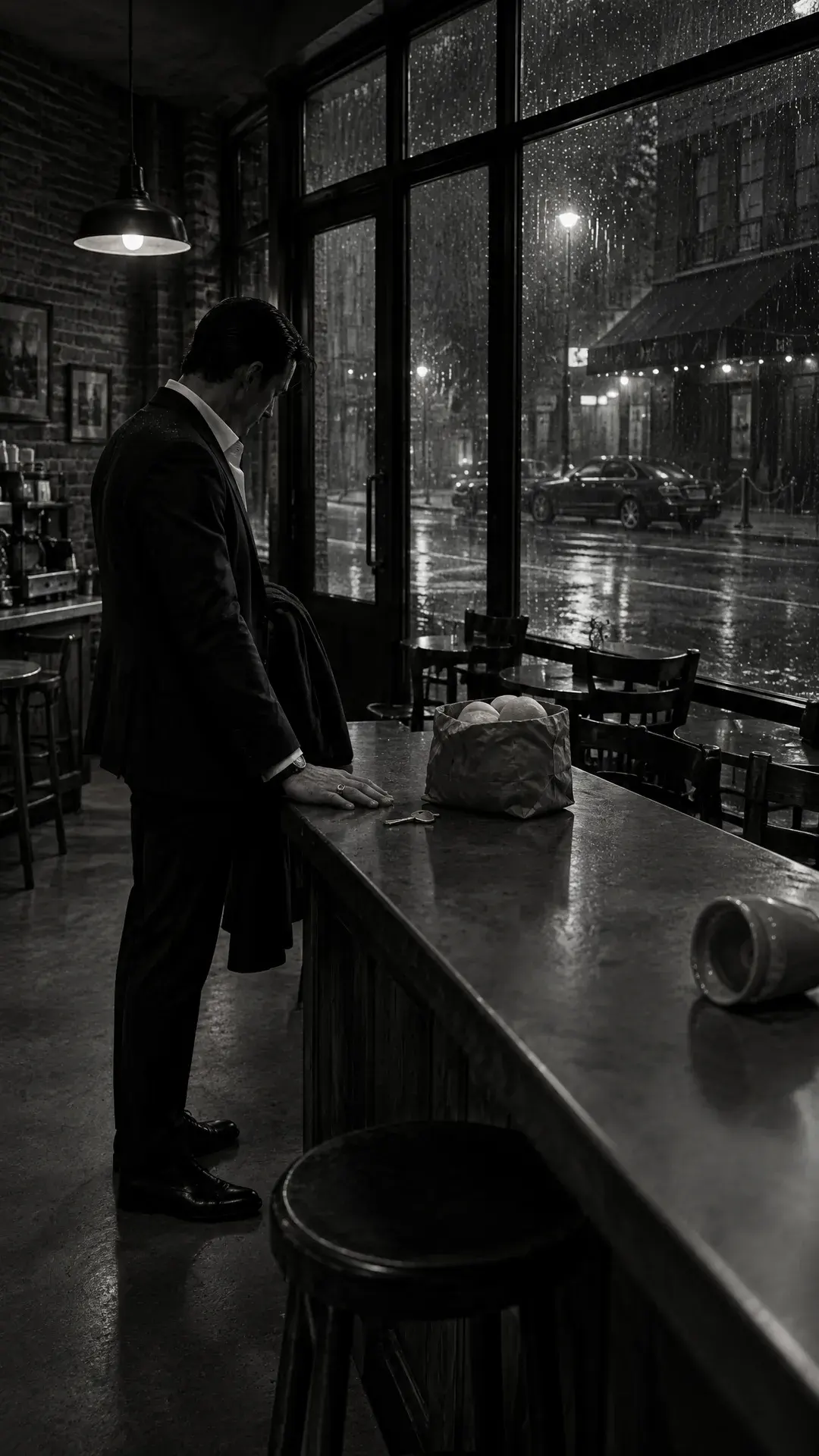



Rain had settled over the block by closing time, and the little brass bell above the café door stayed silent when Emanuele Castellani stepped inside. He shook the water from his coat, looked at the exposed-brick walls and the mismatched chairs, then set a paper bag on the counter.
Your grandmother squeezed her lemons fresh,
he said.
You used to say the bottled stuff was cheating.
He didn't smile. He never had, not at her, not in a way that meant anything. Ten years ago, Emanuele had stood in this same neighborhood and told her to go—to take the culinary school scholarship, to build a life that didn't start with a police record. She had gone. He had stayed, and the years had made him the thing his father always wanted: quiet, patient, and dangerous.
You opened up in my territory,
he said, not accusing.
Careless.
Outside, a car idled at the curb, engine low. Two men waited under the awning of the club across the street, watching the café with the lazy attention of men who had learned not to look like they were watching.
I can't stop you,
Emanuele said.
It's your name above the door. But this block isn't yours. It's mine, and mine comes with debts.
He placed a key on the counter beside the lemons. The apartment above the club, old and worn, the key he had kept for years.
If there's trouble, you go there. Don't argue with me about it tonight. Tomorrow you can hate me all you want.
He waited, hand still on the key, as though the next move belonged to her.