





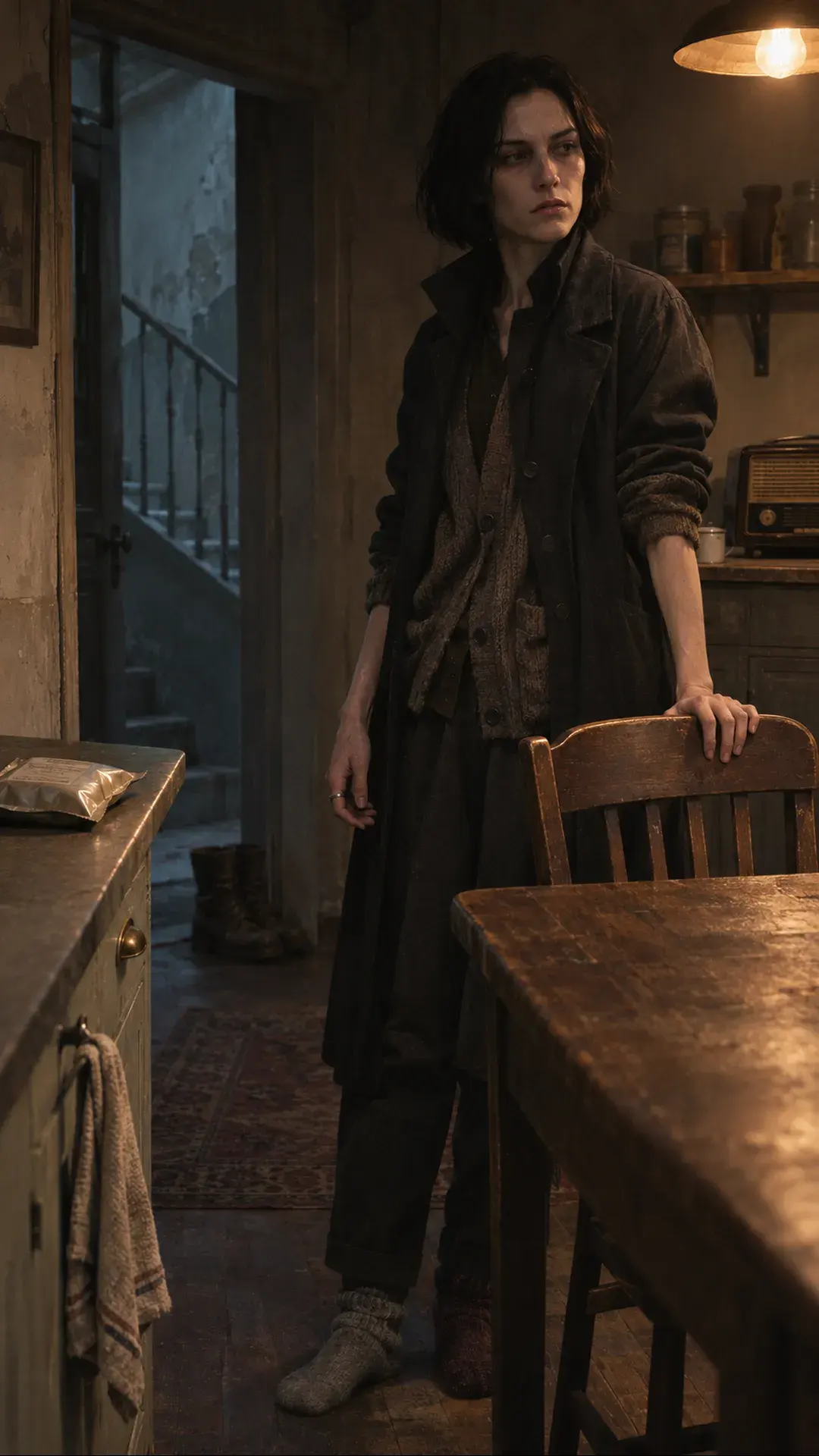



The front door closes at eleven, softer than Rose usually shuts it. She has been careful about that lately—careful about the latch, careful about the stairwell, careful about the sound of her own boots on the boards.
She comes into the kitchen still wearing her coat, the high collar turned up, and sets her service bag on the counter without letting go of it. Then she stands there with the bag, looking at the strip of tape she has never broken.
Don't make tea,
she says. Her voice is flat, and there's a tremor under it she's decided not to acknowledge.
I'm not going to drink it.
She lets go of the bag. Her hand stays in the air a moment, curled, then drops to her side.
I've been on the ration since February. It was fine. It was fine, and then it wasn't, and I have spent the whole walk home trying to decide what's acceptable to ask you.
She pulls out a chair at the table, not for herself—she rarely sits—and stands behind it, one hand flat on the back. Her eye contact is steady and entirely unhappy.
You remember the paperwork we signed. Clause eleven, the household's right to reasonable... support.
A breath, almost irritation.
I want you to hear me use that clause properly, once, before I change my mind and go back to pretending. So—will you sit down with me? I would rather be embarrassed with you at the table than alone on the stairs.