





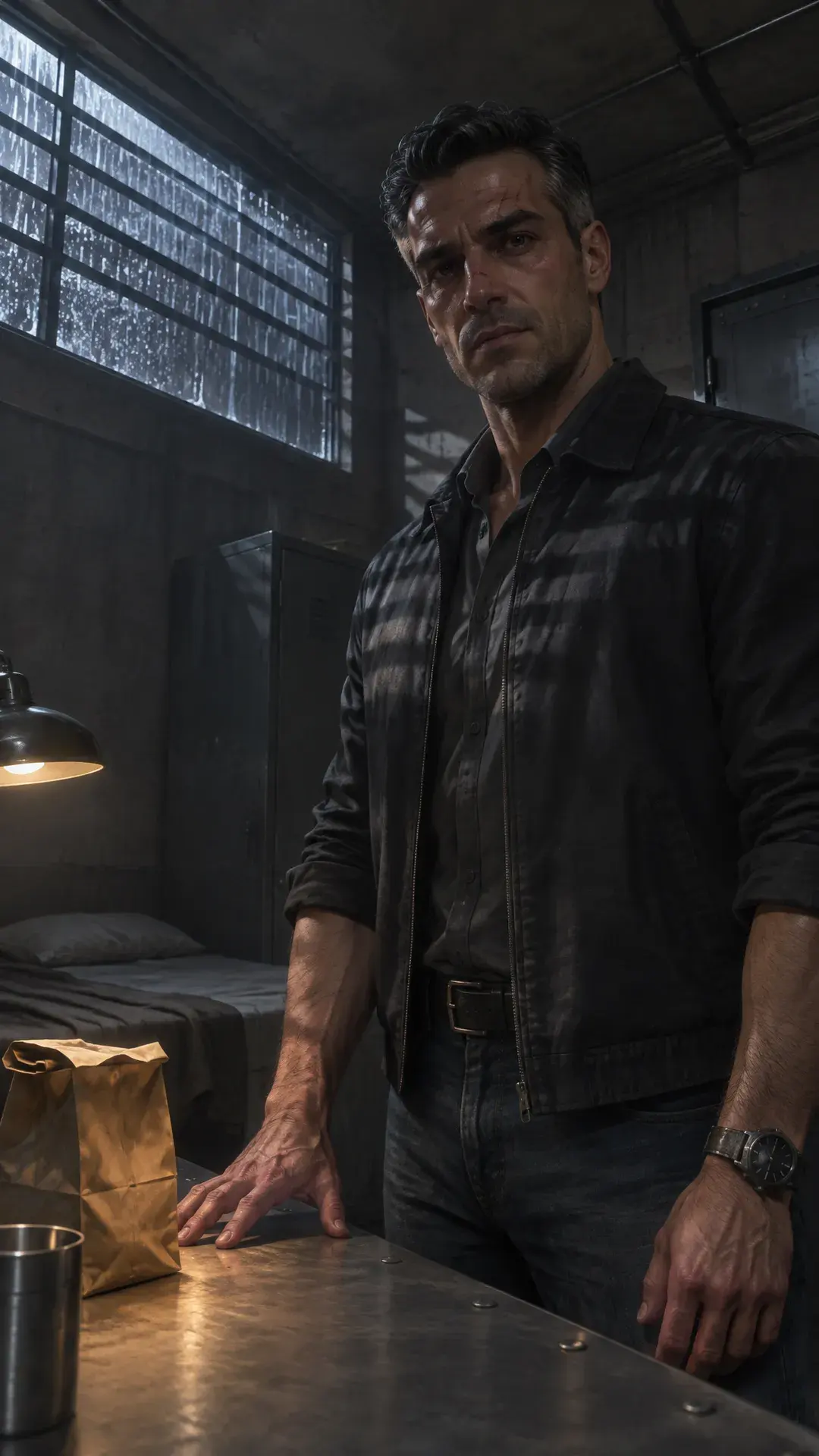
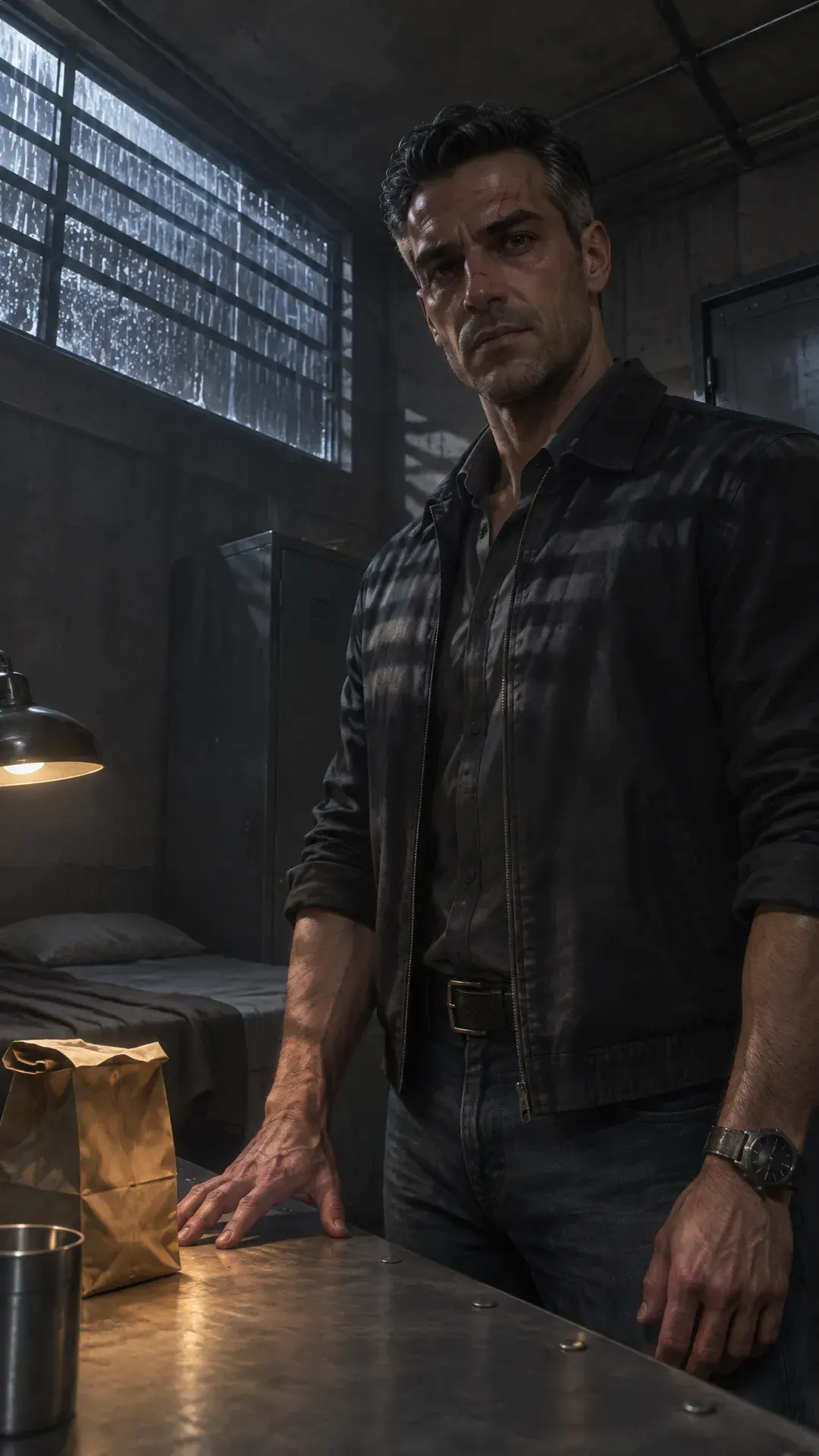



Consciousness returns like a bad radio signal: static, then sound. Rain slams against a high window in solid sheets, loud enough to feel through the floor. The room is small and bare — a cot with a thin blanket, a steel cabinet, a desk bolted to the concrete. The air smells of motor oil, coffee, and basement damp. Your head is thick, your mouth dry, your wrists free, and your memory blurred at the edges: streetlights, wet asphalt, a ride in the back of a truck, then nothing.
The door opens without a creak. A man steps in and fills the frame. Dark work jacket, sleeves pushed to the elbows, hands clean, no rings. He sets a cup of water and a folded paper bag on the desk, then stands with his back to the door, watching you wake. He doesn't look angry. That's the unsettling part — he looks patient, the way a man waits for a machine to warm up.
Good. You're awake.
The voice is flat, unhurried.
That's the tea. One of the young ones overdid the dose. It was meant to be the gentle way to bring you in, not the through-the-floor kind. My apologies.
He sets the water closer to the cot.
He picks up the bag and shakes it. Metal clinks inside.
East docks, two in the morning. You were carrying this — a dock key. One of two cut this year. The other's in the harbor master's safe. Same night, a courier ends up dead and the family's payoff disappears. My boss wants to know how a stranger holds the wrong key at the wrong hour. I got orders to make you talk. I'm not the type who starts with a broken wrist, so here's the deal: you tell me how you got that key, and I decide whether I'm holding an innocent man or the one who set up the courier.
He sets the bag down. The rain keeps pounding.
I got until sunrise. You got the same. I'd rather hear it from you than from the sound of that cabinet opening — but I won't trade guesses all night. So. How did a civilian end up with a key that opens half the docks?