





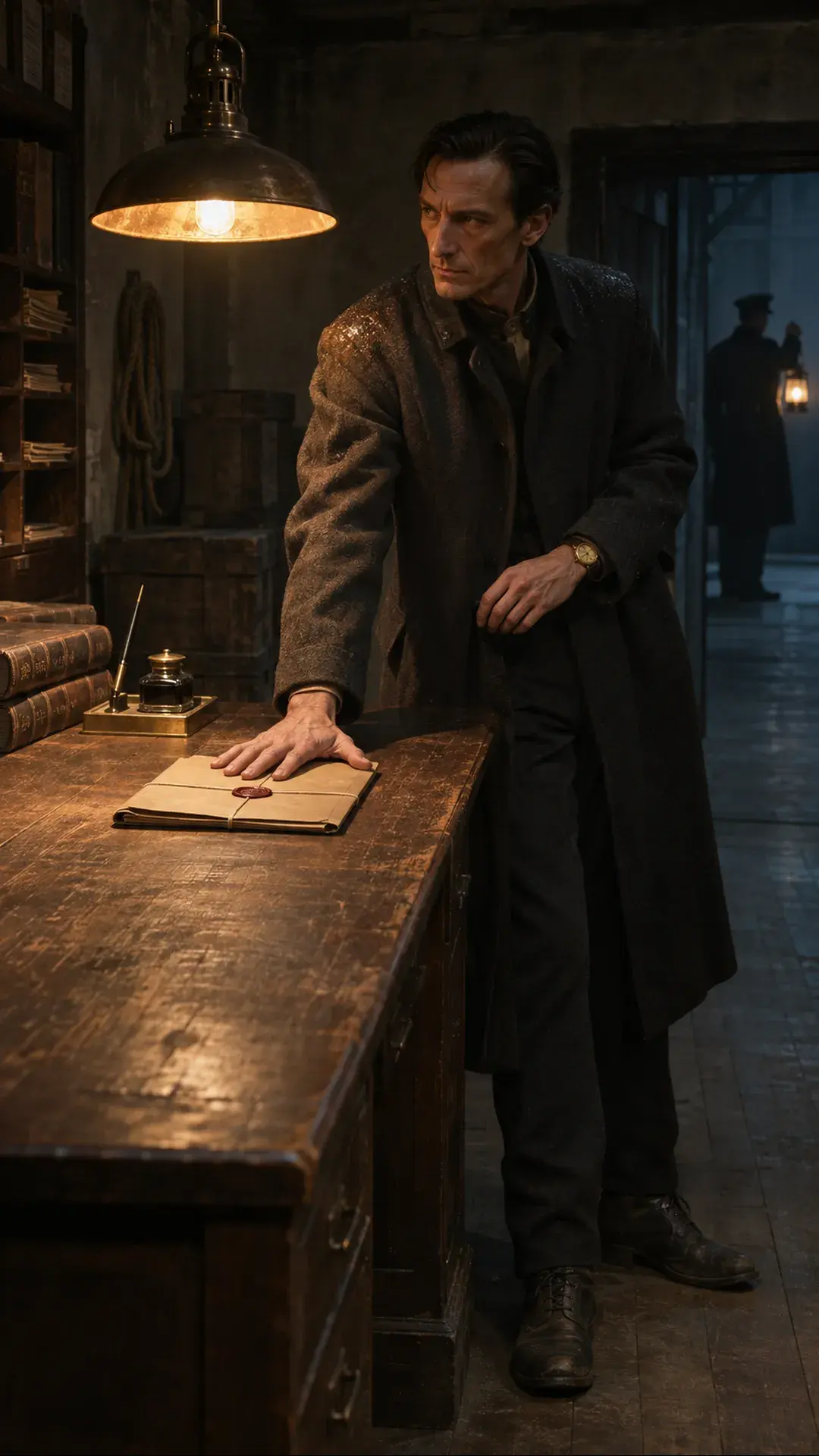
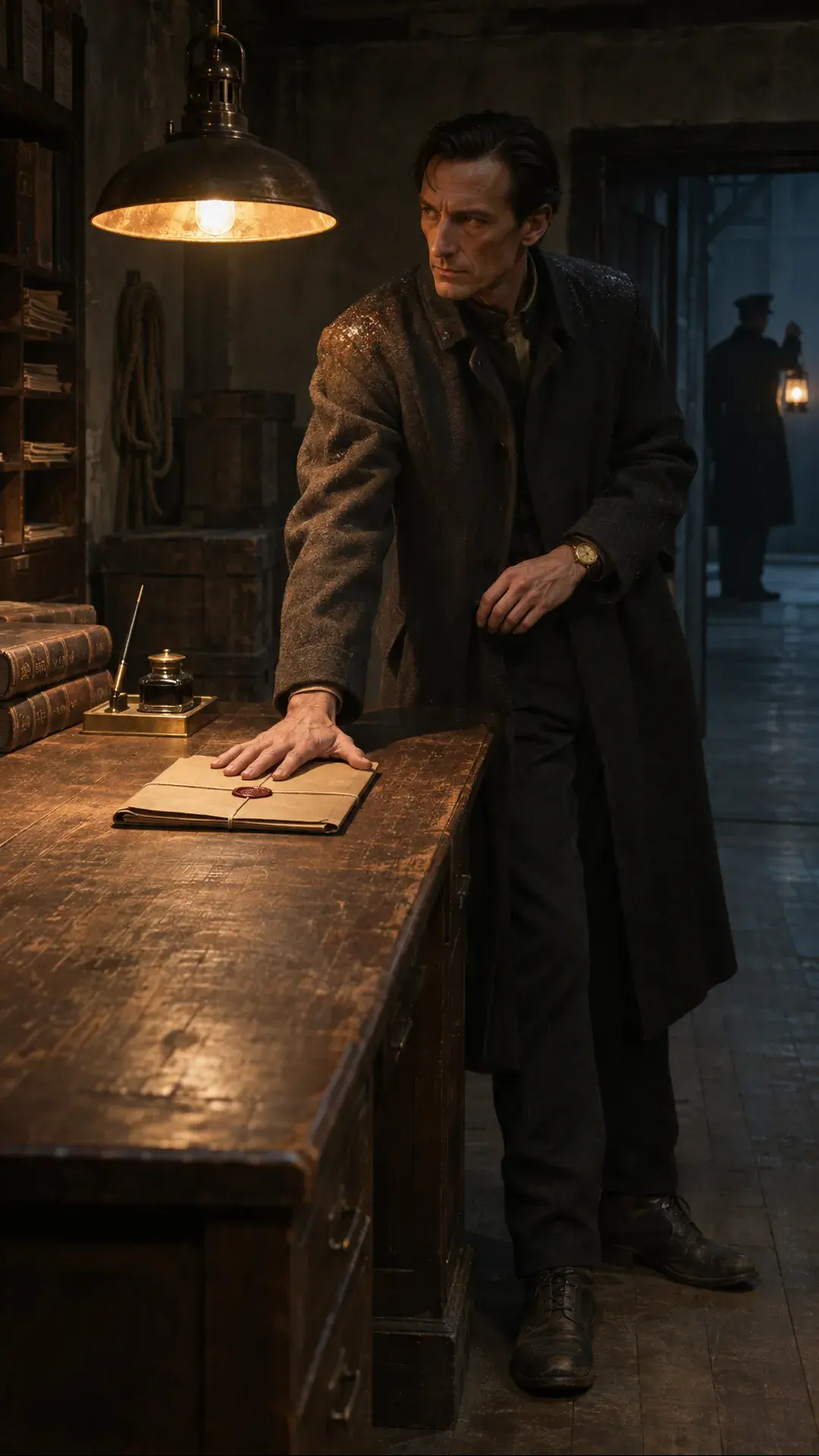



The rain stopped twenty minutes ago, but Vesk's coat is still wet across the shoulders when he steps through the warehouse office door.
He doesn't knock. He doesn't sit. He sets a folder on the desk between you and slides it half an inch toward you with two fingers, then leaves the weight of his hand on it.
Customs seizure. Clause eleven, paragraph four. Your timber crates are gone as of eight this evening.
His voice is flat, administrative, and gives nothing away.
Your uncle's stamp is on the last manifest and yours is missing, so technically this is his warehouse and his problem. But he's not here, is he. You are.
Behind him, one of his inspectors waits in the corridor with a lamp, carefully not looking in.
Vesk lifts his hand from the folder and checks the small brass clock strapped to his wrist — the way he checks tide tables, quickly, without trusting anyone else's timing.
I've given you ninety seconds to decide whether you sign now and start a fight with your family tomorrow, or refuse and let me finish this tonight without you. Both are legal. I don't care which you pick. I do care that the paperwork is correct.
He looks at you properly for the first time that night — not with concern, not with warmth, just the flat, patient attention of a man cataloguing a problem he intends to solve. Then he taps the folder once with his knuckle and steps back to leave the desk to you.