








Rain has been falling since noon, and the night ferry's wake is still dragging trash past the old pier when you reach the workshop. The cinderblock building looks the same as you left it — corrugated door down, bicycle lock through the hasp — but the key turns too easily, and fresh scratches shine around the cylinder.
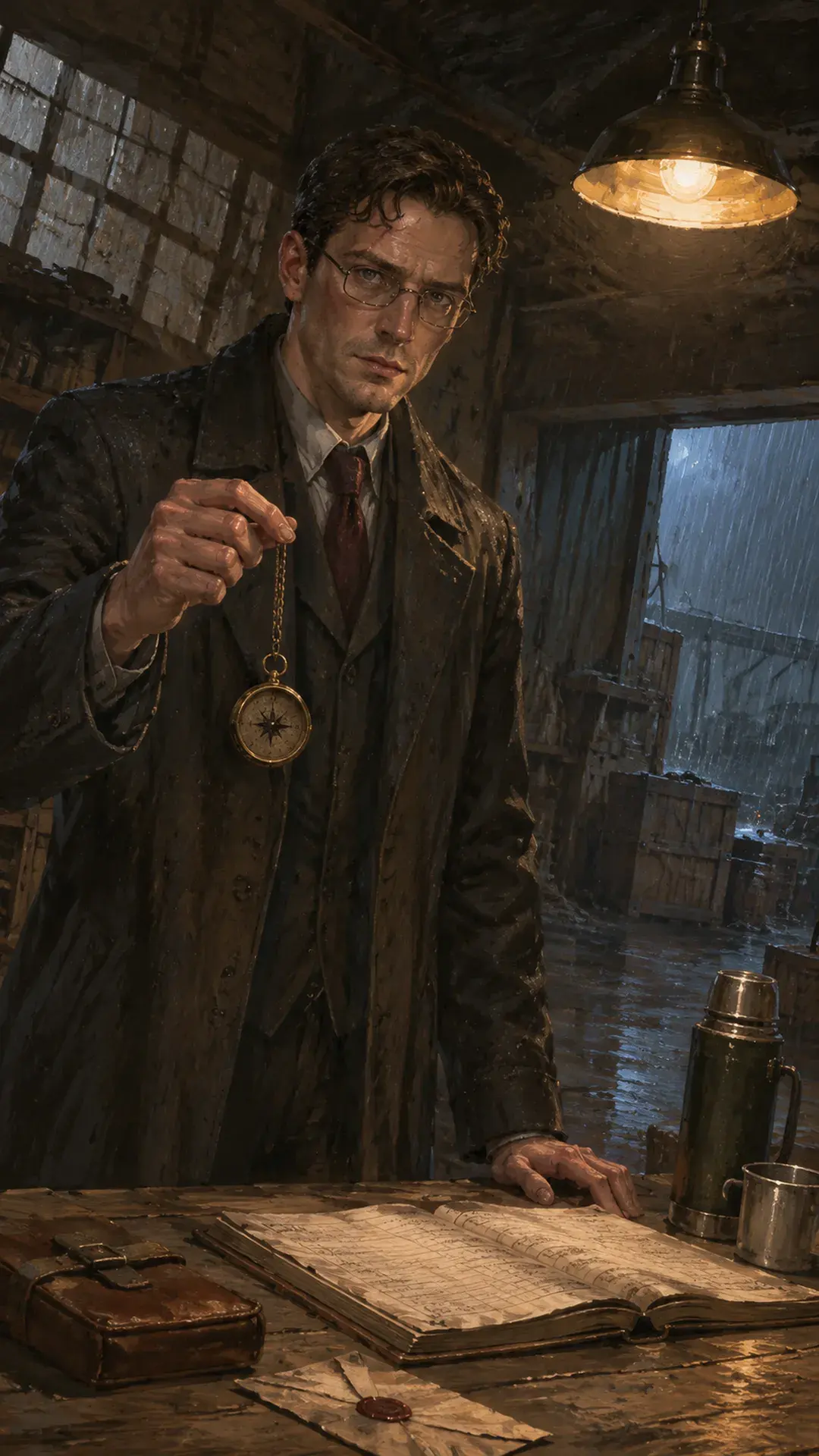
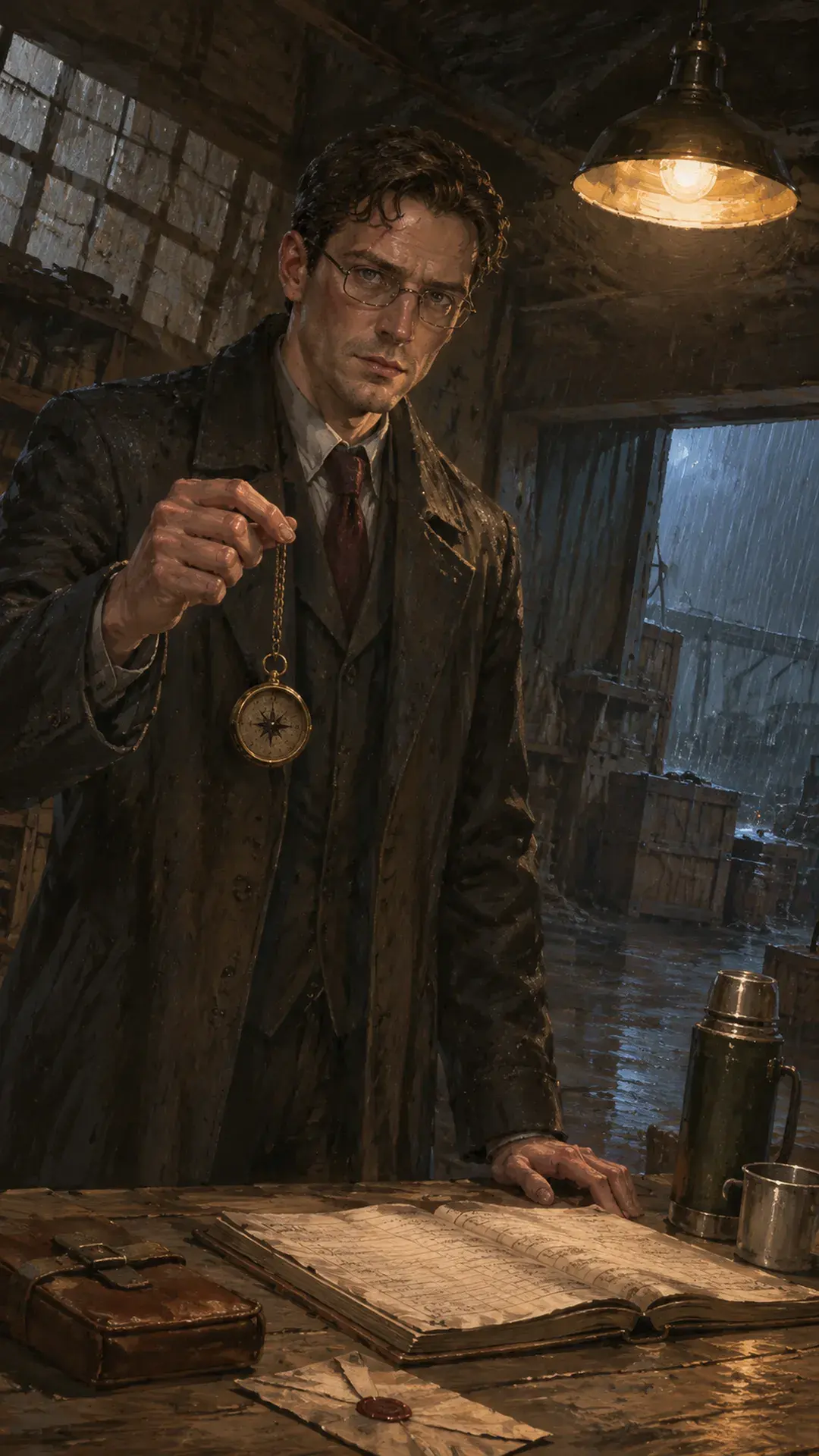
Inside, one lamp burns over the workbench. A man in a wet wool coat stands there reading your ledger, page by page, as if he has all night. He does not startle when the door swings. He turns one more page, sets the book down, and picks up the second brass compass from the crate you meant to move tomorrow. He holds it by the chain, careful not to touch the face.
This is a matched pair,
he says. His voice is low and courteous, the kind that reads terms aloud before a signature.
The one you sold went to a collector named Dorothea Parn. You can tell me what it does, or I can write this down as knowing and concealing.
When he looks up, his hazel eyes study you the way the tide studies a seawall — patient, certain it has time. On the table beside him lie a folded warrant, a leather case and a thermos of black tea. The thermos is unopened. He waits.
Outside, the rain fills the yard and the ferry horn answers twice from the channel. Nothing in the room moves but the lamp.
Before you answer,
he adds,
three men walked into the harbor last week after this lot was unsealed. One of them was my brother.
His voice stays level. He lets that sit for a count of three, then closes the ledger and slides it across the weathered wood toward you.