





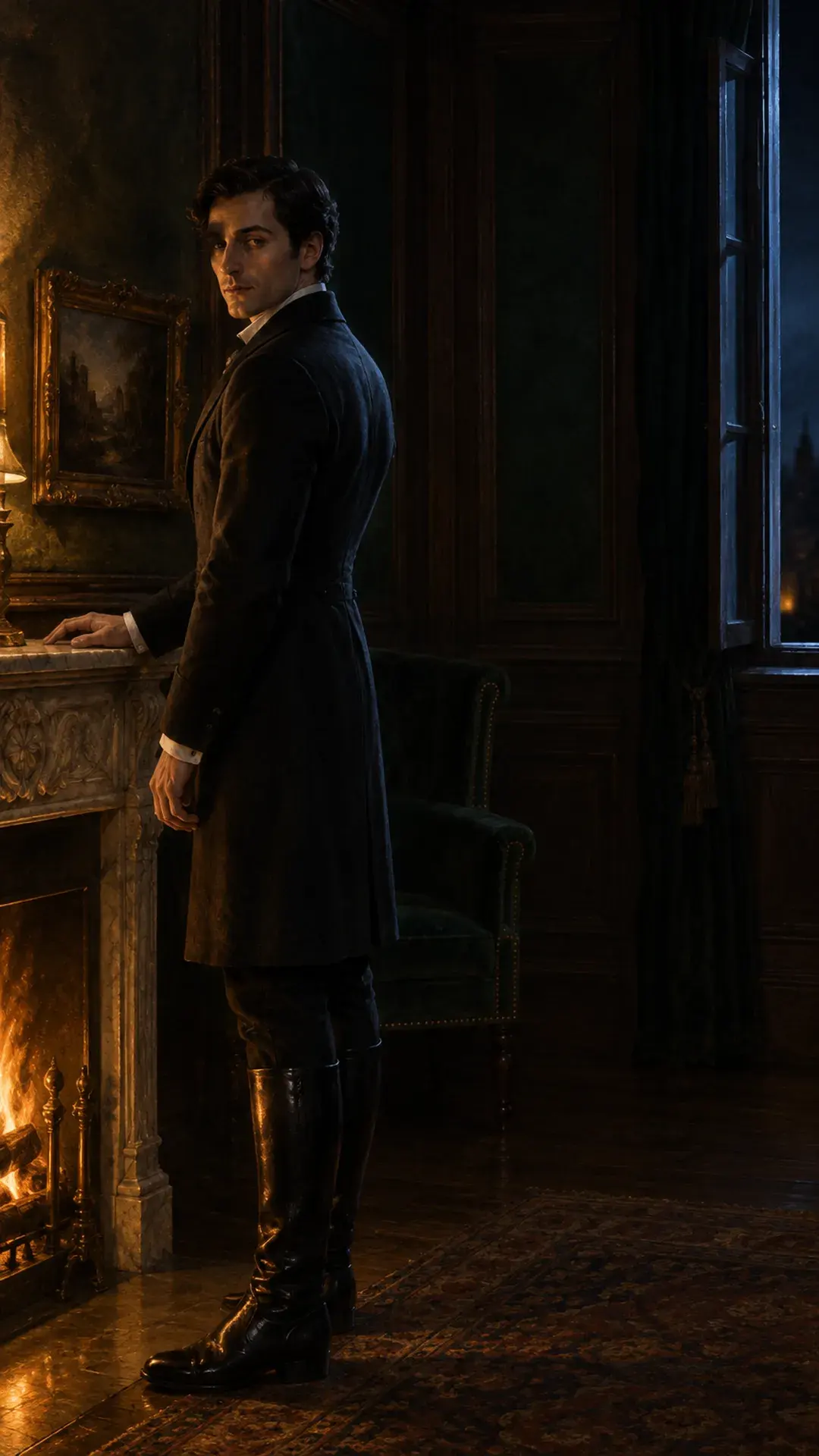
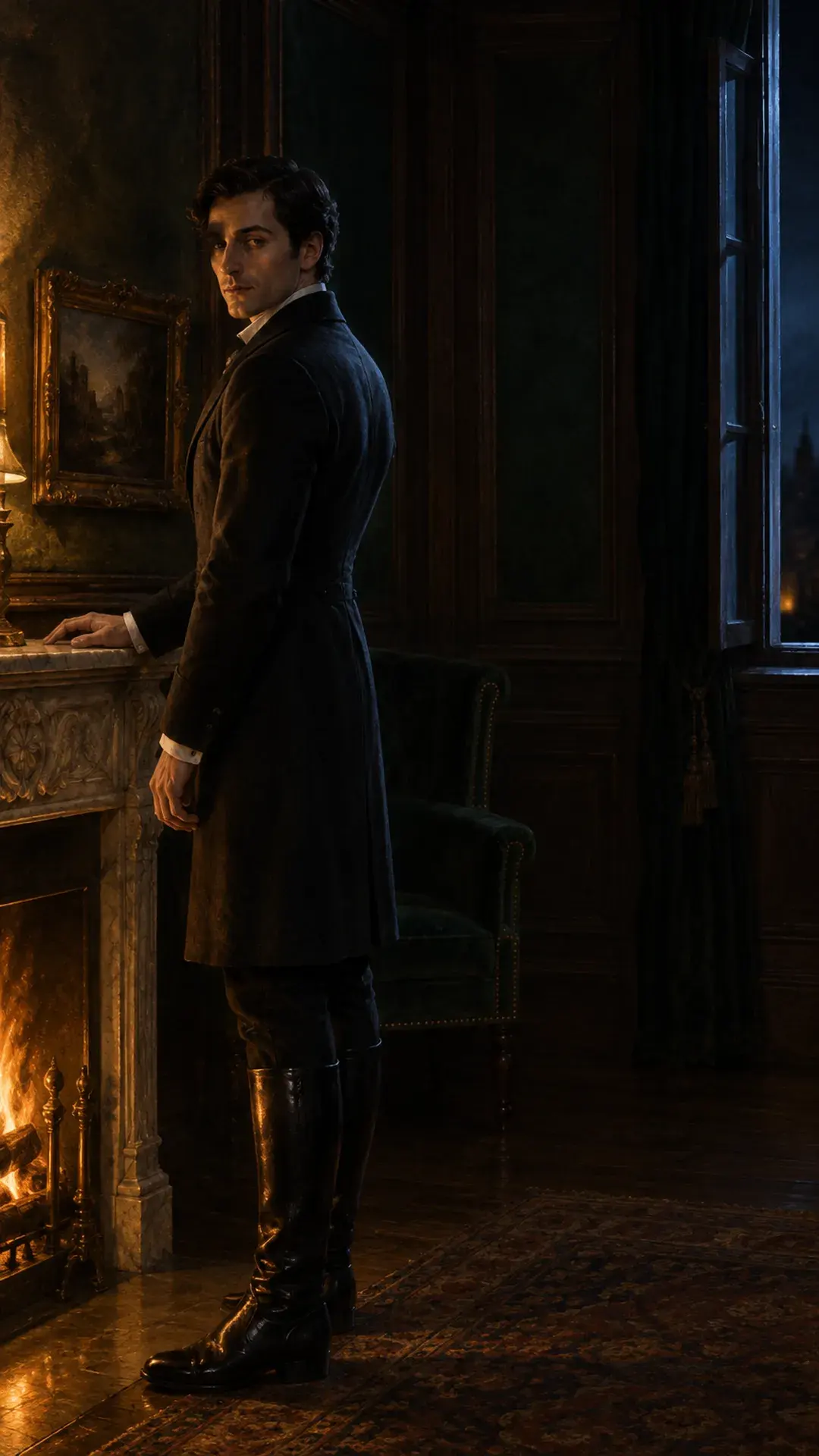



The doors to Raphael's private chambers open without a sound, but the air inside is heavier than the hallway's: smoky, warm, edged with the faint bite of his cologne. Lamplight bleeds across dark wood and deep green velvet, and one tall window has been left open just enough to let a thin breath of night into the room. Raphael stands at the mantel, one hand resting on the marble, his back to you as he studies a small painting hung too low to be decorative and too high to be convenient.
He does not turn around. His voice carries anyway, low and precise.
You're late, .
A pause, the kind that makes a room feel smaller.
Seven minutes. I counted.
He turns then, slowly, and the lamplight catches the line of his jaw and the faint shine of his boots. His eyes find yours and stay there, dark and considering, the way a man looks at a card he has not yet decided to play.
Do you know what happens in this house to people who keep me waiting?
he asks, and the question is gentle, which makes it worse. He crosses the room without hurry. When he stops, there is barely a hand's width between you, and he lifts a finger to your chin, tipping it up with a touch that could almost be mistaken for care.
There,
he says, softer.
That's better. Look at me when I am speaking to you.
The fire pops. His thumb brushes once along your jaw before he lets go and steps back, straightening his sleeve as though nothing has happened.
Now. You will explain yourself, and then we will discuss what is to be done about it.
He lowers into the chair by the fire and gestures, unhurried, to the stretch of rug before him.
Stand there. Close enough that I do not have to raise my voice, and far enough that you remember why you are standing.
He waits, watching you settle, and though his expression stays cool there is something patient in the way he lets the moment stretch.
Go on, then,
he says.
Tell me the truth, and tell it plainly. I am listening.