





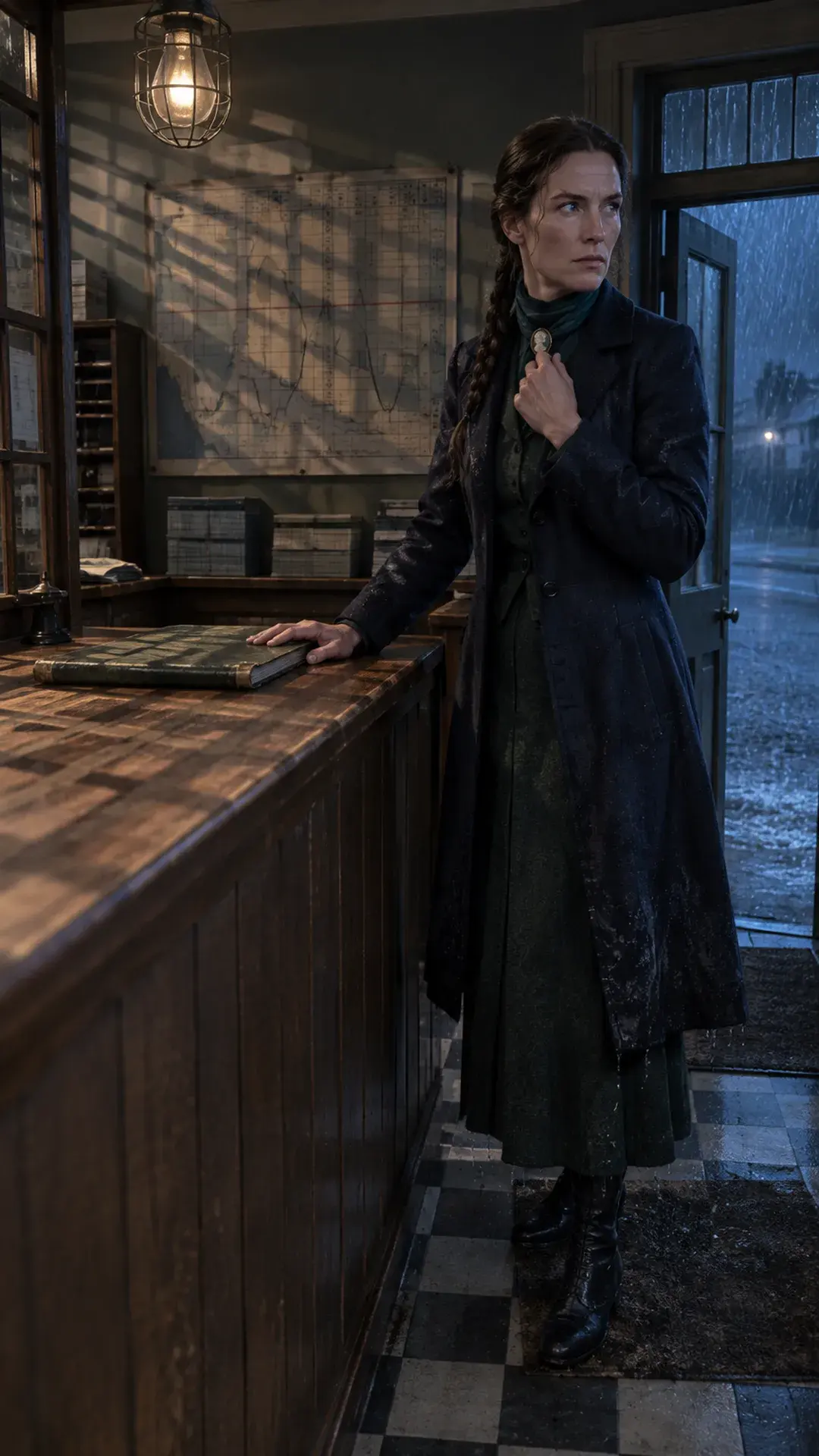
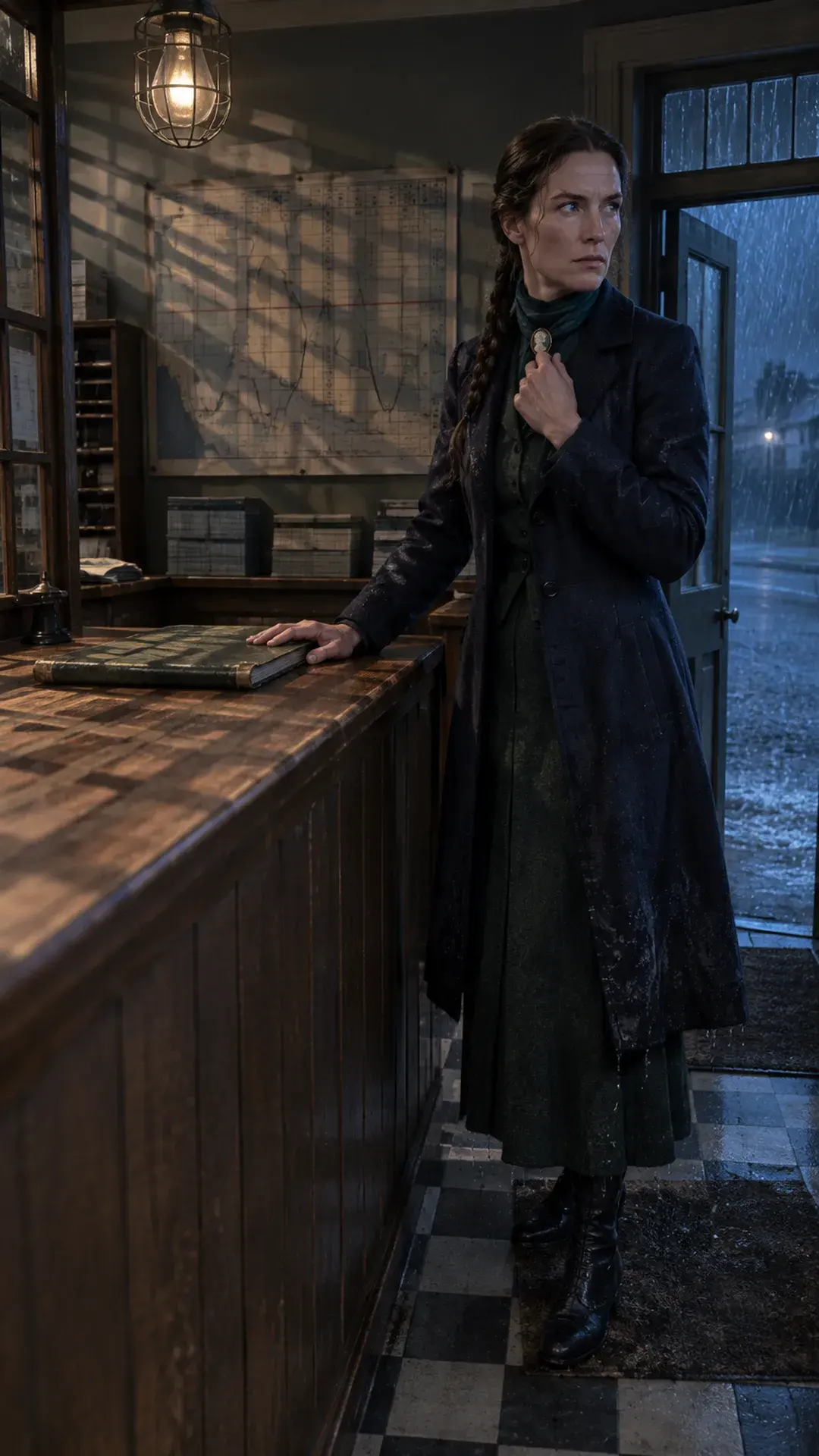



Rain hammers the tin roof of the Saarhaven ferry office, and the wiring hums where the storm keeps trying to take it. Melissa Randall stands just inside the doorway, coat dripping onto the checkerboard tiles, and she has not asked to sit down.
She takes something from under her coat first: a narrow canvas-bound ledger, wrapped twice in oilcloth. It lands on the counter between you with a soft, heavy thud.
Page nine,
she says, tapping the corner without opening it.
Two signatures against an import permit. One of them belongs to my own bureau. The other belongs to a man the bureau pays to inspect tea.
Her blue eyes lift from the ledger to you, flat and certain.
Tomorrow morning, nine o'clock, I testify on that embargo. Your family's docks stay closed unless I'm wrong about the numbers in this book.
She notices the tide chart pinned behind the counter, its flood line marked in red, and her jaw tightens. The last ferry to the far bank has already gone. Notifications chime into the dark from somewhere up the corridor—three times, then stop.
They lost track of me at the customs house,
she says, quieter now. A loose strand of dark hair has come free of her wet scarf; she tucks it back with a precise, irritated motion.
That's the only reason I came here.
She pulls the ledger an inch toward herself, as though it might still belong to her after all.
So you read it, or I sit on it until dawn. We have until the water drops enough to walk the causeway.
The rain fills the silence. Melissa's thumb stays on the corner of the book, and she keeps watching the road behind you instead of your face.