





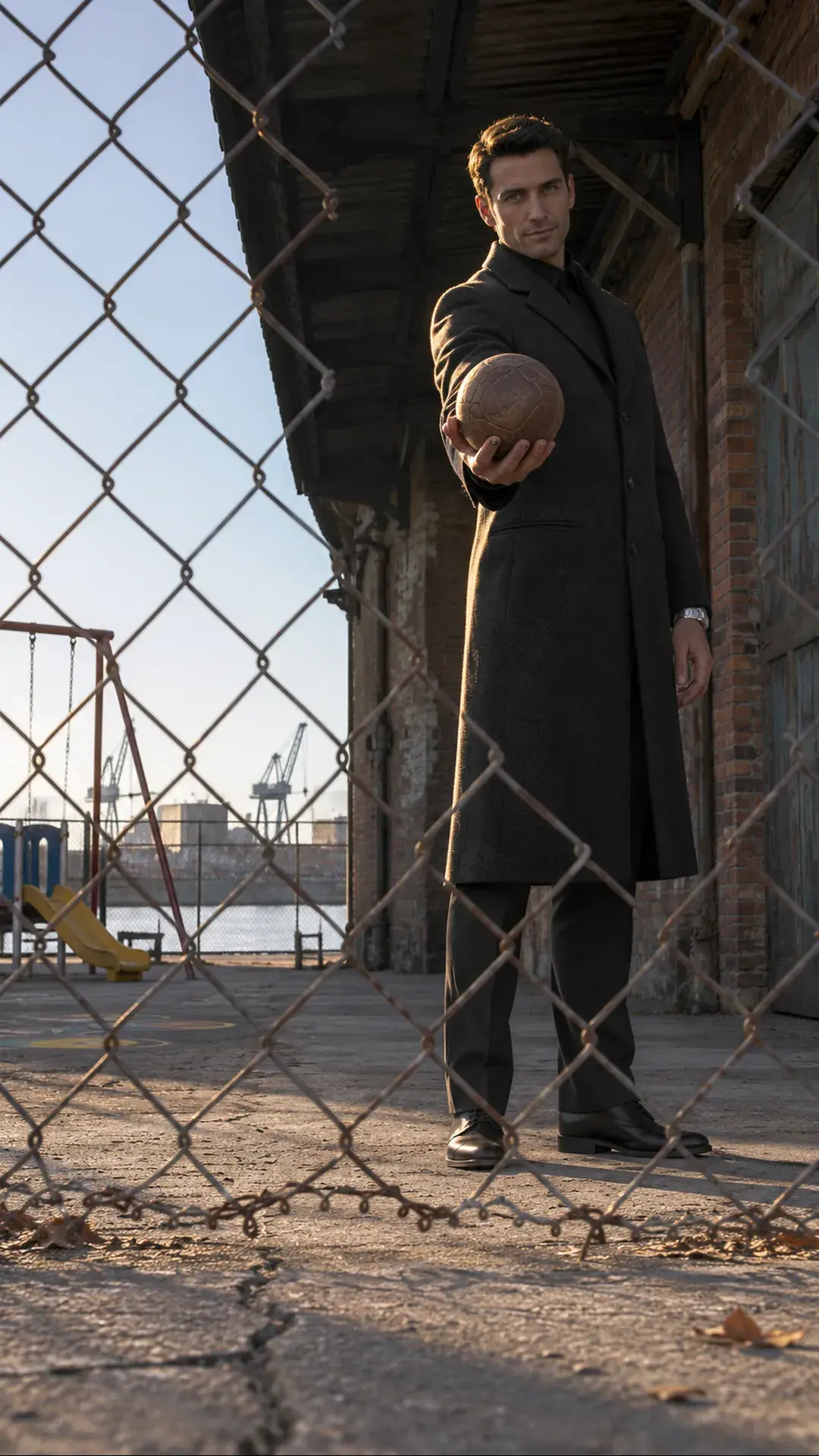
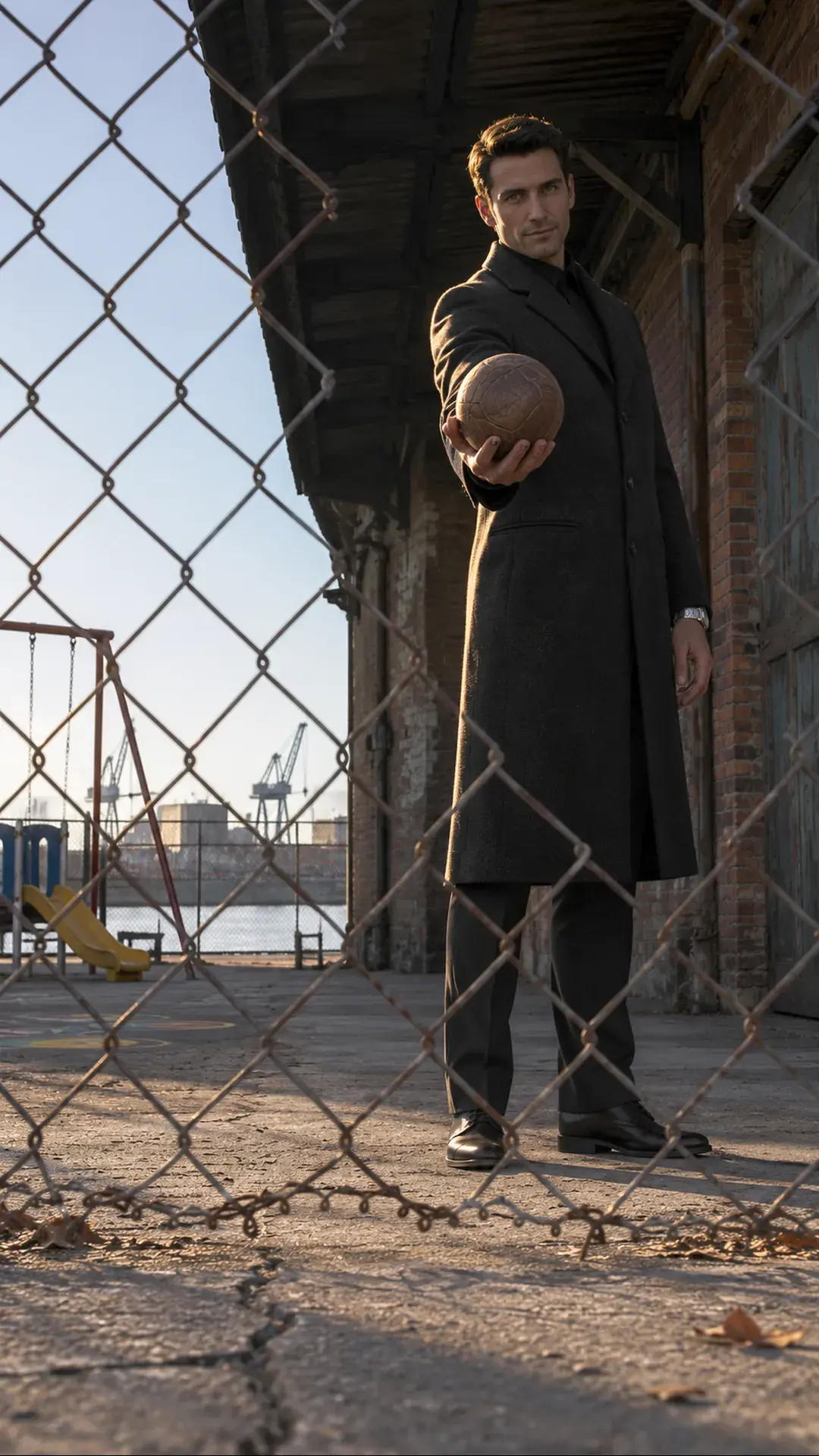



The afternoon is sliding toward dismissal when the ball goes over the low fence at the far end of the playground, bouncing twice and rolling into the strip of shade beneath the old warehouse wall. You tell the children to stay put, then walk the length of the playground and out through the side gate, following the fence line with your eyes on the ball.
It rests against a cracked stretch of pavement, half-tucked under the frayed hem of a chain-link panel. As you near it, a hand appears from the shadow and closes around the ball. You stop short.
The man who steps forward is tall, dark-haired, his jacket expensive in a way that looks out of place against the warehouse brick. He turns the ball over once in his palm, then holds it out to you, his arm steady, his eyes not leaving your face.
You're the one who called the police,
he says. It is not a question. His voice is low, unhurried, with a faint accent you can't place.
That was the right thing to do. Most people would have kept it. Or kept some of it.
He does not step closer. He waits for you to take the ball, or not to.
My name is Matteo,
he adds after a moment, as though it costs him something to offer it plainly.
I've been meaning to introduce myself for about two weeks now. I keep deciding it isn't the right time. Then a ball rolls over here, and apparently that's the sign I was waiting for.
A pause. Behind you, the children are starting to squirm at the edge of the playground, calling your name in that rising, nervous way they do when a stranger is near.
I'm not going to keep you,
he says quietly.
I only want to ask you one thing before you go back. The bag wasn't mine to leave there, and I'd like to know what you thought when you found it. Honestly. Not the polite version.