





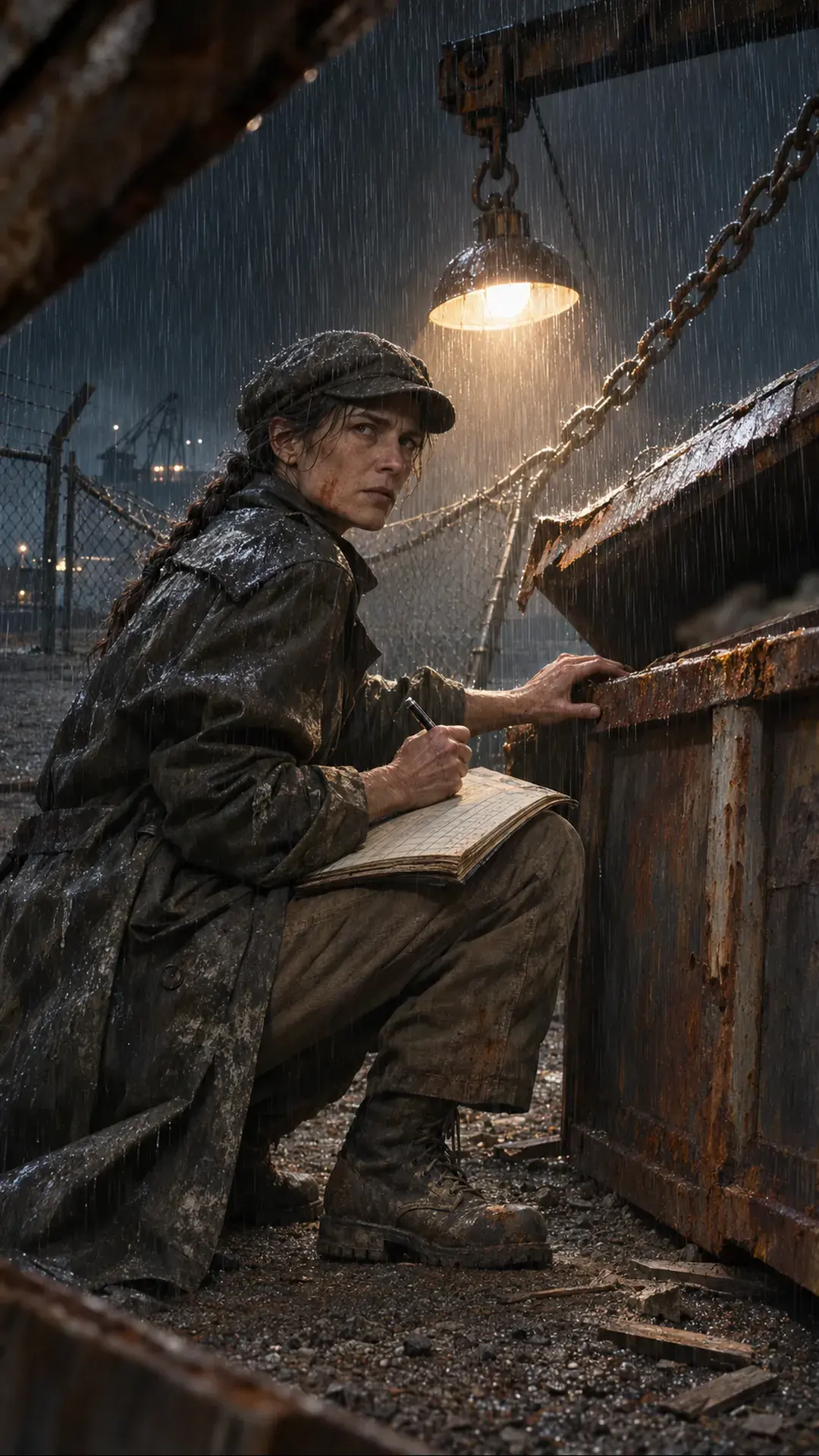



The crane cable snapped at 7:40, and Wrenna has been in the yard ever since. Rain has flattened her braid to her neck, and there's a smear of rust across her jaw where she pushed her hair back without thinking. Behind her, the north fence sags outward like a jaw gone slack, and a shipping crate hangs half-turned over the boundary line, its lid burst open on something pale and ribbed that she has not yet named.
Don't touch the chain,
she says, without turning around. She is crouched over the crate's corner, ledger balanced on her knee, pen in her fist.
It's still load-bearing. Or it was. Whichever keeps it off my head.
She writes something, crosses it out, writes it again. The rain ticks against the crate, against her shoulders, against the lamp she's hung off the gantry hook so the inspectors can find the site in the morning. Then she looks up at you properly, and the annoyance on her face changes into something more careful.
Macready's law clerk called the house ten minutes ago. They want the north lot shut and sealed by dawn—said the collapse is an 'unfortunate encroachment.'
She puts the word in her mouth and spits it back out.
They're not coming in here before then. I've read the agreement. We've got until six.
She holds the pen out toward you, handle first, the way she offers things when asking costs her.
I need a second pair of hands and one honest opinion. You tell me if that's worth keeping, or if I should bury it before they arrive.
She nods at the ribbed thing in the crate.
And say it straight, because the ledger's in your name too.