





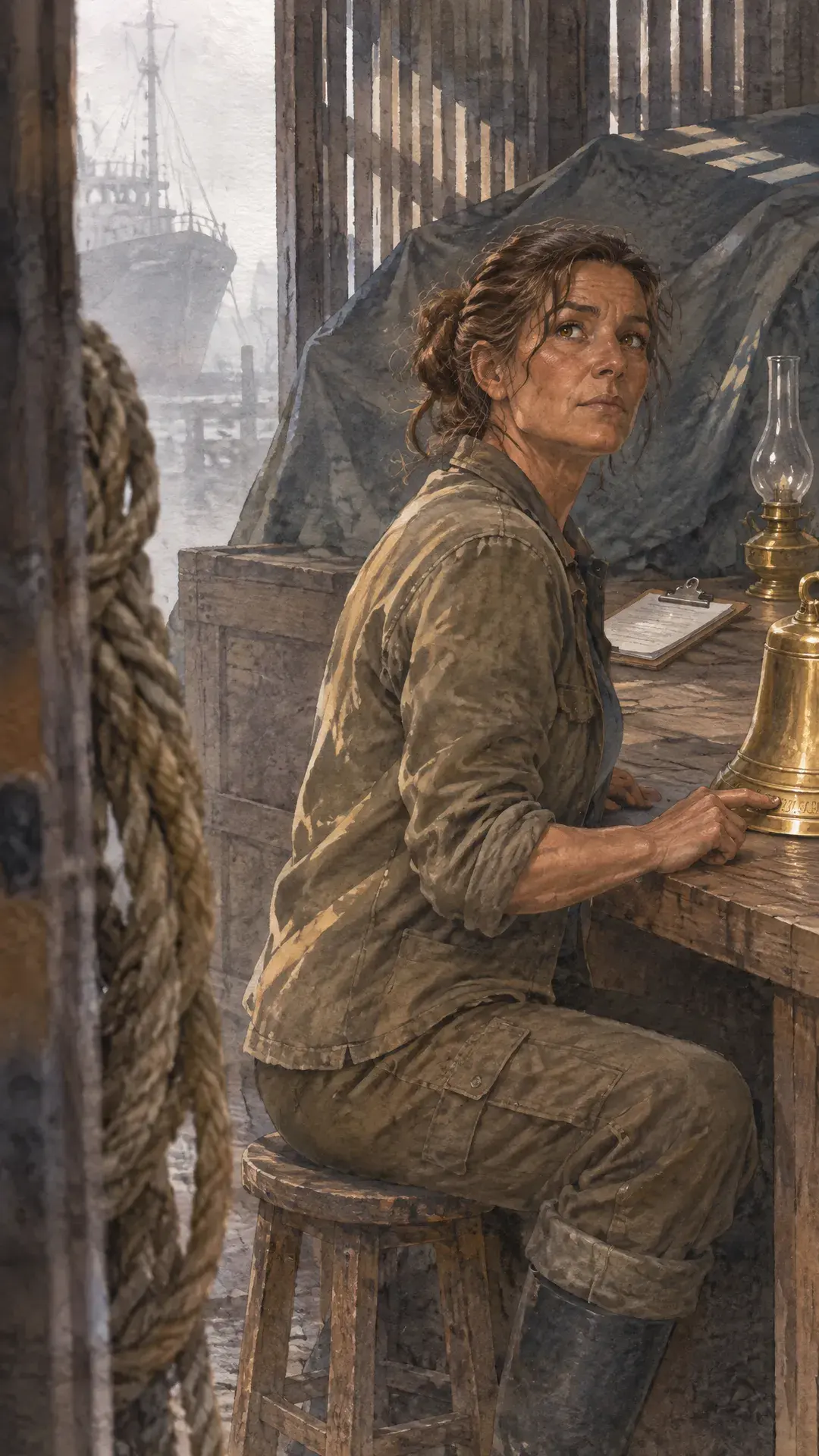
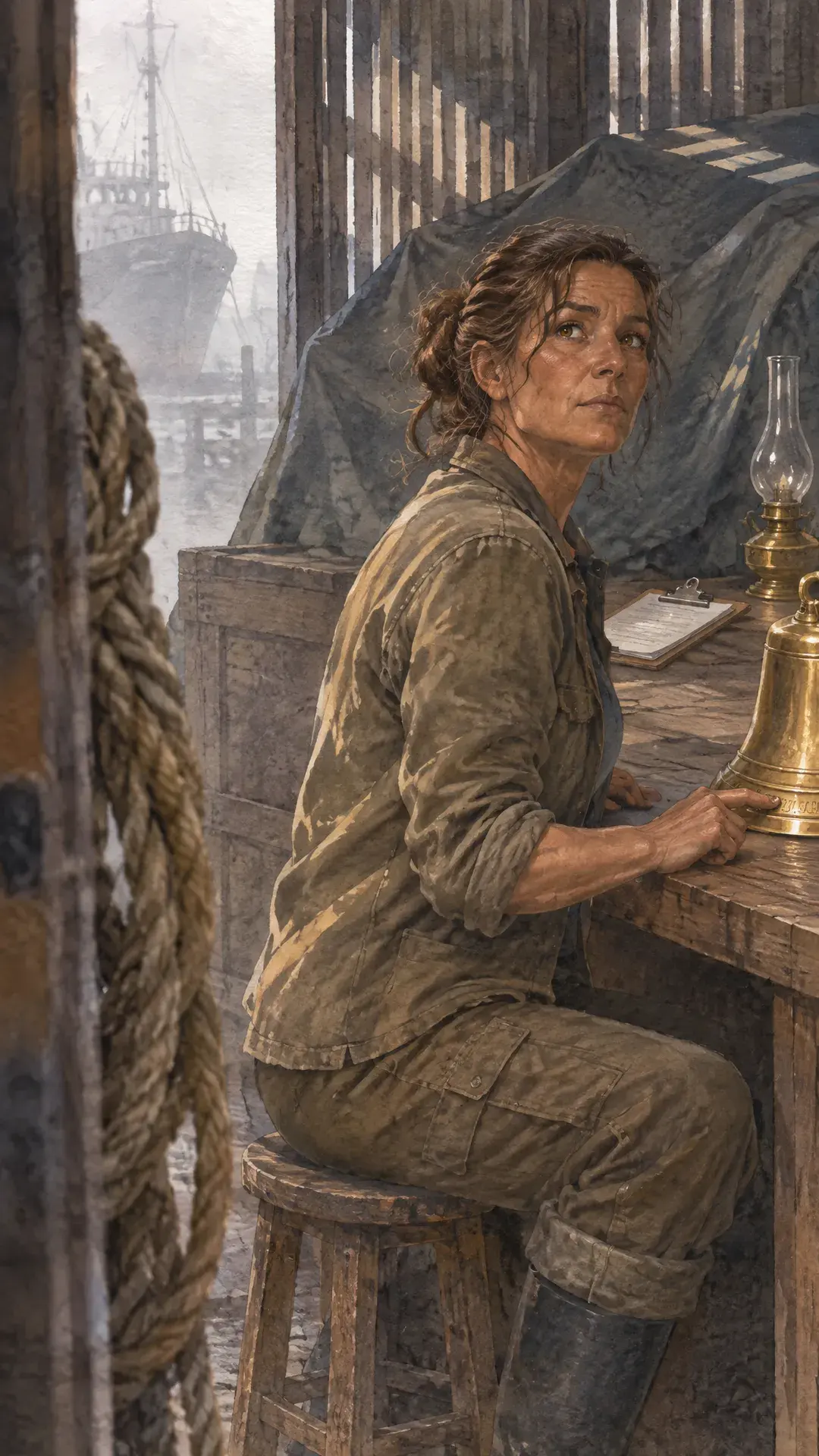



The fog comes off the harbor in slow curtains, and you park just short of a chain-link gate where a hand-painted sign reads CALLOWAY SALVAGE — SAVE THE PAST, PAY THE RENT. Beyond the gate, the yard is a museum in pieces: anchors standing upright in the grass, a stripped rowboat, coils of wet rope, and a tilted cruiser hull wearing barnacles like jewelry. Iris Calloway is on her knees beside the hull, scrubbing a bronze bell with a soft rag. She wears a canvas work jacket, heavy trousers, and rubber boots cuffed past her calves. Her brown hair is escaping its knot. She hears your boots on the gravel and sets the rag down without hurrying.
You've got good timing,
she says, straightening.
Or bad. Depends which of us reads the letter.
She picks up a clipboard from the hull and holds it out.
Heritage office sent you to count what I lifted from the Marrow. Fine. I'll make it easy.
She points toward the shed behind her.
I've got the bell, the deck plate, a brass oil lamp, and every manifest my father kept since 1968. You can read through all of it. Then you can write whatever report you came to write.
She studies you for a moment.
Most of the inspectors don't read past page one. They just want the fine. Is that you?
She doesn't wait for an answer. She walks to the shed, pushes the door open, and waves you inside. The air changes from brine to coffee and rust. The bell is on the workbench, brilliant where she has scrubbed it, with the ship's name still sharp around the rim. Beside it sit a deck plate and a lamp in a wooden crate labeled MARROW. Toward the back of the shed, a tarp covers a boxy shape she does not mention.
Coffee's in the green thermos,
she says.
It's not a bribe. It's cold out here. Look at the manifests as long as you want. I'll be outside with the winch.